
Independent workshop in Al Quoz
Tesla Accident Repair in Dubai
After an accident, you need to know what can be repaired and what it will cost. We repair damaged Tesla bodywork, replace parts where needed and bring the paintwork back together. Send photos for an initial estimate, then arrange an inspection to identify damage behind the panels.
Localised dent repair AED 500–1,500Planning estimate per damaged area. Paint, replacement parts and wider collision damage cost extra. Your written quote confirms VAT and the total.
Model 3 · Model Y · Model S · Model X
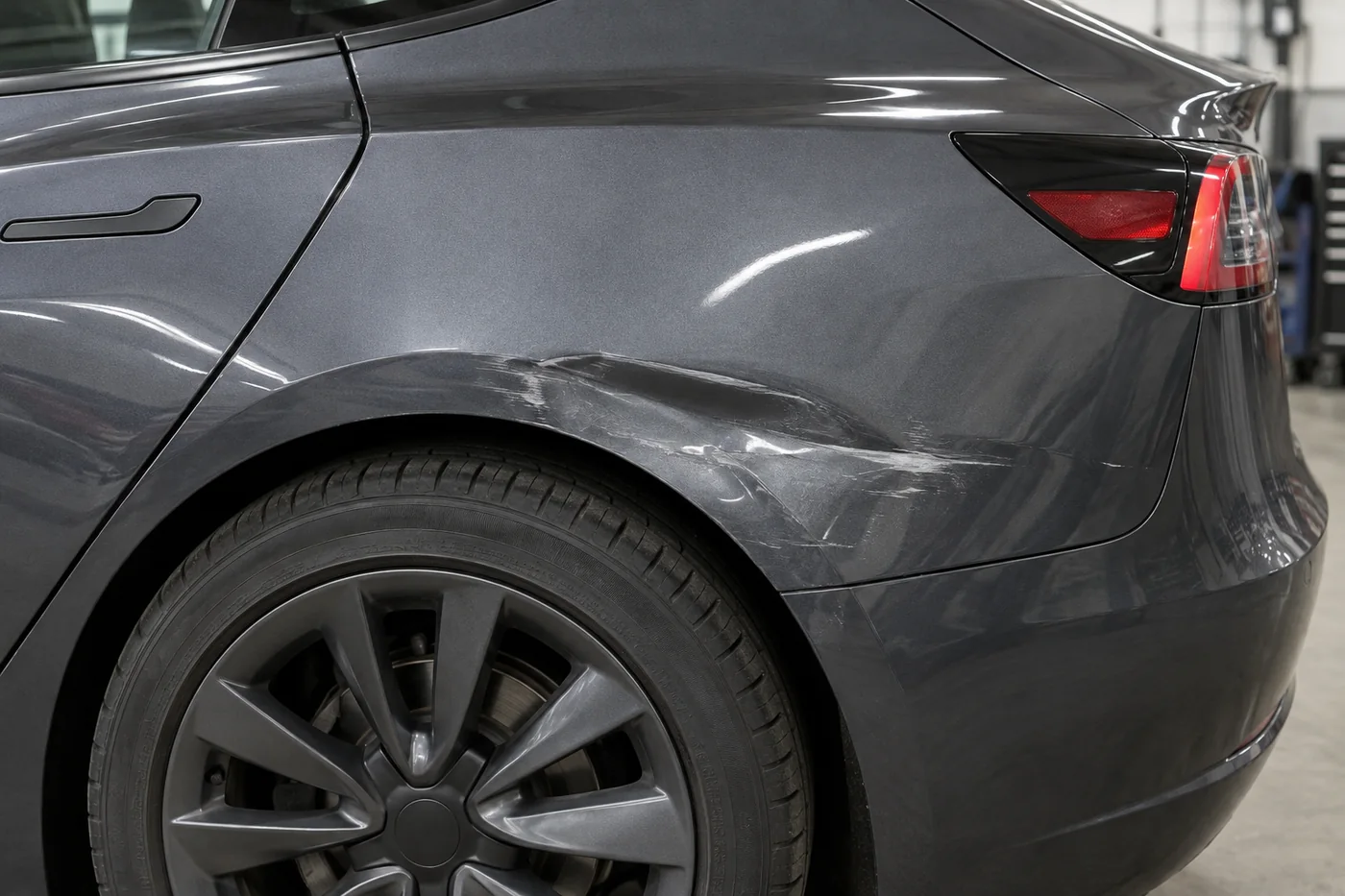
Budget for the actual damage
Accident repair price guide
Start with the work your car needs. A localised repair can preserve a usable panel; a replacement adds the component, fitting and refinishing. Several damaged areas need one combined quotation.
- Localised dent repair
- AED 500–1,500
- Per damaged area. Dent correction where the metal and access allow a repair. Repainting is separate if the finish is damaged.
- Repairable bumper damage
- From AED 600
- Repair and repainting of one suitable bumper cover. A new cover, damaged mounts or components behind it add to the job.
- Single-panel repaint
- AED 800–3,000
- Repainting one panel. Metal repair, replacement parts and any colour blending into additional panels are priced separately.
- Several damaged panels
- From AED 2,500
- A starting budget for combined bodywork and paint. Replacement panels, glass, airbags, suspension and structural work are additional where required.
From the report to the repair
Documents for accident repairs
For an insurance claim, have the accident report and vehicle records ready. The checklist below covers common requests; your insurer confirms the documents needed for your claim.
Your claim documents
Keep clear, complete copies- Police accident report
- The report for this incident, including its reference. Keep the original digital file or a clear copy.
- Vehicle registration
- Both sides of the registration card, often called the Mulkiya.
- Driving licence
- Both sides of the licence of the person driving at the time of the accident.
- Emirates ID
- A copy where your insurer requests it. Some insurers require both sides.
- Insurance and claim details
- Your insurer and policy number. Once the claim is registered, keep the claim reference and any repairer assignment or approval message too.
Send identification documents through the submission channel specified by your insurer.
One corner, several decisions
Panel fit and paint finish
A scraped rear corner may cross the bumper, quarter panel and door edge. Painting only the most visible mark can leave the rest of the damage unresolved. The estimate should identify which parts need repair, which simply need refitting and where colour blending is necessary.
We review the shape and panel gaps before finishing the surface. The paint code is a starting point; previous refinishing, metallic finishes and pearl colours can change the matching work. The aim is a consistent transition across the repaired area.
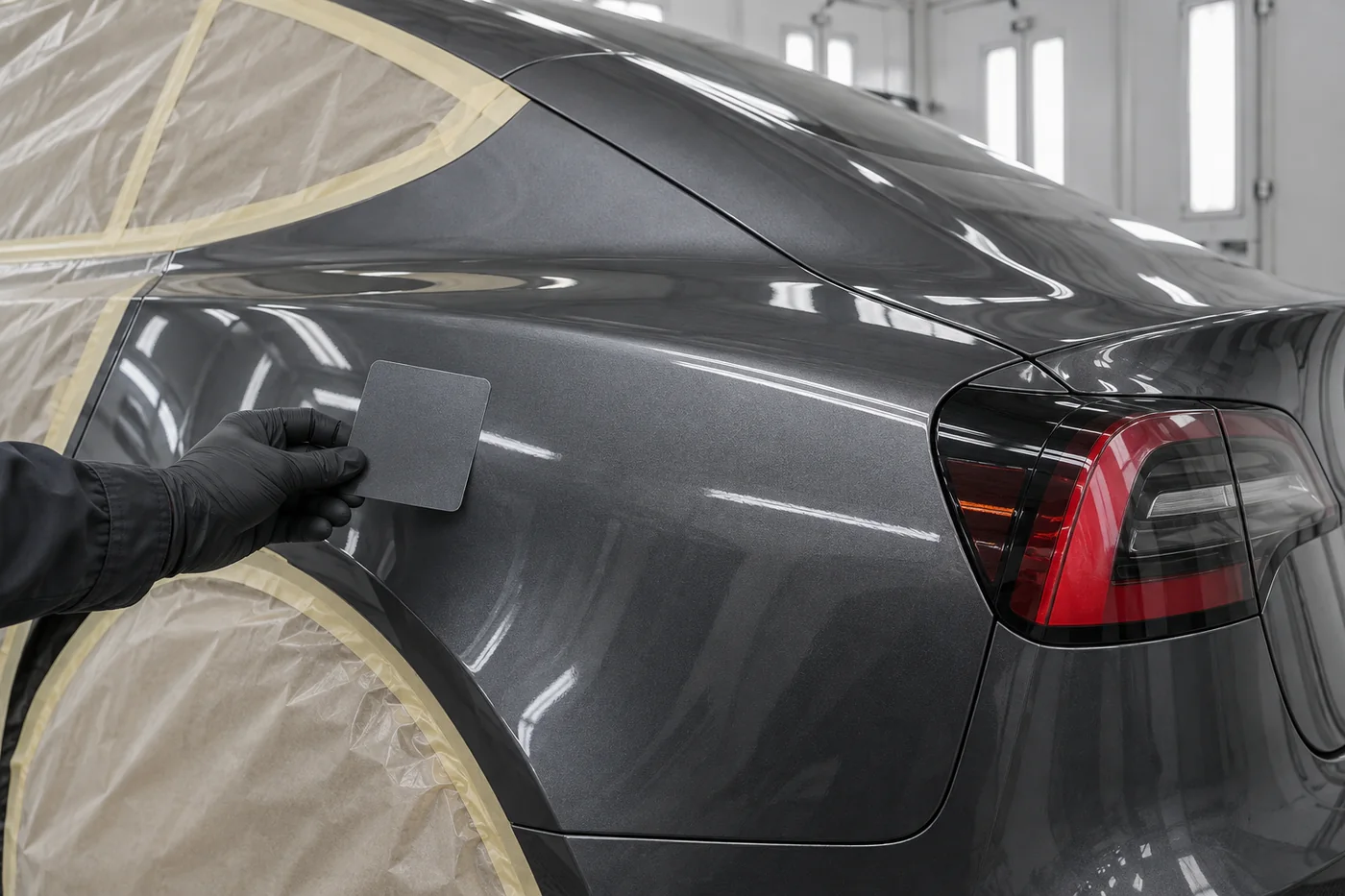
Sealing, protective coatings, trim clips and wheel-arch liners matter too. Where repair work disturbs them, their reinstatement belongs in the job rather than being left until an owner notices a loose trim or water leak.
Keep the repair proportionate
Repair or replace the part?
Appearance alone does not settle the choice. A large shallow dent may allow cosmetic repair, while smaller damage at a joint or safety-component mounting can require replacement. These are the practical differences to discuss.
| Option | When it may suit | What changes the decision |
|---|---|---|
| Paintless dent removal | Localised cosmetic damage with intact paint and suitable access behind the panel. | Stretched metal, sharp creases, damaged joints or an unsuitable location can rule it out. It does not repair broken paint. |
| Panel repair and repaint | Repairable outer-panel damage where the permitted method can restore the shape before refinishing. | Material limits, previous repairs and the condition of edges or attachments determine whether repair remains practical. |
| Component replacement | A damaged part that cannot be repaired within the applicable procedure. | The correct assembly, access work and adjoining damage affect the price. Replacement does not always mean removing an entire body side. |
Damage around the rear wheel may involve the outer skin or a larger assembly. Our quarter panel replacement page explains those specific repair choices.
Follow the point of impact
Find your damaged area
Tell us where the car was hit and what changed afterwards. The outside damage guides the inspection, but it cannot show every broken bracket, trapped wire or displaced component.
01Front bumper, bonnet and lightsFront-end impacts
The painted bumper cover sits ahead of other components. A cracked cover can come with damaged supports, headlight mounts or cooling parts behind it. Bonnet gaps and latch operation help identify whether the damage extends beyond the outer surface.
Front-bumper repair limits also depend on the vehicle’s equipment. Tesla publishes different requirements around the radar area on applicable vehicles. We identify the version before deciding whether that part of the cover can be repaired.
02Rear bumper and boot openingRear-end impacts
Rear damage may involve the bumper cover, tail-light mounts, rear panel and boot or liftgate opening. A lid that catches or an uneven light-to-panel gap is useful information when arranging an assessment.
A left rear-corner impact can also affect the charge-port area. Report a flap that sticks or a charging warning after the accident; these need attention beyond repainting the bumper.
03Doors, sill and side panelsSide impacts
Door damage needs assessment of the shell, hinges, latch area and nearby structure. A scrape limited to the outer surface is a different job from a distorted opening or damage close to an intrusion beam or impact sensor.
On a Model X, describe any change in Falcon Wing door movement as well as visible dents. Glass, seals and the opening around the door may need to be assessed together.
04Wheel, steering and lower bodyWheel or kerb impacts
A struck wheel can pass force into steering and suspension parts. Tell us about pulling, rubbing, a changed steering-wheel position or a new knock. An alignment adjustment alone cannot establish that collision-damaged components are sound.
Lower-body impacts also need attention to the area around the battery enclosure. This calls for an appropriate assessment before deciding that the damage is cosmetic.
Not sure how to bring the car in? See the recovery and arrival guidance, or call us to discuss the damage.
A practical plan for arrival
Getting your Tesla here
A Tesla that still moves can have damage that makes driving unsafe. A rubbing or displaced wheel, a door or bonnet that will not latch, deployed airbags or a high-voltage warning calls for assessment before driving.
Arrange suitable transport
Tell the recovery provider the model, location and visible damage, and whether a wheel is locked or the screen is unavailable. Mention basement access or a low parking entrance so the operator can plan the collection.
The operator should follow Tesla’s transport instructions for your model. Tesla recommends a flatbed for Model 3 and requires all four tyres off the road during transport. Loading and electrical precautions belong with trained professionals.
If there is smoke, unusual heat or a suspected battery emergency, keep away and contact emergency services. Do not approach the car to take extra photographs.
Confirm the receiving workshop and arrival time. If you are using insurance, ask whether recovery is covered and how it must be arranged.
Compare the same work
Your estimate, line by line
A useful accident quotation lets you follow the repair from damaged parts to finished bodywork. It should make clear which parts will be reused, repaired or replaced, with the finishing and checks needed around them.
This matters when two quotes look very different. One may include a new lamp, bumper fittings and adjacent-panel blending; the other may price only the visible dent and paint. Compare the included work before comparing the total.
- Damage and access
- Named damaged areas, any agreed dismantling and the trim or components that must be removed to reach them.
- Repair and replacement
- Panel repairs, identified replacement parts, necessary fasteners and the labour to fit and align them.
- Paint and protection
- Panels to refinish, any adjacent colour blending, clear-coat coverage and disturbed sealing or protective coatings.
- Required checks
- Relevant diagnostics, mechanical checks, alignment or calibration. Each should relate to the damage and repair.
- Total and conditions
- VAT treatment, the agreed total, expected timing and any work still awaiting inspection or parts confirmation.
Know who approves the work
Insurance or a private repair
The repair estimate describes the work and cost. Who pays, and who must approve it, depends on whether you are making a claim or paying directly.
Before claim-funded repairs
Register the claim and follow your insurer’s repairer instructions. Agency-repair cover and an insurer’s approved garage network are different arrangements.
- Ask whether your chosen workshop is accepted and whether a surveyor must inspect the car.
- Obtain the required approval for the estimate before insurance-funded repair work starts.
- Confirm your share of the bill, including the excess (your policy’s claim contribution), any charge towards new parts and work outside the claim.
We are an independent workshop. The insurer decides claim acceptance and payment; an estimate from us is not an approval.
Choose and agree the repair
We assess the damage and explain the repair choices with an itemised quotation. You decide which quoted work to authorise.
- Agree any charge for inspection or dismantling before it begins.
- Confirm the parts, paintwork, labour, VAT and total for the chosen repair.
- Keep optional improvements, such as unrelated old scratches, separately priced.
Paying yourself does not replace accident reporting. Follow the police instructions that apply to the incident.
If more damage is found
A removed bumper may reveal a cracked support, damaged wiring or a broken lamp mount. We explain the finding and revised cost before extra work goes ahead. An insurance repair may also need further insurer approval. Keep the revised quotation with the original so the final bill is easy to follow.
The repair must suit the car
Materials set the repair limits
“Aluminium body repair” is too broad to describe every Tesla job. The damaged component’s material, location and joining method determine the permitted work. Repairable outer-panel damage and deformation of a structural component need different decisions.
We are an independent workshop. Serious structural damage may require a Tesla-authorised collision facility with the required training and equipment.
Suitable exterior damage may be repairable, preserving the existing panel. Damage at safety-related components or compromised bonds can change that recommendation.
Tesla’s procedures restrict reshaping, sectioning and replacement locations. Conventional frame pulling is not a general repair solution for these vehicles.
Model 3, Model Y, Model S and Model X have their own procedures, with changes across production years. Parts selection starts with the actual vehicle, not the model badge alone.
Plan around the repair
Parts, paint and workshop time
A localised body repair may take a few working days. Replacement parts, access work and hidden damage can extend the time considerably. We discuss the likely completion date after inspection and parts checks.
Parts that fit your vehicle
We use genuine Tesla replacement components for the agreed work. A bumper cover, complete door or lamp assembly can involve different fittings and transferred parts. The estimate should identify what is supplied and what can be reused.
Having the correct parts available before a planned bodywork appointment can reduce unnecessary time without the car. Ask about availability before arranging alternative transport.
Time beyond the paint booth
A repaint needs preparation, finishing and reassembly, while a collision repair may also need mechanical or safety-system work. The car’s appearance cannot determine when all those jobs are complete.
Approval for additional damage and arrival of a missing component can affect collection. Keep appointment availability, actual repair time and parts waiting time separate when discussing a date.
While the car is away
Ask when to expect the next update and whether the car is waiting for inspection, approval, parts or repair. A drop-off date is not always the repair start date.
Replacement transport
If you need a hire car, check your insurance entitlement, permitted duration and booking arrangements. Coverage depends on the policy and claim. Agree any rental extension before assuming extra days will be reimbursed.
Before you collect
Review the finished repair
The handover should cover the work agreed in your estimate and any approved additions. Take time to look around the repaired area and ask which relevant checks were completed.
These are useful collection questions. They do not replace the technical inspections needed for structural, electrical or restraint-system work.
Panel fit and operation
Review gaps and edges around the repair. Doors, the bonnet or liftgate involved in the job should open, close and latch correctly, with relevant trims secure.
Paint and surface finish
Look at the repaired colour from different angles and review any agreed blending. Ask about aftercare before applying protection film, coatings or abrasive polish to fresh paint.
Lights and repaired functions
Review the lamps, locks, seals and other functions affected by the impact. Discuss any remaining warning message rather than treating it as unrelated without assessment.
Checks and written records
Ask for the invoice describing the work and parts, along with available records of relevant diagnostics, alignment or calibration. Keep any applicable warranty terms and approved additions with those documents. Confirm any balance or policy excess payable at collection, and record outstanding items with the agreed next step.
Can you give a final quote from photos?
Photos support an initial estimate for visible damage. A final collision quote may need inspection and some dismantling because brackets, inner panels and other components can be hidden. Any paid inspection or dismantling should be agreed before it starts.
What if airbags or seat belts deployed?
Deployment can add required restraint components and associated work to the repair. The exact requirements depend on the vehicle and what deployed. Our airbag replacement service explains this separately. Arrange assessment before driving the damaged car.
Does every accident need camera calibration?
No universal package fits every collision. The requirement depends on the vehicle’s equipment and the components moved, removed or replaced. Relevant checks and required calibration should be identified for the actual repair, rather than promising every sensor will be recalibrated.
Can I get an estimate before claim approval?
Yes. Contact us about the visible damage and an assessment. You can compare the repair and cost while your claim is being reviewed. For work you expect the insurer to pay, obtain the required repair authorisation before the job starts.
What if the insurer declares a total loss?
The insurer will explain the settlement process. Resolve that decision before authorising repairs. Serious damage also needs an appropriate technical assessment; a quotation for exterior bodywork alone cannot establish that the vehicle is repairable.