
Independent Tesla workshop in Al Quoz
Tesla Battery Coolant Replacement in Dubai
A coolant leak, a cooling-system warning or recent repair work can leave your Tesla needing attention to its cooling system. We assess the problem, explain the repair and replace or refill the coolant when needed, using the procedure for your vehicle.
Coolant replacement From AED 1,200Starting estimate per vehicle. Leak repairs and replacement components are quoted separately. Your written quote confirms the included work, VAT and total.
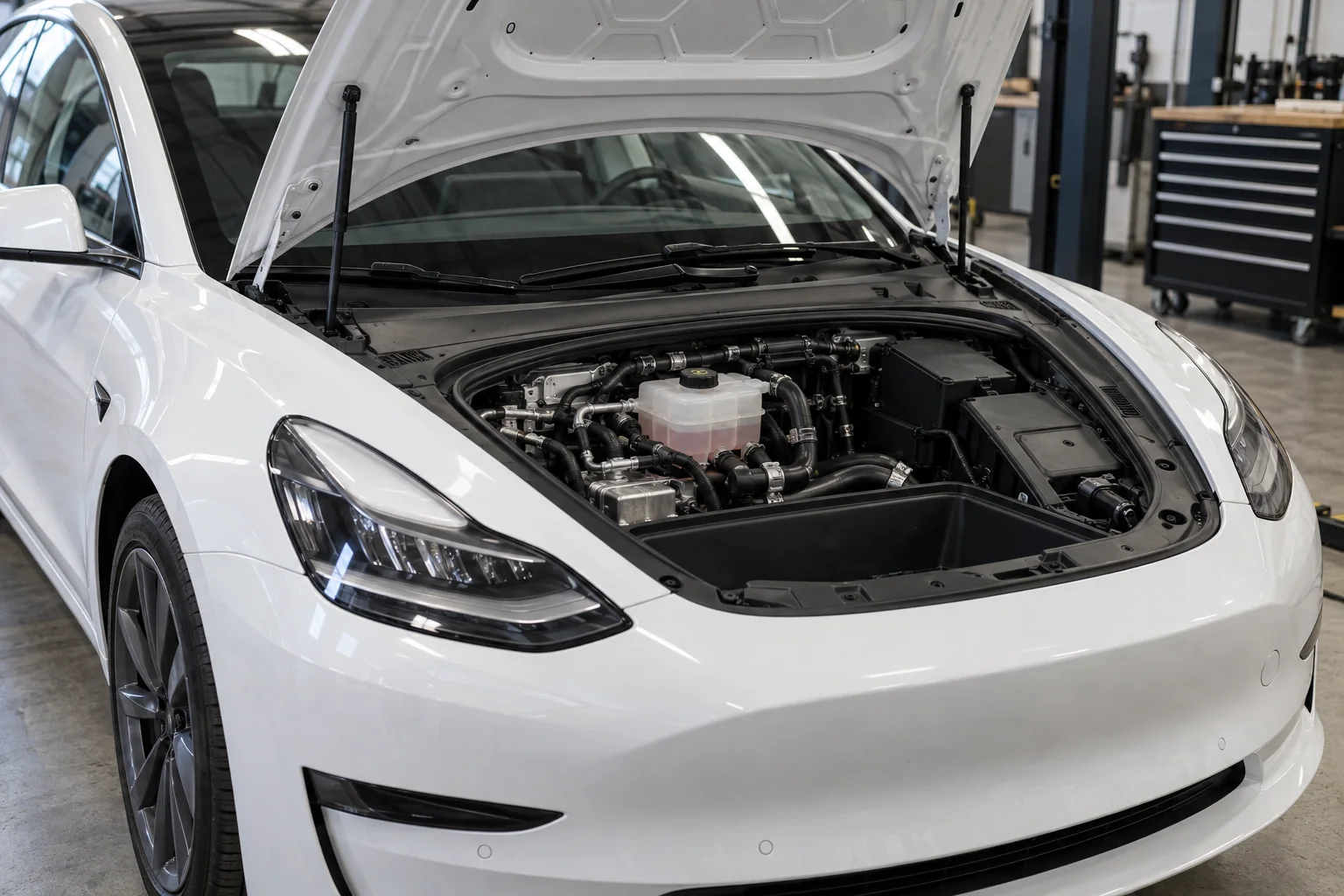
Price the work your car needs
Battery coolant replacement cost
The starting estimate for Tesla battery coolant replacement is AED 1,200. The final amount depends on the vehicle, the circuit being serviced and whether a leaking or faulty component needs replacement.
A straightforward fluid service and a repair involving hoses, a pump or difficult access are different jobs. We explain any additional work before it is authorised, so you can compare the full repair cost.
Tell us the model and why you need the service. Any diagnostic, dismantling or repair charge is agreed separately before that work begins.
Your quotation should identify
- Fluid and labour
- The compatible coolant, the circuit being drained or refilled and the access work.
- Refill and checks
- The applicable filling, air-removal and completion checks.
- Any separate repair
- Named hoses, seals, pumps or other parts, with their fitting cost.
- The payable total
- VAT treatment, the final total and any agreed diagnostic charge.
Battery-pack repair, refrigerant service and replacement cooling components are not included automatically in a coolant replacement estimate.
The right reason to replace it
When coolant work makes sense
Tesla’s Model 3 and Model Y owner manuals say battery coolant normally does not need replacement during the vehicle’s life. A routine flush is therefore not a universal annual or mileage-based Tesla service.
Leaks, contamination or repairs that open the cooling circuit can create a different need. The recommendation should follow the actual vehicle and the work required.
Repair the leak, then refill
Falling coolant level needs a cause. A leaking hose or connection may require a local repair before the specified fluid level can be restored. Repeated top-ups leave the underlying problem unresolved.
Complete the cooling-circuit work
A repair can involve draining all or part of the system. The replacement coolant and any required bleeding belong in the repair plan, with the amount of work determined by what was disconnected.
Assess the fluid and system
Tell us if another fluid was added or you have a previous repair report. We review the appropriate corrective procedure instead of assuming that every car needs the same flush or internal cleaning.
If the only reason for changing coolant is age or mileage, bring the recommendation with you. We can review it against your vehicle’s applicable service information before agreeing the job.
Describe the change you noticed
Which cooling checks are useful?
The message on the screen and when the problem happens help us choose the first checks. These concerns do not all call for the same repair.
- Fluid beneath the car
- A small water puddle from air-conditioning condensation can be normal. An unexplained deposit, visible loss or accompanying warning needs inspection. Avoid touching or tasting an unknown fluid, and leave the coolant reservoir closed.
- A cooling or temperature warning
- Send the exact wording if it is safe to do so. The technician can relate the alert to fluid level, circulation, temperature information or another thermal-system fault rather than guessing which part has failed.
- More fan or pump noise
- Cooling equipment can run while parked or charging. A new persistent noise, particularly after repair work or alongside a warning, is worth describing. Noise by itself does not establish that the coolant needs changing.
- Slower charging or less range
- Battery temperature is one of several influences. Charging conditions, battery state and other faults may need assessment. Coolant replacement should be recommended only when the cooling-system findings justify it.
If a warning says stop
Follow the vehicle’s instruction and stop safely. If coolant is leaking heavily or the car cannot be driven safely, discuss suitable transport before bringing it to the workshop.
Cooling involves several components
Fluid is one part of the repair
Coolant carries heat through the vehicle’s thermal system. Its level and specification matter, but circulation and heat transfer also depend on working components. That is why a fluid change alone cannot resolve every cooling fault.
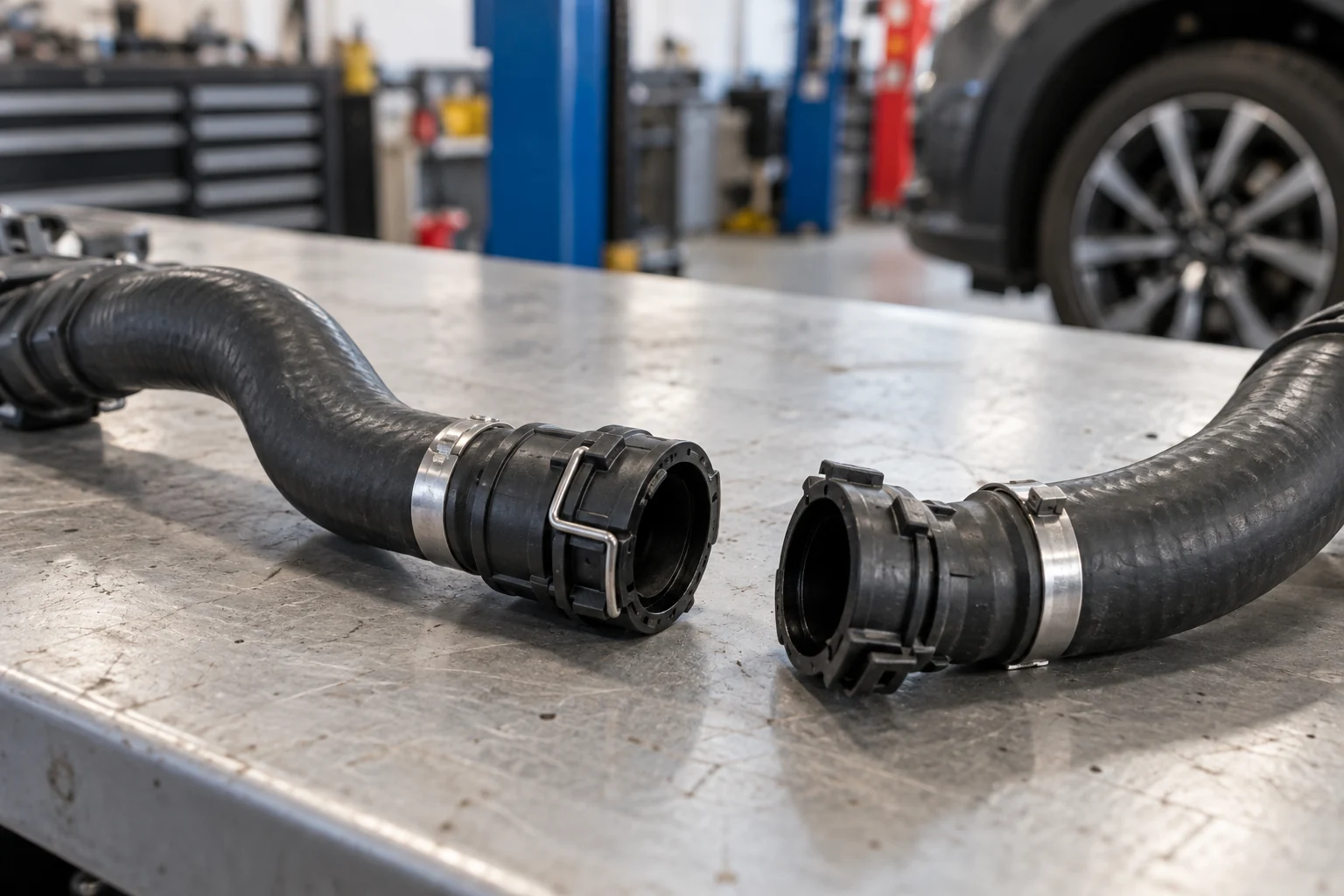
Hoses and connections
Connections, seals and pipework need to contain the coolant. Signs of loss guide the leak investigation and help establish which part needs attention.
Pumps and valves
These move and direct coolant. A circulation problem may need electrical or component testing as well as a fluid-level check.
Heat exchangers and airflow
Radiators and related thermal components transfer heat. Debris restricting external airflow needs different work from replacing fluid inside the circuit.
Temperature information
The vehicle uses temperature readings to control cooling. Warning information and operating checks help distinguish an actual cooling problem from an incorrect reading.
The AC compressor can also support battery cooling. Coolant and AC refrigerant are different fluids with different service requirements. If cabin cooling is the main concern, our Tesla AC repair service explains the relevant work.
A complete fluid service
Refilling and removing trapped air
Coolant work needs the correct filling and air-removal method for the vehicle. Air left in the circuit can interfere with circulation, so adding fluid to a reservoir is not the whole job.
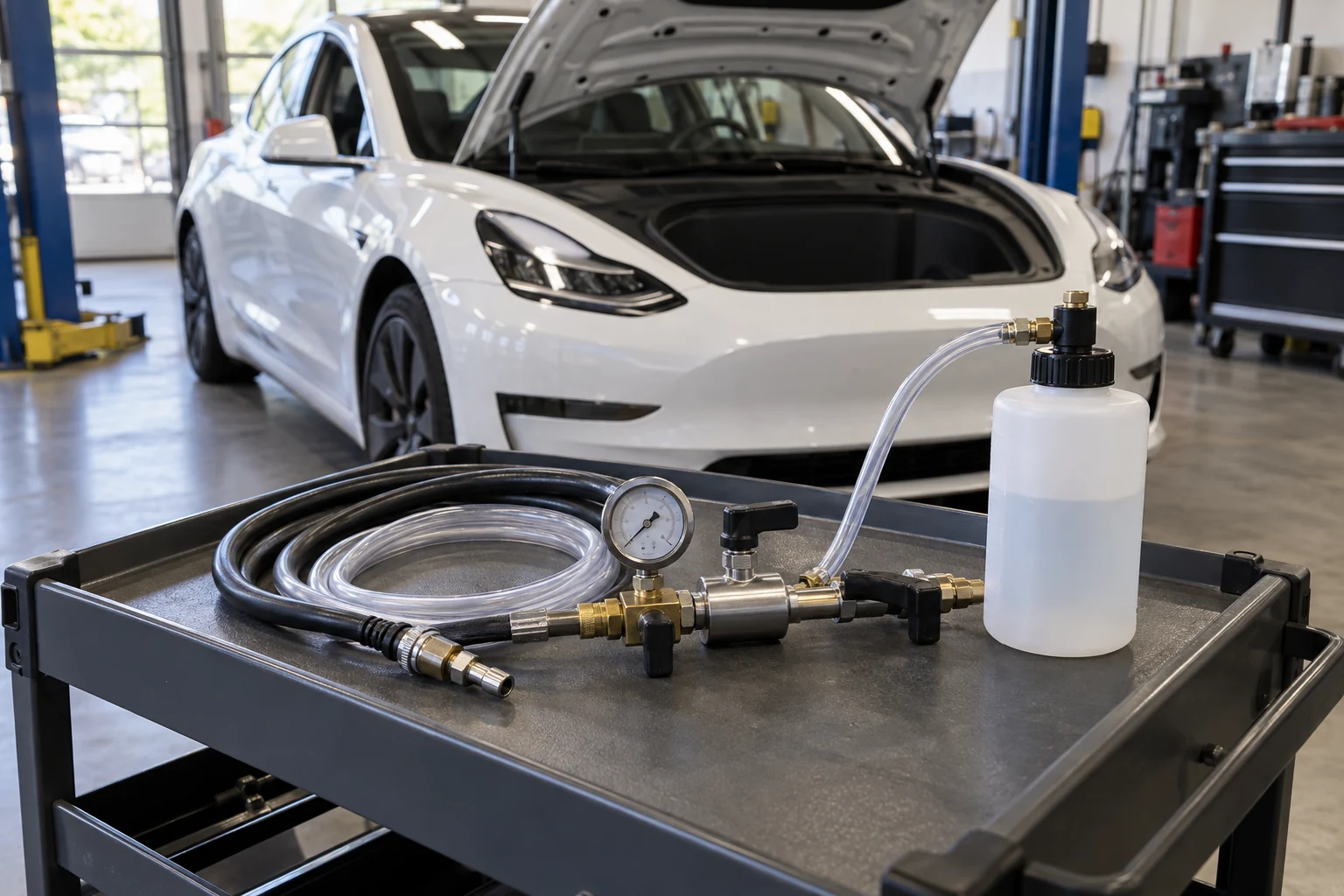
Identify the required work
Review the vehicle details, recent repairs and the reason for coolant service. Explain any fault that must be repaired before refilling.
Service the agreed circuit
Carry out the authorised repair and fluid work, with the access and safety precautions required for that vehicle.
Refill and remove air
Use the applicable filling and purge procedure. The method depends on the thermal-system version and which components were opened.
Check the result
Check the completed work for leaks, confirm the level as specified and perform the relevant cooling-system checks before handover.
Tesla’s service procedures distinguish between particular draining, refilling and bleeding operations. For example, the 2024-onwards Model 3 vacuum-refill procedure includes an air-purge routine and thermal checks. Other builds require their applicable procedure.
The right fluid matters
The specification must match the vehicle’s current service information. Colour or a general “EV coolant” label is not enough to select it. Keep a record of any fluid used during earlier work.
Compatibility before the quotation
Your model and repair history
Model 3, Model Y, Model S and Model X do not share one universal coolant quantity or service method. Production changes and earlier repairs can affect the components fitted to the car.
- Model, year and VIN
- These identify the relevant service information, fluid specification and replacement parts. The model name alone may not identify the correct thermal-system version.
- Work already carried out
- A recent hose, pump, radiator or battery-related repair helps explain why the system was opened and what refilling may still be needed.
- Fluid previously added
- A product name or previous invoice is useful if somebody topped up the coolant. Avoid adding another fluid while trying to identify what is already in the system.
Coolant work does not automatically mean removing or replacing the traction battery. If assessment points to a fault within the pack, we discuss it separately. Our high-voltage battery service covers that decision.
From enquiry to collection
Plan your workshop visit
Start with your model and the problem or work requested. You do not need a full diagnosis before calling.
Send the useful details
A warning photo, approximate mileage and recent repair invoice can help. Bring the key card or other agreed vehicle access, and confirm the appointment and any transport arrangement before setting out.
Tell us if the car has an active warranty or a repair already agreed with another provider. Review the applicable terms before authorising independent work; a coolant service is not a promise of manufacturer warranty coverage.
Allow for the whole job
A planned fluid service can be simpler to schedule than an intermittent fault or a repair awaiting parts. Access, leak investigation, filling and completion checks all affect the handover time.
Ask for the expected collection time with your estimate. Same-day completion depends on the findings, parts and appointment availability.
Keep a clear service record
Ask for the reason coolant work was needed, the fluid and parts used, the checks completed and any follow-up advice. Keep the invoice with the car’s repair history.
If an alert or leak returns, contact the workshop with the message and when it happened. Leave reservoir checks and further fluid additions to a professional.
Does Dubai weather change the replacement interval?
Hot weather makes working thermal management important, but it does not by itself establish a different fixed coolant-change interval. Use your vehicle’s applicable guidance and any diagnosed repair need.
Can I book after another workshop opened the system?
Yes, enquire with the model and details of the earlier repair. Share the invoice and fluid used if available. Any remaining fault and the required refill or bleeding work need assessment before a price is finalised.
Will new coolant restore lost battery capacity?
A fluid change does not reverse battery-cell degradation. If a cooling fault is limiting operation, repairing that fault is a separate matter from the battery’s remaining capacity.
Arrange the next step
Ask about your Tesla’s cooling system
Tell us the model and what prompted the enquiry. We can discuss a suitable appointment and explain what is needed for a vehicle-specific estimate.
Visit our independent Tesla workshop at Warehouse 39, Al Quoz 4, Dubai. If the car cannot be driven safely, call before arranging its arrival.