Tesla ownership · Model comparison
Tesla Model S and Model 3 Maintenance Compared
Compare the equipment and service decisions that matter before choosing repairs, parts or an ownership budget.
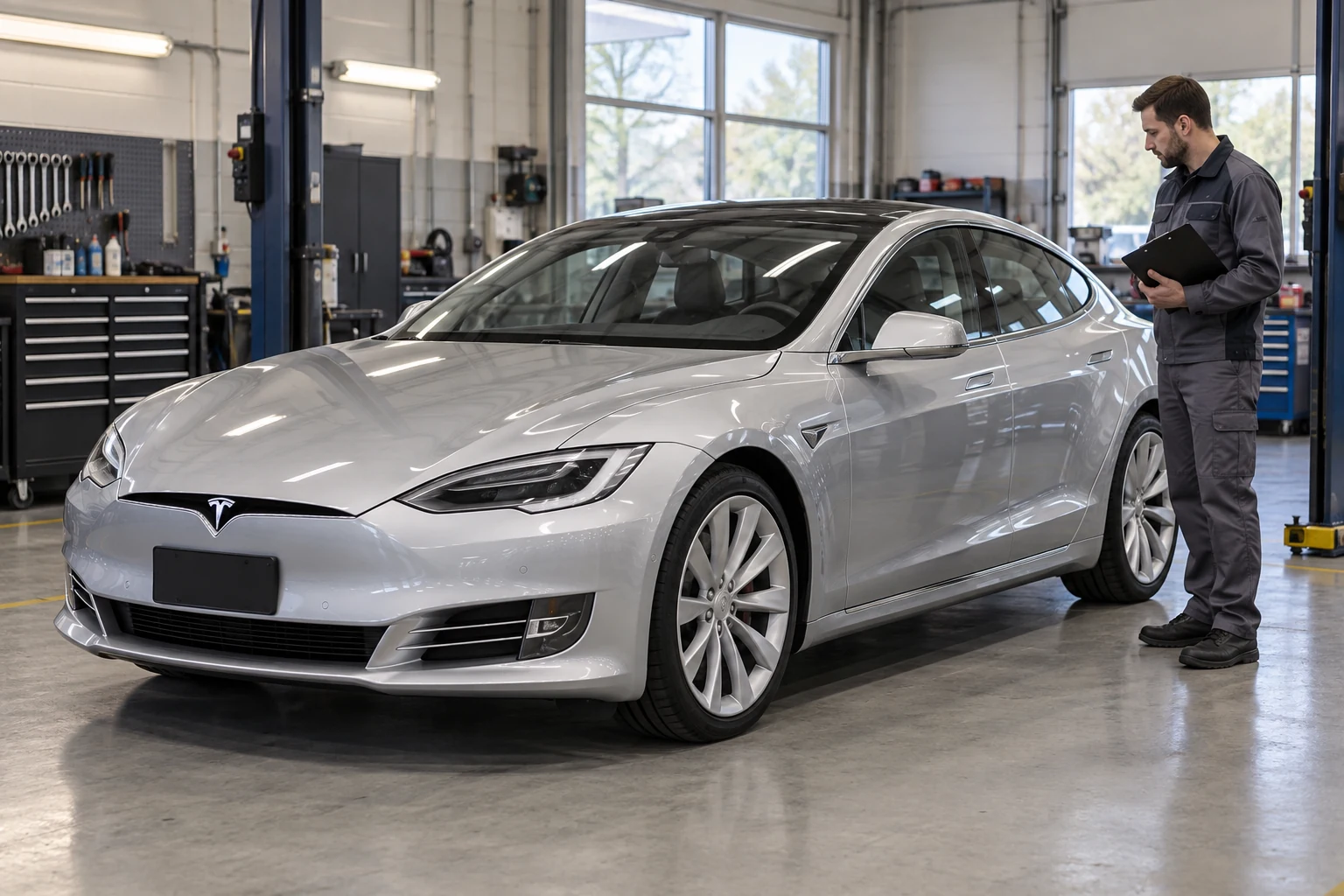
Model S and Model 3 maintenance depends on the actual build and fitted equipment. Compare the screen hardware, thermal system, suspension and access mechanisms before judging repair costs. Neither model needs a generic package of heat-related upgrades.
Compare the fitted equipment before repair costs
Model S and Model 3 share an electric powertrain, but that does not make their repair requirements interchangeable. A comparison is useful when it explains the fitted hardware, the maintenance that applies and the work included in an estimate. It becomes misleading when every Model S is labelled complicated and every Model 3 is treated as a simpler, cheaper version.
Start with the production period and market specification. Tesla separates its owner information for earlier Model S vehicles from the 2021+ generation, and earlier Model 3 vehicles from the 2024+ generation. Those divisions help you choose a manual. Changes within a production period still need checking against the actual vehicle.
| Item | Model S | Model 3 |
|---|---|---|
| Screen hardware | Earlier and later layouts differ. Some older vehicles fall within the limited eMMC recall. | Identify the fitted computer and screen. The Model S/X eMMC recall is not a Model 3 diagnosis. |
| Suspension | Air suspension, where fitted, adds height-control checks. | Use the specification for the variant, including any adaptive dampers. |
| Cooling maintenance | Production period and heat-pump equipment change scheduled items. | Heat-pump and non-heat-pump cars need the applicable recommendation. |
| Access hardware | Presenting exterior handles need their own function checks. | The pivoting exterior handle works differently. |
A badge alone cannot establish a repair budget. A well-documented car with an identified fault can be a clearer proposition than another car carrying the same model name but an unexplained warning. Compare findings and included work before comparing totals.
Identify equipment before choosing any replacement parts
Record the model, production date, mileage and vehicle identification number, or VIN. If it is an import, record the original market too. Registration year is useful, but it is not a substitute for identifying the build and fitted components. Previous repairs or upgrades may also have changed the equipment.
On supported vehicles, Controls → Software → Additional Vehicle Information provides useful hardware information. Tesla identifies the low-voltage battery type there and uses the same area to identify heat-pump equipment. Record what the car actually shows instead of inferring its specification from the dashboard’s appearance.
The low-voltage battery supports vehicle electronics. It is separate from the high-voltage battery used for propulsion. An estimate for a low-voltage replacement should identify the compatible battery and required procedure. A charging or range complaint does not, on its own, establish that either battery needs replacement.
- Vehicle identity: Check the VIN and build information against the estimate.
- Installed equipment: Note the battery type, thermal configuration and relevant options.
- Previous work: Provide invoices for changed screens, suspension parts or charging equipment.
- Current complaint: Keep the exact warning wording separate from your suspected cause.
For either model, avoid buying a part because an online listing says it fits “all Tesla vehicles.” Confirm the part number, vehicle compatibility, condition and any setup required after fitting. A physically similar component may still need a different procedure. Agree acceptance and fitting terms before purchasing a customer-supplied part.
Compare screens without assuming a software fault
An earlier Model S with a vertical centre screen is a different hardware proposition from a later Model S or a Model 3. Screen shape helps describe the car, but it does not establish the computer installed behind it or the reason for a fault. Separate a frozen image, failed touch input and an app that cannot load online content.
Tesla’s 8GB embedded MultiMediaCard, or eMMC, recall covers specified Model S and Model X vehicles built before March 2018 with the affected memory hardware. It does not cover every Model S and does not describe a Model 3 failure. Check eligibility by VIN with Tesla before approving a paid repair for the recalled condition.
The recall memory replacement and Tesla’s paid Infotainment Upgrade are different services. The recall retains the original processor while replacing the affected memory. The upgrade changes other hardware and features. Neither should be presented as the automatic remedy for every blank, slow or unresponsive screen.
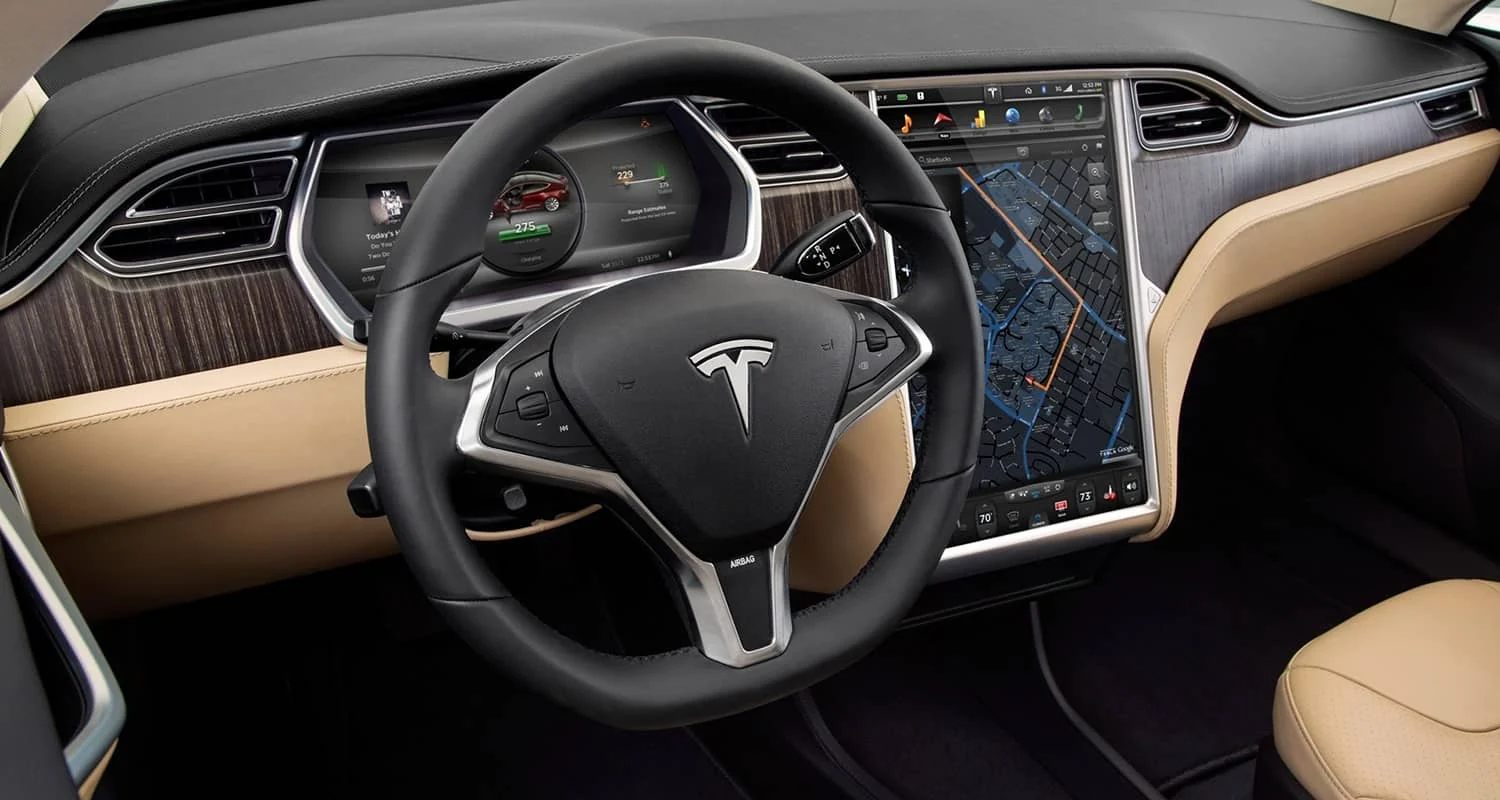
For a Model 3, record whether the entire display freezes or only one function stops responding. Note when it began and whether it repeats, without assuming that an update caused a hardware failure. A successful restart is useful evidence about behaviour. It is not confirmation that the underlying issue has been repaired.
Ask a screen-repair estimate to distinguish the display, touch input, computer and connectivity findings. Leave restart instructions to the applicable owner manual and perform any permitted check safely parked. Stop investigating comfort or entertainment functions if a separate vehicle warning requires immediate action.
Match climate maintenance to the fitted hardware
The useful comparison is heat-pump equipment and production period, rather than an assumption that one model’s AC always works harder. Identify that configuration before ordering refrigerant service or scheduled desiccant work. Desiccant is a moisture-control component in the AC system. Replacing it is different from diagnosing poor cooling.
Tesla’s current UAE guidance recommends cabin filter replacement every two years for Model 3. For Model S it lists three years, with a two-year recommendation for vehicles produced in 2012–2020. Environmental exposure can change the schedule. A change in airflow or an unknown replacement history is a reason to inspect, rather than impose the same six-month rule on both cars.
The guidance also distinguishes older non-heat-pump configurations for AC desiccant servicing. Check the vehicle’s current manual and Maintenance Summary, where supported, for what is due. Do not turn a scheduled item into an annual refrigerant top-up or sell a cabin filter as the answer to strong airflow that remains warm.
Describe the complaint in two parts. How much air reaches the selected vents, and how does its temperature change? Add whether the problem happens during charging or in ordinary use. Those observations help determine the assessment. They do not prove a compressor, pump or refrigerant fault.
Use the specified fluid and service procedure for the vehicle. A claim that factory coolant needs replacing with a special “Dubai-grade” alternative is not a sound basis for maintenance. Keep owner checks outside refrigerant circuits and high-voltage components. A workshop should explain the finding that requires opening the system before recommending that work.
Separate suspension concerns from tyre wear patterns
Air suspension on a suitably equipped Model S introduces ride-height and self-levelling functions. The current Model S manual explains that compressor operation can be normal when the reservoir fills. A noise alone is therefore not proof that its compressor needs replacing. Describe any warning, persistent height difference or change in behaviour.
Do not use those Model S height-control expectations to assess every Model 3. Suspension equipment varies by variant. The current Model 3 manual, for example, describes adaptive damping where equipped. Compare the fitted system and actual complaint instead of assuming that all electronic damping is air suspension.
For both models, pulling, vibration, uneven tread wear and a knock over bumps are different observations. They may lead to different checks. An alignment result does not establish that every suspension joint is sound, and replacing a joint does not automatically resolve a damaged tyre or wheel.
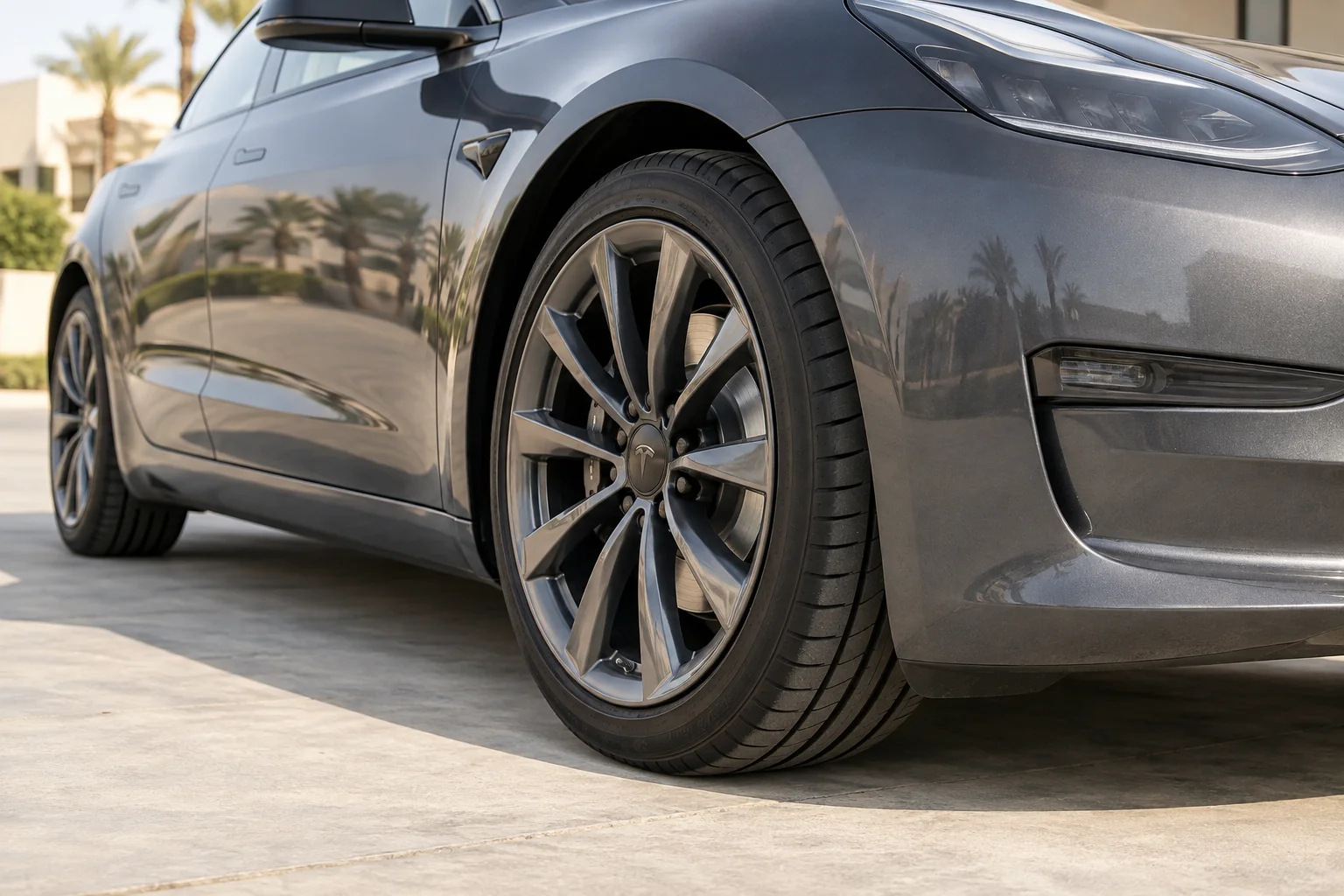
Before comparing tyre quotations, identify the actual front and rear sizes, load and speed ratings, and wheel condition. Some configurations use different sizes front and rear, so do not assume every car can follow the same rotation pattern. Use the applicable manual and fitted tyre information.
If a tyre loses pressure, has visible damage or the vehicle’s handling changes substantially, arrange a safety assessment rather than continuing a comparison drive. Leave lifting and underbody inspection to someone using the correct lifting points and procedure. After repair, ask which original symptom was checked again.
Check access hardware on each Tesla model
A Model S handle that does not present is a different complaint from a door that will not release or latch. Its presenting mechanism is also different from the pivoting exterior handle on a Model 3. Describe the failed function before agreeing to a complete handle or door replacement.
On a Model S, note whether one handle is affected or several and whether normal unlocking is working. The applicable owner manual explains the conditions for automatic handle presentation. A setting or key-detection difference can change what you observe without proving that a handle mechanism has failed.
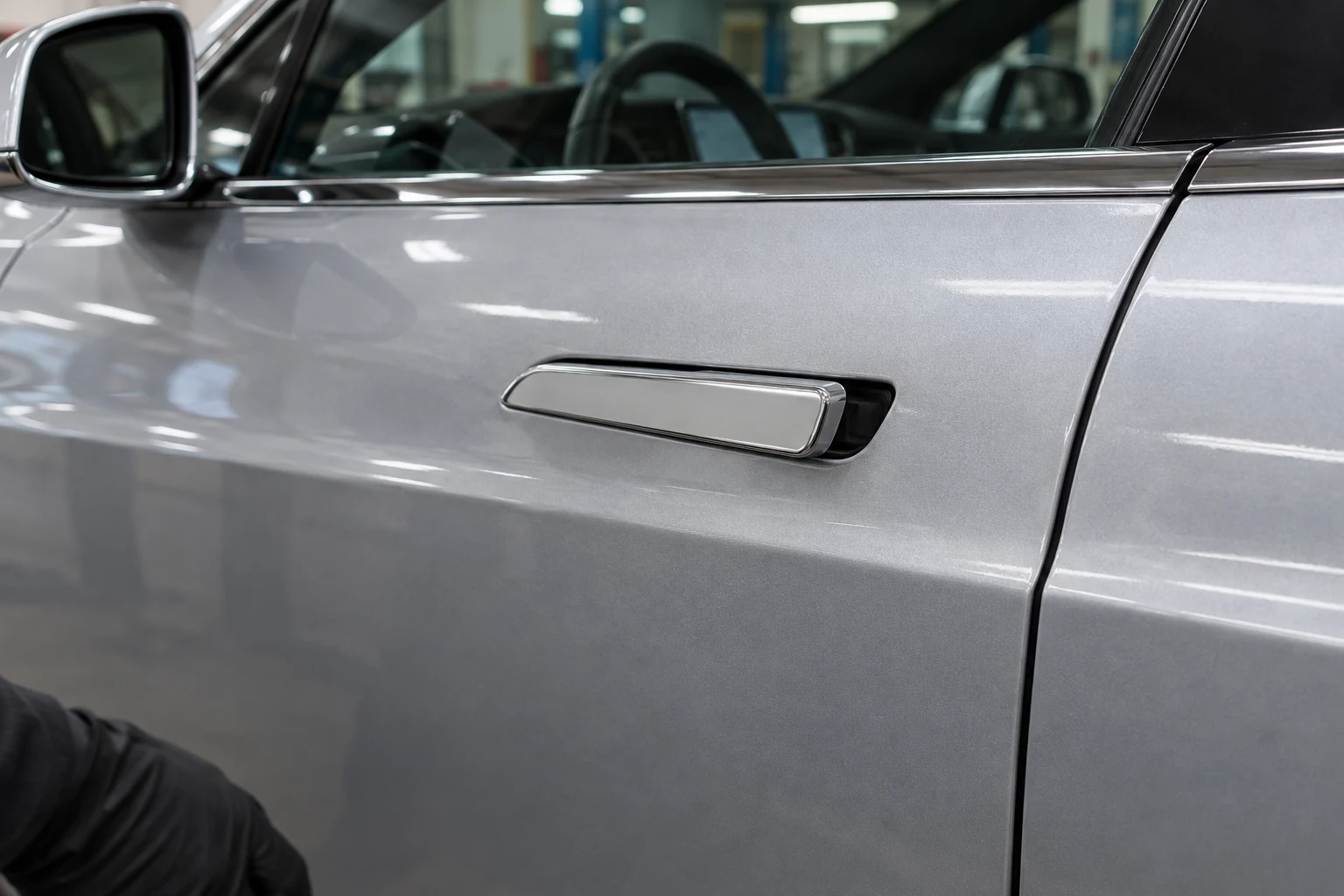
On a Model 3, record whether the exterior handle moves normally and whether the door releases using its ordinary controls. Keep key recognition, the handle, the latch and window movement as separate observations. A window that does not make its usual short movement deserves an applicable check rather than repeated forced opening.
For either car, do not pull repeatedly against a stuck window or force a door that cannot close correctly. If a door will not latch securely, discuss safe arrival arrangements before driving. Emergency manual releases have model-specific instructions and should not become a routine diagnostic test.
An access-repair estimate should name the affected door and function, identify the proposed component and include any relevant checks after fitting. Ask whether window travel, locking and sealing will be checked alongside the repaired function. A successful single opening should not be described as proof that an intermittent complaint is resolved.
Compare repair estimates using the same work
There is no reliable blanket rule that every Model S costs more to maintain than every Model 3. Production period, fitted equipment, mileage, previous repairs and the current finding change the work required. A model-wide price table can hide those differences when it groups unlike repairs under one label.
Compare the same service task first. A cabin-filter replacement is not equivalent to AC diagnosis. Low-voltage battery fitting is not a traction-battery assessment. A display replacement is not the same work as an infotainment upgrade. If the task differs, the lower total may simply contain less work.
- Finding: What observation or test supports the recommended repair?
- Parts: Which component, quantity, condition and compatible specification are included?
- Labour: Does the estimate include required fitting, setup and confirmation checks?
- Total: Is tax included, and what additional work would need separate approval?
- Handover: What was repaired, what was tested and what remains unresolved?
Check active warranty or recall eligibility with Tesla before authorising paid work that may be covered. Independent maintenance and manufacturer warranty service are different decisions. A workshop estimate does not establish recall eligibility or guarantee that any later claim will be accepted.
After collection, retain the invoice and update maintenance records where supported. Record the actual work and date rather than resetting an item merely because it appeared due. If the original symptom returns, provide the sequence and conditions so that the previous result can be compared with the new complaint.
Separate maintenance from optional equipment upgrades
Put each proposed item into one of three groups before comparing the cars. Due maintenance follows the applicable recommendation and service history. A repair addresses an identified fault or damage. An optional change adds a feature or changes how the car works. Combining those groups can make one model appear more expensive without showing that it needs more maintenance.
For an older Model S, an optional infotainment upgrade belongs in a different group from an eligible recall remedy. For either model, replacement wheels chosen for appearance are different from replacing an unsafe tyre. A suspension component should be tied to the assessment finding rather than included because another owner fitted it.
If a car has an incomplete history, ask which items can be checked and which need a documented starting point. Do not assume that every unrecorded job was missed, or that a seller’s statement proves it was completed. Receipts, the applicable maintenance record and current condition answer different parts of that question.
A useful first-year plan lists due items separately from unresolved repair findings and optional purchases. Compare those lists for the actual Model S and Model 3. That makes the financial difference easier to explain and gives you control over changes that can wait. Keep any safety concern at the top, and avoid allowing a comfort upgrade to delay a necessary repair.
Answer practical questions about the model comparison
Is Model 3 always cheaper to repair?
No universal ranking follows from the model name. Compare the actual component, equipment, finding and work included. A minor Model S repair and a major Model 3 repair cannot establish a model-wide cost rule.
Should both models follow one service schedule?
Use the current recommendation for the identified build and fitted equipment. Filter and AC maintenance can differ, while some condition-based checks depend on how the car is used.
Does a blank Model S screen prove eMMC failure?
No. The eMMC recall has a limited production and hardware scope. Verify the VIN and finding with Tesla. Other display, power or computer faults require their own assessment.
Should a used car receive every suggested upgrade?
Separate necessary repairs, due maintenance and optional changes. Check compatibility and the expected change in function before approving an upgrade. It is not a substitute for identifying a fault.
Prepare a comparison around the two cars you actually have in mind. Record their builds, fitted equipment, service history and unresolved findings. That gives you a useful ownership decision without treating a model badge as a diagnosis or a maintenance schedule.
Official references for vehicle-specific ownership and maintenance
- Tesla UAE maintenance recommendations
- Tesla eMMC recall scope and remedy
- Tesla Infotainment Upgrade
- Tesla low-voltage battery identification
- Model S UAE owner manual
- Model 3 UAE owner manual
Use the owner and service information for the vehicle’s actual build and market.