Brakes and maintenance
Tesla Brake Pad Wear and Lifespan
Learn how regeneration affects pad life, why mileage alone is unreliable and which wear, material and aftercare details matter.
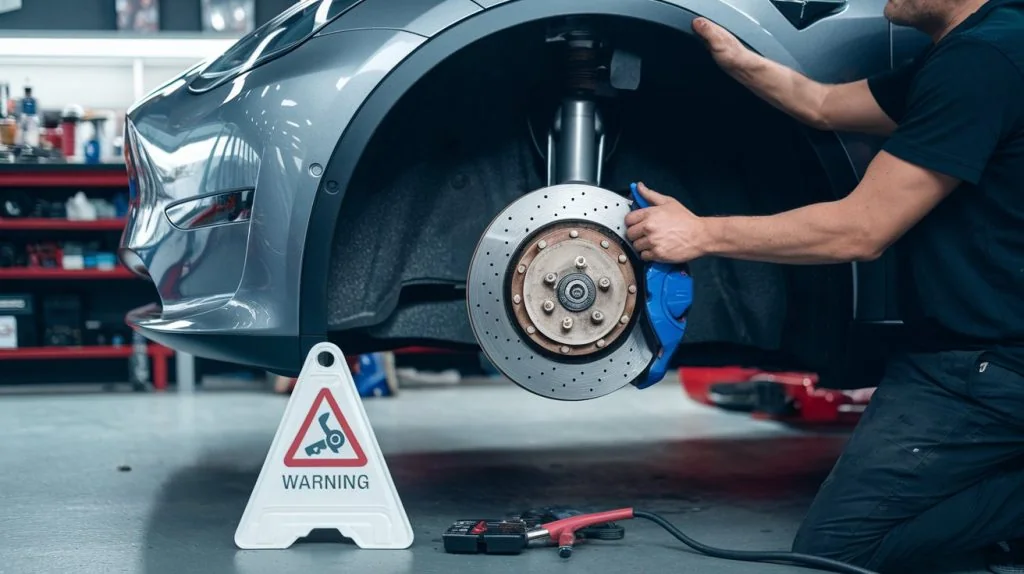
A squeal from your Tesla’s brakes can make you wonder whether an expensive replacement is due. Tesla brake pads should be replaced when their measured condition or damage requires it, not simply because the car reaches a universal mileage. Regenerative braking can reduce pad use, but the friction brakes still need inspection. Persistent grinding, reduced braking or an abnormal pedal needs prompt attention rather than another week of monitoring the noise.
How long should your Tesla brake pads last?
There is no fixed replacement mileage for every Tesla. Regeneration reduces friction-brake use, but an odometer cannot tell you how much material remains or whether a pad is damaged. An inspection, matched to the actual brake system, provides the useful answer.
Your daily use helps explain the findings. Tell the technician about regular towing, long descents, performance use or a car that has stood unused. Also mention previous pad changes and any brake modifications. These details are more useful than copying another owner’s replacement mileage.
Ask for the measured friction-material thickness on the inner and outer pads at each wheel, compared with the applicable limits. The backing plate is not usable friction material. Tesla’s Model 3 brake specifications give different limits for front and rear pads and Performance and non-Performance applications. One generic millimetre threshold cannot be applied to every Tesla.
If the pads remain serviceable, ask when another inspection makes sense for your use and the measured condition. That is an inspection plan, not a guarantee of a remaining distance. Missing maintenance records on a used car make a baseline check especially useful.
Separate pad-wear noise from an urgent brake fault
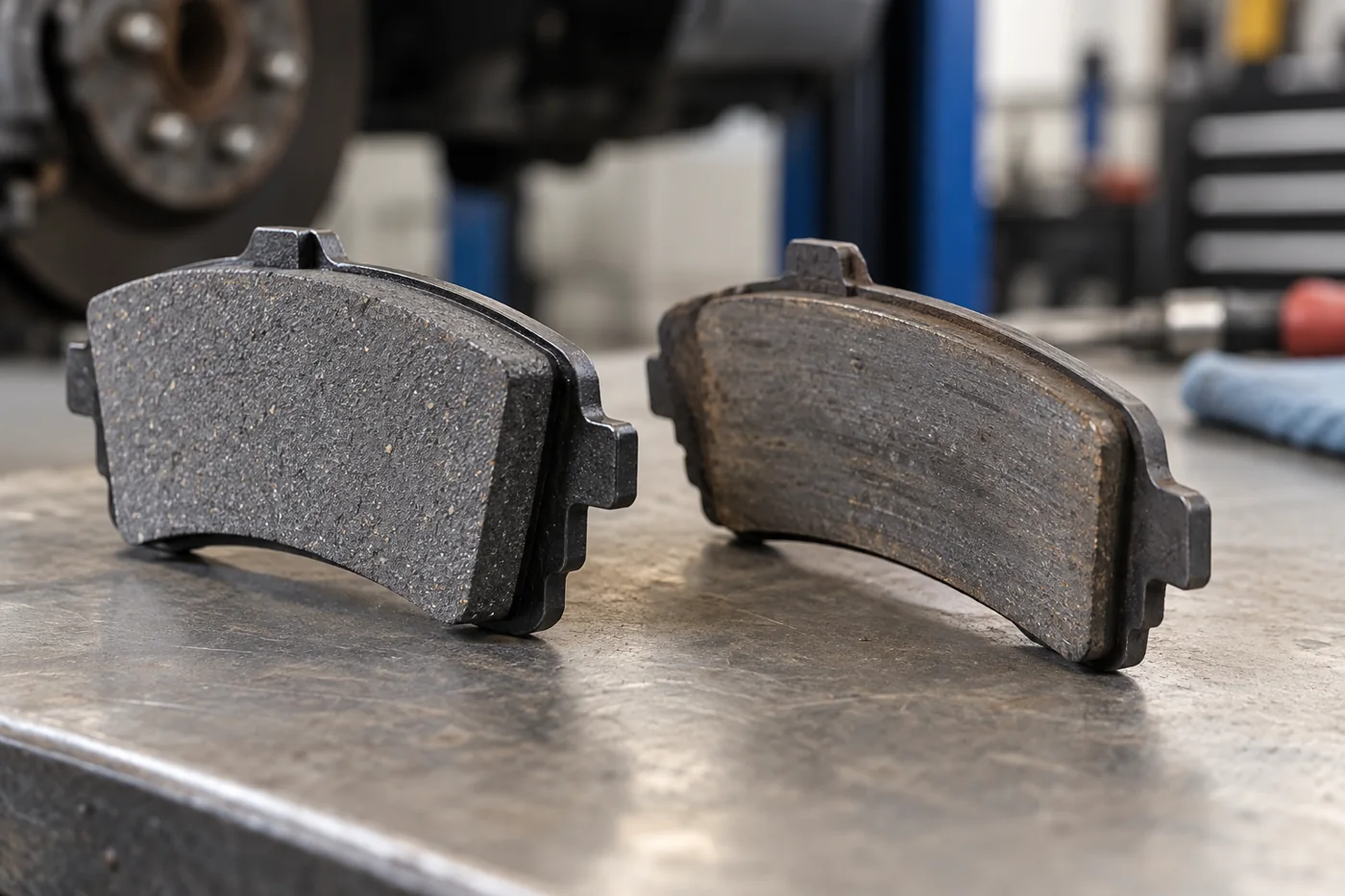
Tesla’s Model 3 braking guidance describes a metal wear indicator that squeals as a worn pad reaches its replacement point. Other brake noises still need inspection; the sound alone does not identify the component.
Describe when the noise occurs: after standing, with light braking, at the end of a stop or throughout every application. Record whether it persists and whether braking feel has changed. Do not reproduce it through repeated hard stops.
A brake warning needs its own response based on the exact symbol and message. It should not automatically be interpreted as a request for new pads. Read that warning alongside the actual braking behaviour before choosing any repair.
Check wear patterns as well as remaining thickness
A proper inspection looks beyond the pad visible through the wheel. The inner and outer pads can tell different parts of the story. The technician should inspect the relevant components closely and compare their condition across the axle, following the procedure for the actual braking system.
Inner and outer pads can wear differently
Ask whether the remaining friction material was measured and whether the wear is even. If one pad is substantially different from its partner, ask what has caused that difference. This is a useful way to separate ordinary wear from a problem with how the pad or caliper is operating.
Disc condition affects the pad replacement decision
Disc thickness needs to be compared with the specification for the fitted component. The surface also matters. Deep scoring, cracks, overheating damage or other unsuitable condition can change the repair even when there appears to be material left. A casual glance at the outer edge is not a complete disc assessment.
Uneven wear needs a cause established first
The caliper holds and operates the pads. Its condition, the pad movement and the relevant fitting hardware should be checked when uneven wear or persistent noise is present. Any leak or damaged component requires its own explanation and repair decision. New pads should not be used to disguise an unresolved fault.
Thick pads can still need professional attention
Remaining thickness is one finding. Damaged friction material, contamination or poor contact can require attention even when the pad appears thick. If replacement is recommended, ask to see the finding and whether a related component needs repair. An unevenly worn set should not be replaced without addressing its cause.
Ask for a short written result with the measurements and recommendations that affect the quotation. You do not need a folder of diagnostic printouts for a straightforward wear inspection. You do need enough detail to understand why work is due now, what can remain in service and when a future check is sensible.
Understand whether discs also need replacing now
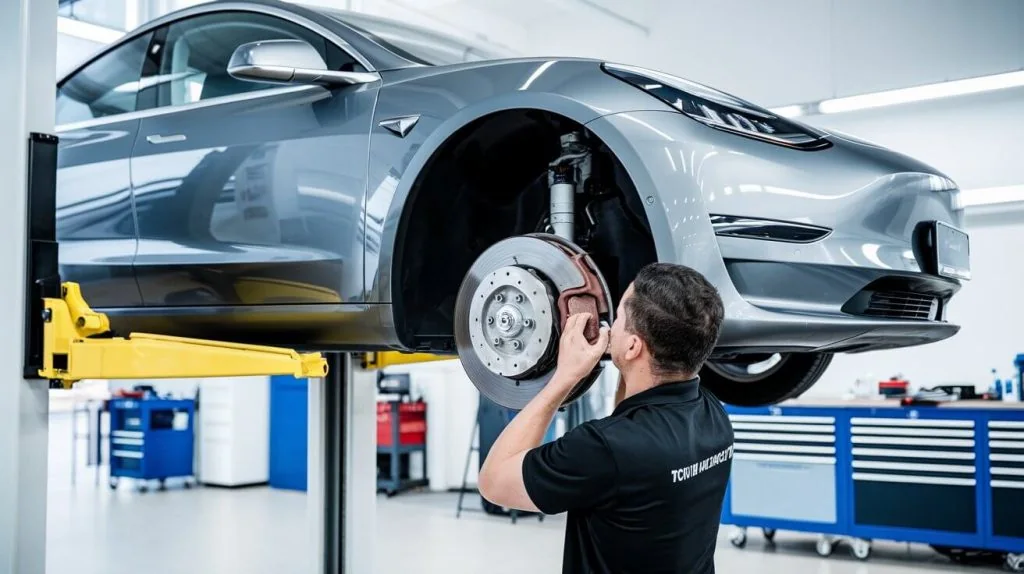
New pads do not automatically require every disc on the car to be replaced. The relevant discs need a measurement and surface assessment. Ask which finding makes the suggested work necessary.
Brembo’s fitting instructions call for pad replacement in axle sets. Disc replacement also needs the associated pads considered under the applicable instructions. Front-axle wear does not establish that the rear axle is due.
If resurfacing is proposed, ask whether it is permitted for the actual disc and whether its finished condition will satisfy the component limits. Keeping a damaged disc to reduce the bill can leave an unsuitable surface for the new pads. Repair choices must follow the fitted brake system.
Choose pad materials for the actual brake system
Start with the VIN, production period, variant and fitted hardware. Mention known modifications and ask for the manufacturer and part number. A material label such as “ceramic” or “sport” does not establish fitment or a guaranteed lifespan.
Brembo’s pad-selection guide distinguishes low-metallic road compounds, ceramic ranges designed around comfort and dust reduction, and EV products supplied as a matched pad-and-disc system. These are product-specific descriptions. They do not prove that any ceramic pad outlasts any metallic pad on your Tesla.
| Option being offered | What to establish before choosing it |
|---|---|
| Ceramic or lower-dust road pad | Exact Tesla and axle fitment, suitable road use and the manufacturer’s claims for this particular product. |
| Metallic or low-metallic road pad | The specified compound and operating characteristics, rather than assuming a broad material category predicts noise or wear. |
| EV kit or performance product | Whether matching discs are required and whether the application suits ordinary road use or a different intended use. |
Swipe to read the full table.
Explain the problem you want to solve. Less wheel dust, a persistent noise and track use are different questions. If the existing noise comes from a brake fault, choosing another compound without addressing the fault can leave the complaint unresolved.
Keep upgrade proposals separate from replacing worn pads. Ask what changes, why the change suits your use and whether the existing disc or caliper arrangement remains appropriate. Retain the part numbers and actual warranty terms with the invoice.
Compare replacement estimates using the same axle coverage
A wear finding should translate into a clearly described estimate. Compare a front set with a front set, using named parts and the same required work. A parts-only listing and a supplied-and-fitted quotation answer different questions.
- Identify the front axle, rear axle or both.
- Name the pad manufacturer, part number and fitting labour.
- Separate necessary discs or hardware from optional upgrades.
- Confirm whether caliper repairs or fluid work are additional.
- Ask for the VAT basis and complete payable total.
- Agree approval for any further work found during inspection.
Do not use a general replacement estimate as proof that pads are worn. Establish their condition first. The fitted-price and booking details belong with the pad-replacement service.
Follow the fitted parts’ instructions after pad replacement
The workshop should complete the required installation checks and verify braking operation before handing the vehicle back. Ask what was found, what was replaced and whether anything else needs attention. If the original complaint was a noise or vibration, ask whether that complaint was addressed as part of the final check.
Follow the bedding guidance for the actual pads and discs supplied. Bedding is the initial period in which the friction surfaces establish their working contact. Different products can have different instructions, so a universal internet routine of repeated hard stops is not suitable advice for every installation.
Have the workshop explain any temporary change in feel that is expected and what should prompt a return. Persistent grinding, a new warning, reduced braking or an abnormal pedal should not be dismissed as normal bedding. Contact the provider promptly and use assistance if the car is unsafe to drive.
Keep the replacement date, odometer reading, axle and part numbers together. If the vehicle provides a maintenance record, update it appropriately or ask the provider to explain the entry. Do not record a brake-fluid replacement simply because pads were changed. They are separate maintenance actions.
At collection, read the invoice while the technician’s explanation is fresh. If the rear pads remain serviceable, ask whether a future inspection is recommended and why. A specific follow-up based on condition is more useful than a vague instruction to replace the rest soon.
Keep brake care separate from pad replacement intervals
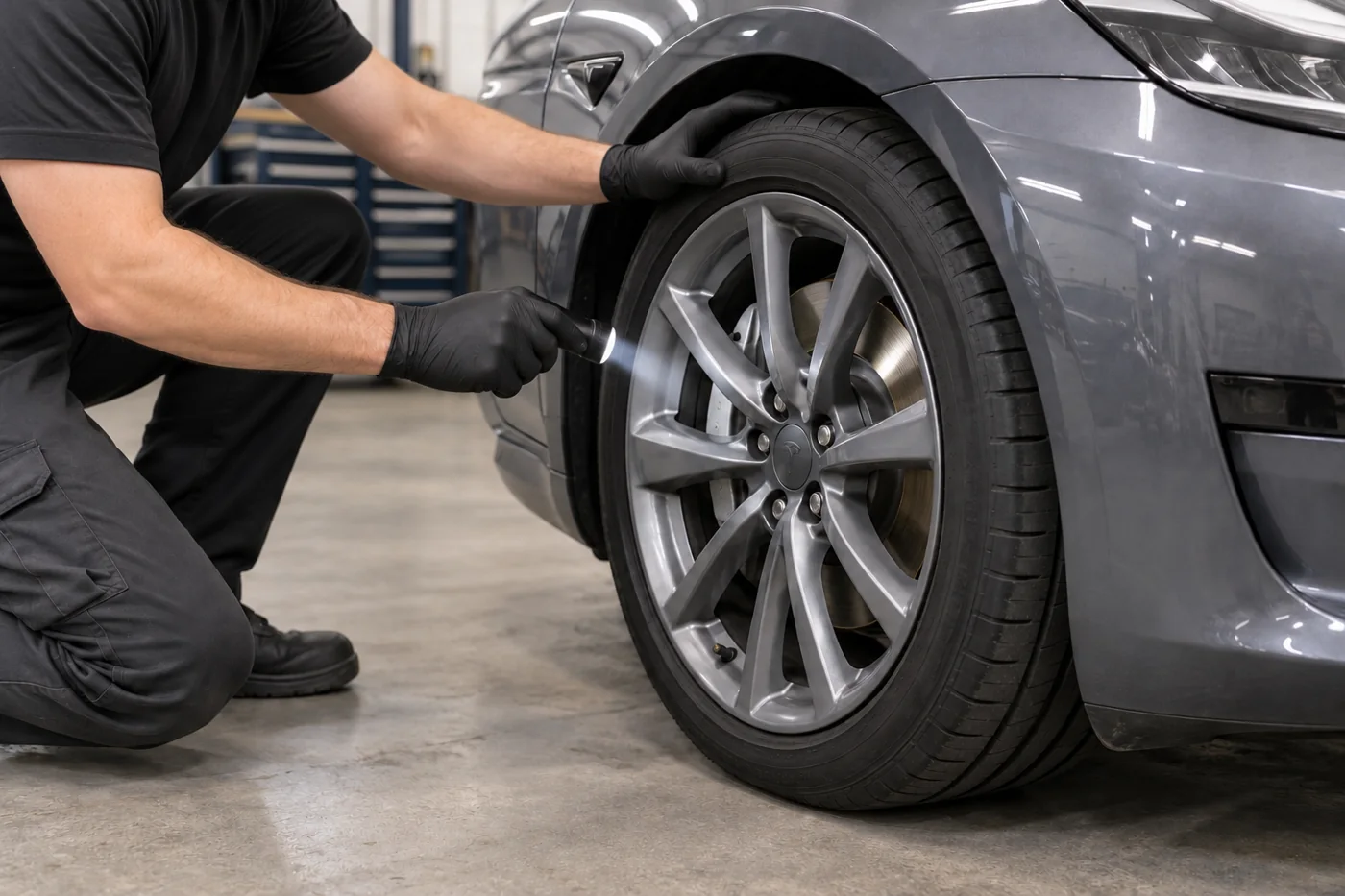
Low friction-brake use does not eliminate the need to inspect the system. Tesla’s maintenance guidance calls for a brake-fluid contamination check every four years, with replacement as needed, while heavier use can justify earlier checks. Check the current recommendations for your own vehicle. This interval is not a four-year pad replacement schedule.
Likewise, Tesla’s annual or 20,000 km brake-cleaning recommendation applies to vehicles and conditions involving winter road salt, with model-specific exceptions. Tesla says brake lubrication is not required for Model Y vehicles produced after February 2025. The salt-related interval should not be copied into a blanket Dubai service schedule. Discuss actual condition and the applicable manual instead of assuming every maintenance line applies everywhere.
Tell the provider about towing, repeated mountain descents or performance use when discussing brake care. Give the real pattern of use rather than simply describing the car as driven in hot weather. That information helps the technician decide which observations deserve closer attention.
Tesla’s Model 3 manual notes that corrosion can occur despite reduced pad use. Use the brake pedal as required during ordinary safe driving and have persistent noise assessed. Do not create a hard-braking routine or treat visible rust as proof that either all parts need replacement or everything is harmless.
Before a long journey, address an existing braking concern early enough to allow inspection, parts supply and any required follow-up. Avoid leaving a persistent noise until the evening before departure. Planning the check in advance gives you room to make a considered decision about the repair.
Discuss measured wear before arranging pad replacement
If an inspection confirms worn pads, replacement of the affected axle set can be quoted for your Tesla’s brake specification. If you have only noticed a noise, request a condition check first. Share the model, year, symptom and any available measurements.
Other questions about pad wear and aftercare
Can brake pads need attention on a low-mileage Tesla?
Yes. Mileage alone does not describe damage, contamination, corrosion or the operation of related components. Ask for an inspection when symptoms appear, even if the vehicle has covered relatively little distance.
Does one-pedal driving mean the pads never wear?
No. The friction brakes remain part of the vehicle’s braking system. Judge their serviceability by inspection and the applicable limits, and remain ready to use the brake pedal whenever the driving situation requires it.
Should a warning be reset after changing pads?
The workshop should resolve the cause of any warning and follow the correct vehicle procedure. Clearing a message does not confirm that a fault has been repaired. Ask what the warning meant and how the completed work addressed it.