Fault records and informed repair decisions
Intermittent Tesla Faults and What to Record
Build a useful event record when a problem comes and goes without a clear warning.

An intermittent Tesla fault can deserve assessment even when there is no warning on the screen. Record what happened, the exact time and conditions, and any message that appeared. A scan result is one piece of evidence. It does not replace checking the symptom or establish which part needs repair.
If braking, steering or safe control has changed, stop safely and seek assistance rather than driving to reproduce the problem. Follow any instruction displayed by the vehicle. A disappearing message does not cancel an instruction to stop.
Record the event while details are fresh
Write down what you noticed in ordinary language. “A clicking sound came from the front passenger area while parked” describes an observation. “The compressor is failing” is a conclusion that still needs evidence. Keep those separate when speaking to a repairer.
Tesla’s service guidance asks for dates, times and the time zone, identifiable symptoms, environmental conditions and relevant vehicle settings. These details help a technician relate your account to the vehicle information available for that event.
- Time: Note the date, approximate start and finish, and local time zone. If you are unsure, say approximately rather than inventing a precise time.
- Vehicle state: Record whether the car was parked, charging or moving, and what you were doing just before the change.
- Conditions: Note rain, glare, road surface, ambient conditions or a long parked period when relevant. Describe conditions without treating them as the cause.
- Behaviour: State what stopped working, what still worked and whether normal operation returned.
- Vehicle details: Provide the model, production year if known and software version available through the normal vehicle interface.
Keep related events in the same log, including occasions when the same activity worked normally. A pattern may be more useful than a long list of guesses. A recent update or repair is relevant history, but the timing alone does not prove it caused the fault.
Capture messages and sound only when safe
Photograph the complete warning, including its wording and any identifier, once safely parked. If it disappeared before you could capture it, record the words you remember and identify them as a recollection. Do not substitute an alert found online for the one your car displayed.

A short sound recording can help describe a click, rattle or intermittent whine. Include where you heard it and what was happening at the time. A recording cannot, by itself, identify the failed component. Avoid handling a phone while driving or repeatedly operating a suspect component to obtain a better clip.
Photographs should include useful context as well as detail. For a charging concern, note the charger and the session time. For a cabin sound, identify the side and whether the climate system was running. Do not remove covers, touch damaged cables or approach a smoking or unusually hot vehicle to collect evidence.
Use a simple intermittent fault event log
You can keep this in a notebook or a phone note. One clear entry per event makes the sequence easier to review.
| Record | Useful detail |
|---|---|
| Date, time and time zone | When it started, how long it lasted and whether the timing is exact or approximate. |
| Activity and settings | Parked, charging or driving, with relevant settings and what happened immediately beforehand. |
| Symptom and message | What you observed, the complete displayed instruction and any available alert identifier. |
| Conditions and location | Relevant weather, road surface, charger or parking conditions. |
| Recovery and evidence | How normal operation returned, what you changed and the associated photo or recording. |
Describe repetition honestly. “It happened on two occasions after overnight parking” is more useful than “it always happens” when you have only seen it twice. If the fault does not return, keep the original record instead of repeatedly testing a safety-related function.
Separate symptoms stored alerts and confirmed causes
A symptom is what you observe. An alert is a message or recorded vehicle event. A diagnostic trouble code, often shortened to DTC, is another form of service evidence. A confirmed cause is the explanation supported by the relevant checks. Those are different stages of diagnosis.
Tesla’s current service documentation distinguishes alerts, which may include external charging or connectivity events, from DTCs representing confirmed service-related faults. The information available depends on the vehicle and software. A confirmed fault record still needs to be interpreted in the context of its description and repair requirements. It is not a licence to replace any component mentioned nearby.
A “no faults found” report needs context too. Ask which systems were checked, whether the concern occurred during assessment and what information was available. It may mean no relevant fault was identified during that visit. It does not establish that your observation was imaginary, or that every part of the car was tested.
Understand why diagnosis may need physical checks
A scan can supply information, but the car may also need an inspection or a test related to the complaint. A trim rattle, a rubbing panel or an intermittent connection cannot be settled simply by listing codes. The technician should explain what the proposed check is intended to establish.
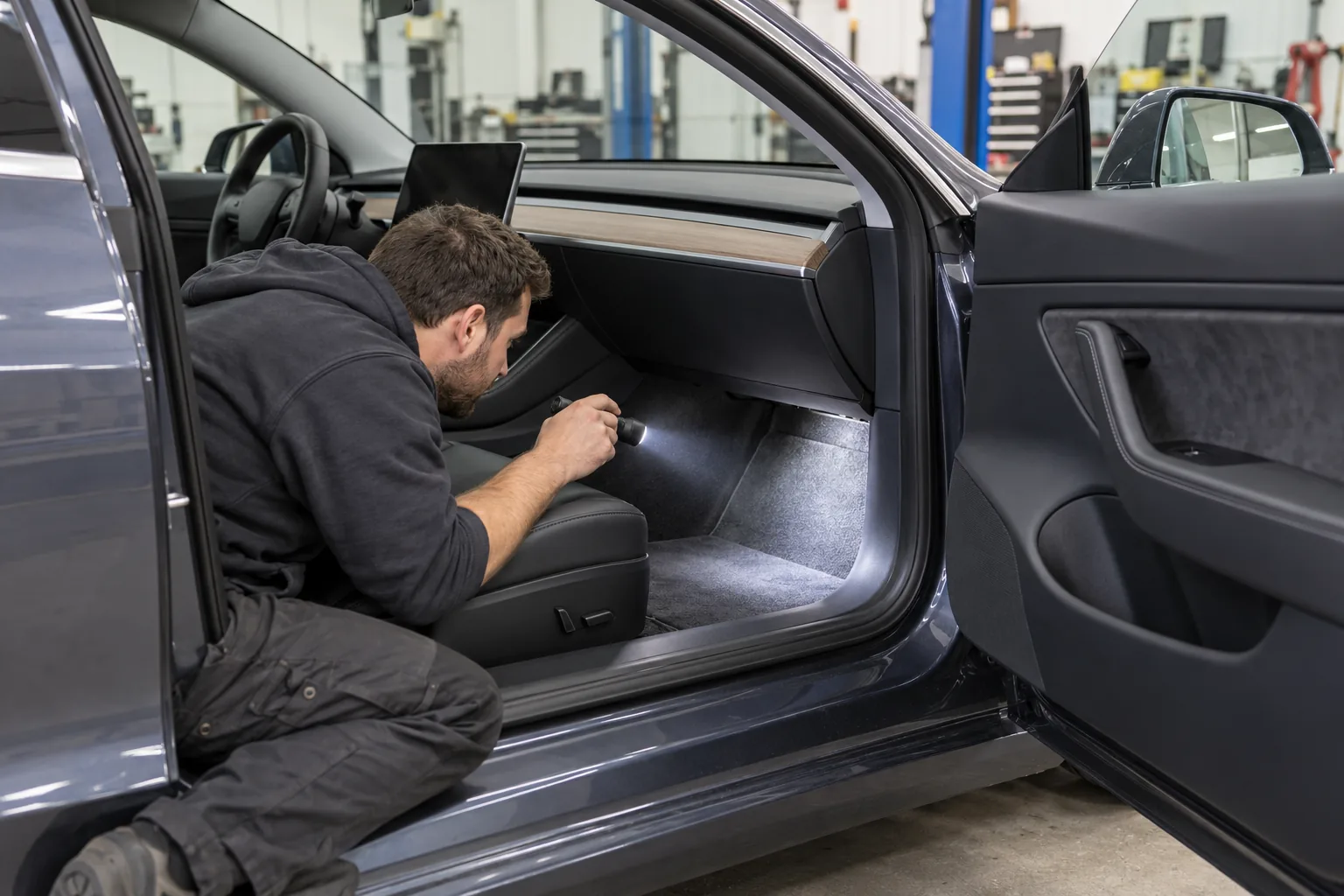
Ask whether the symptom was reproduced, whether recorded information matches the event time and what remains uncertain. Where a controlled test is needed, the repairer should decide whether it can be performed safely. Do not drive faster, provoke emergency steering intervention or continue cycling a failing mechanism to make the fault appear.
Tool coverage varies with the product, connection, vehicle hardware and software. A generic reader is not automatically useless, and a named Tesla-compatible tool does not guarantee a diagnosis. Ask what the workshop can actually read and test on your vehicle. Tesla documents its own service and diagnostic processes, but that does not establish an independent workshop’s access to them.
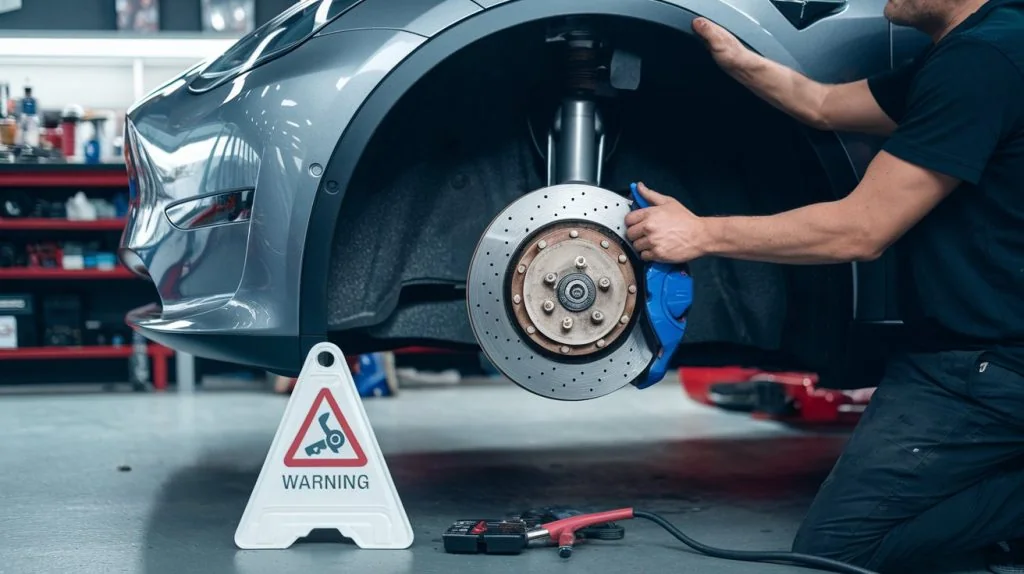
Follow the instructions for a Tesla brake warning before collecting diagnostic notes. If braking has changed, deal with that immediate safety concern first. Use the event log to support the later assessment.
Ask for findings before authorising repair work
Diagnosis and repair are separate decisions. Before an assessment, ask what is included, whether there is a diagnostic charge and when further tests would need your approval. There is no useful universal price for every intermittent fault because the work can range from reviewing a record to investigating a concern that does not occur during the visit.

- Findings: Ask what was observed, reproduced or measured, and how it relates to your complaint.
- Next test: Ask which question it should answer and what happens if the result is inconclusive.
- Repair recommendation: Ask why adjustment, repair or replacement is appropriate, and what alternatives remain.
- Estimate: Confirm the included labour, parts, any programming or calibration actually required, VAT treatment and the approval limit.
- Confirmation: Agree how the original symptom will be checked after the work and what to record if it returns.
If the fault remains unconfirmed, the report should say so. Monitoring with a clear record and an agreed follow-up can be a sensible outcome for a non-safety concern. Safety-related symptoms need advice based on their actual risk, even if a scan did not identify the cause.
Common questions about intermittent Tesla fault diagnosis
Should I restart the car before recording the fault?
Record the message and conditions first when it is safe. Follow the vehicle’s instructions. A restart that restores operation does not identify the cause or prove a repair. Do not clear diagnostic records or run Service Mode actions to experiment.
Can I request Tesla service without a warning?
Yes. Describe the observed concern in the service request. Tesla’s UAE service guidance allows you to select a support topic, describe the concern and provide supporting information. Follow the app’s current instructions for your vehicle.
What if the workshop cannot reproduce the problem?
Ask which checks were completed, what evidence was retained and what remains unconfirmed. Agree what to record next and when to return. Do not accept a guaranteed cause without supporting findings.
Does a diagnostic code mean a part needs replacing?
It can identify a service-related fault, but the applicable description and tests determine the repair. Ask how the proposed replacement addresses the original symptom and what evidence supports it.
Official references for recording and service evidence
- Tesla guidance on details to provide when scheduling service
- Tesla UAE service requests and estimates
- Tesla 2021+ Model S explanation of alerts and diagnostic trouble codes
Checked on 30 September 2026. Diagnostic interfaces and available information vary by vehicle and software. Use the current instructions for your Tesla.