Tesla ownership · Summer and trip preparation
Tesla Summer and Road Trip Checklist
Prepare for a longer UAE drive with safe owner checks, a workable charging plan and a clear line between routine preparation and workshop testing.

Before a summer drive or a longer UAE trip, check the tyres, charging plan, cabin cooling, current alerts and access to the car. You can do these checks while safely parked. Coolant checks, brake inspections and electrical fault diagnosis belong with a technician.
A healthy Tesla does not need a workshop visit before every journey. This checklist helps you spot an unresolved concern before leaving and prepare for the distance you actually intend to cover. Use the owner’s manual on your touchscreen for instructions matched to your model, equipment, market and software.
Start with these checks before your departure
Allow time to deal with a problem rather than making the checklist the last thing you do as passengers get in. Tick off the items that apply to your car and journey.
Check tyres before they warm up
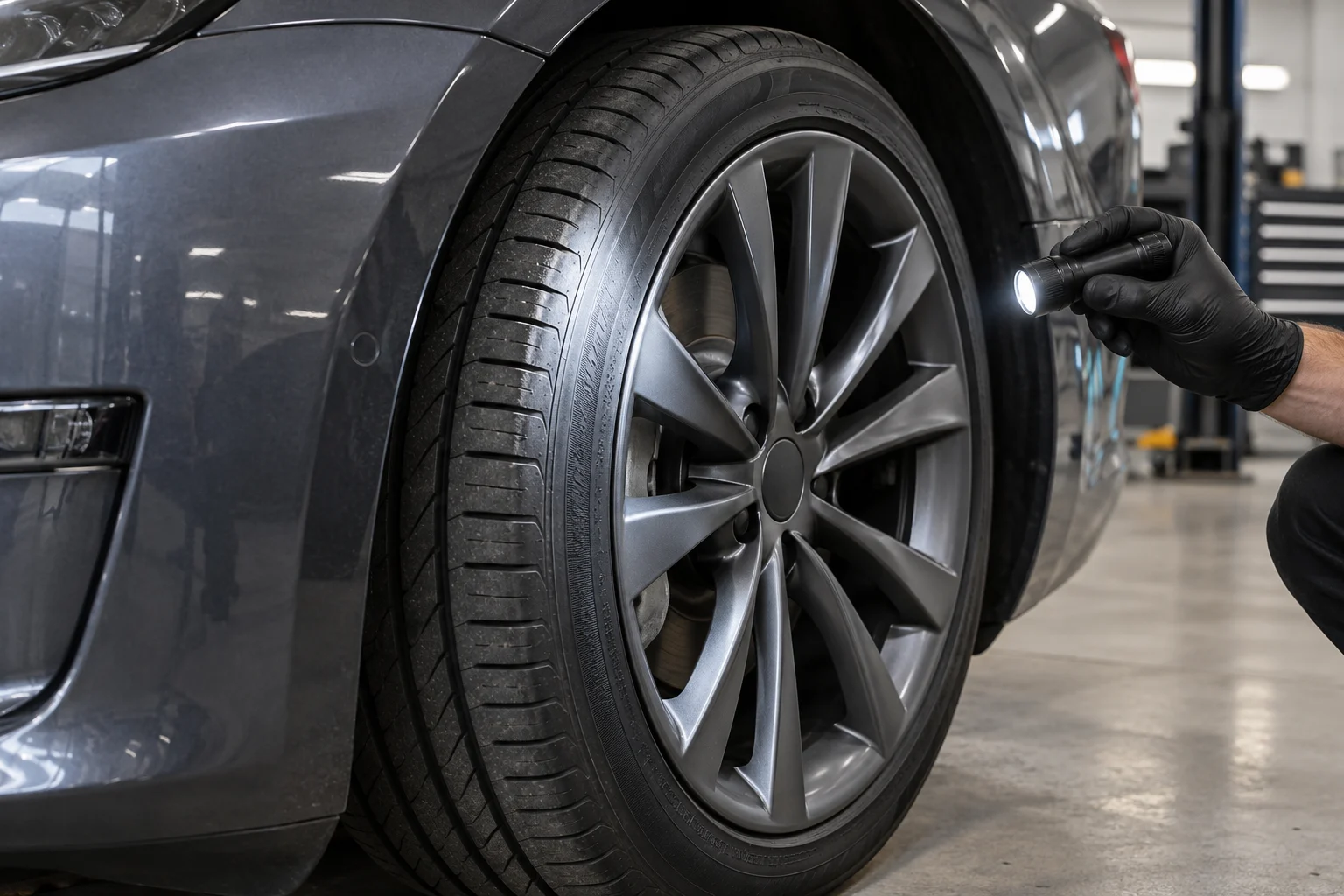
Measure pressure with an accurate gauge when the tyres are cold. Use the vehicle’s tyre information label and applicable manual, including any different instructions for accessory wheels or towing. Do not use the maximum pressure moulded into a tyre’s sidewall as the car’s target.
Driving and direct sun can raise the reading. Do not let air out of warm tyres to make them match a cold-pressure figure. Check again under the correct conditions instead of improvising a summer pressure adjustment. The monitoring system is useful, but its readings and functions vary by vehicle and do not replace a condition check.
Look at the visible tread, shoulders and sidewalls for a bulge, cut, cracking, embedded object or uneven wear. A tyre that keeps losing pressure needs assessment. Do not remove an embedded object simply to see whether it leaks. If an inner edge is hard to see, ask a tyre professional to inspect it rather than reaching underneath or jacking up the car for this checklist.
Plan charging around your actual driving journey
Enter the destination in the vehicle’s navigation before leaving and review the proposed charging stops. Check connector compatibility, access hours and any account or payment setup the charging operator requires. An alternative stop is useful when a charger is occupied or unavailable. Recheck live information close to departure rather than relying on an old screenshot.
Follow the daily and trip charging recommendations shown by your car or app. There is no single charge limit for every Tesla battery and journey. Leave enough flexibility for traffic, detours and cabin cooling, and reassess the plan if the car predicts less remaining energy than expected.
For fast charging, use the vehicle’s navigation to the charging location so it can prepare the battery where supported. Cabin preconditioning and preparation for fast charging are different functions. You do not need a universal cooling wait after every drive or charging session. Follow any temperature or charging instruction the vehicle actually displays.
If remaining energy is insufficient for the journey, follow the vehicle’s instructions and seek assistance rather than relying on an uncertain reserve. This checklist addresses preparation before departure.
Check charging equipment safely before connecting it
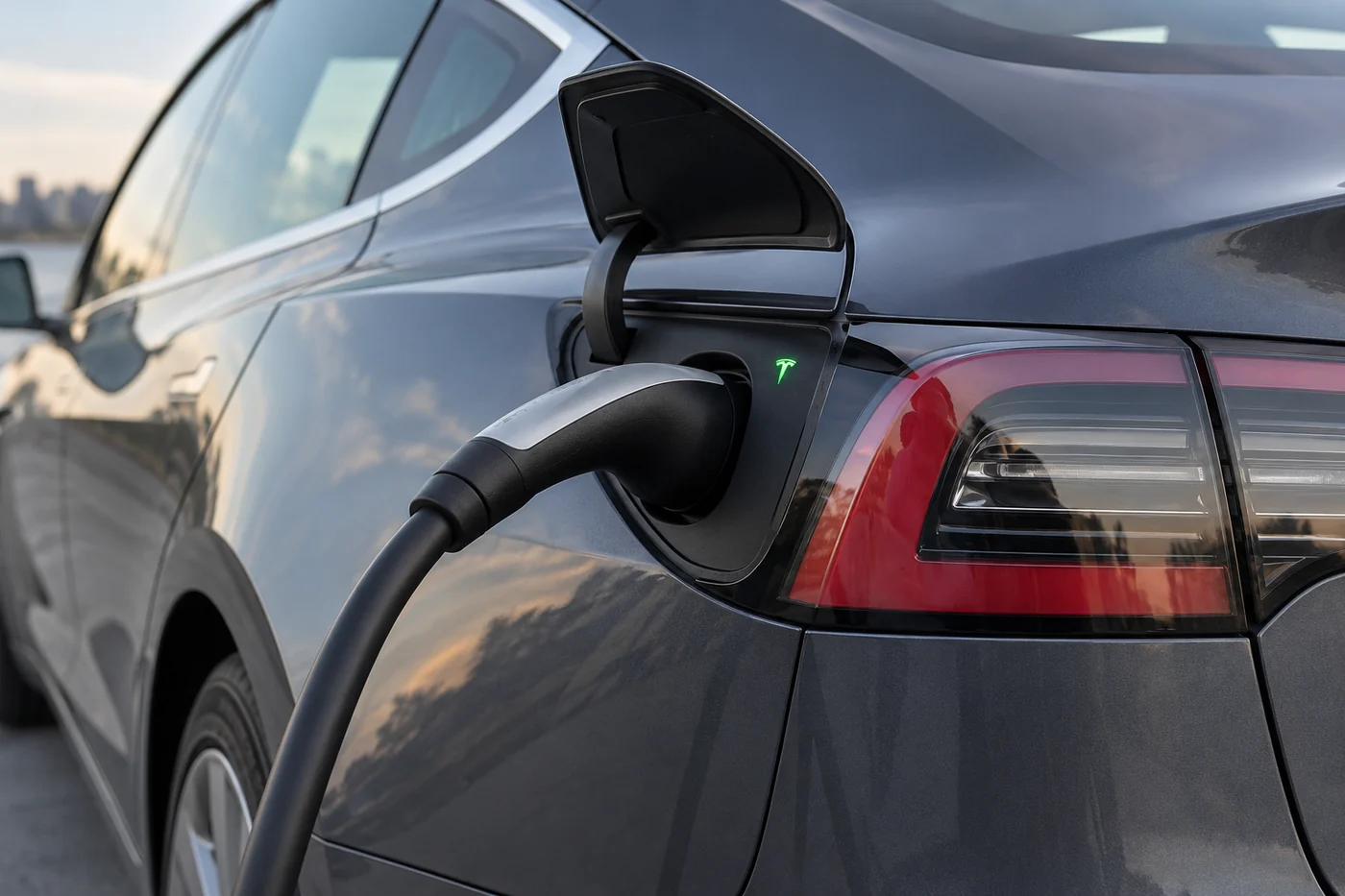
Before connecting, visually check the cable, handle and accessible inlet for damage or an obvious obstruction. Use compatible equipment approved for your vehicle and the charging installation. Carry only adapters you know are suitable for the chargers you plan to use.
Do not put tools, cloths, cleaning fluid or contact cleaner into the electrical contacts. Do not force a connector or keep using equipment with exposed wiring, damaged pins or signs of burning. Stop using affected equipment and ask the charging operator or a qualified service provider for help.
Confirm charging on the screen or app rather than assuming that inserting the cable started the session. A scheduled session can be connected without charging immediately. If charging fails, retain the exact alert and follow the matching instructions. A connector that will not release needs the procedure for your vehicle and equipment, not a general instruction to pull harder.
Prepare the cabin for the heat
Start climate control while parked and check whether airflow and temperature are suitable for the passengers. Cooling the cabin through the app before departure can make entry more comfortable. Where practical, prepare it while connected to suitable charging equipment. Use the climate or schedule features available on your own vehicle.
Weak airflow and air that is not cold enough are different symptoms. Note which one you have, whether it happens during charging or ordinary driving, and any message shown. A dusty filter is one possible airflow issue, but it does not prove the cause. Refrigerant and cooling-system tests are workshop work.
Cabin Overheat Protection is a comfort feature, not a guarantee that the car will remain safe for occupants. It can stop operating and uses battery energy. Never leave children or pets unattended relying on it. If the cabin will not stay comfortably cool, resolve that concern before a long hot-weather journey.
Also check that the windscreen is clear, the washers and wipers work and you can demist the glass. Use the owner instructions for topping up washer fluid if needed. Clear visibility matters during dust, rain and changes in humidity, as well as on bright days.
Keep workshop tests separate from owner checks
Make a note of a new noise, vibration, warning or operating change. You do not need to reproduce it with a demanding road test. Normal fan or compressor activity can change in hot weather, so noise alone is not a diagnosis.
Swipe across the table on a small screen.
| Area | Safe owner check | Workshop work when needed |
|---|---|---|
| Battery and cooling | Read alerts and note when a concern occurs. | Diagnose temperature faults, leaks or battery concerns. Tesla says coolant levels should be checked professionally. |
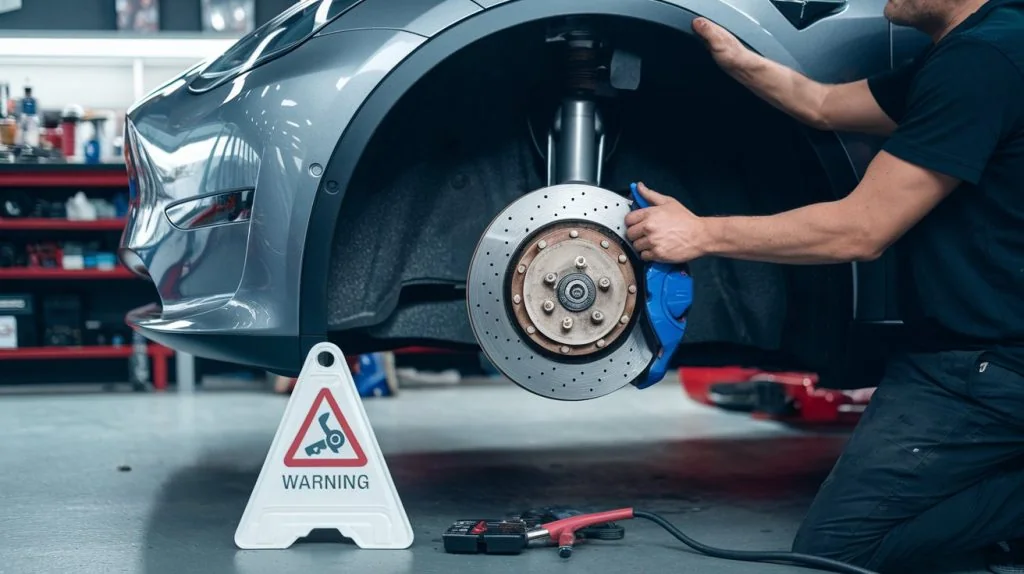
| Brakes | Report changed pedal response, warnings or uncertain stopping. | Inspect pads, discs and fluid as appropriate. Do not top up brake fluid or test regen down a hill. |
| Tyres and suspension | Check accessible tyre surfaces, pressure and new symptoms. | Inspect less visible wear, leaks, suspension play or alignment concerns using suitable equipment. |
| Charging | Check visible equipment condition and session status. | Assess damaged contacts, wiring or persistent charging faults. |
| Air conditioning | Check airflow, cooling and displayed messages. | Test cooling performance and diagnose persistent faults. |
Do not open battery-coolant reservoirs, remove underbody panels or handle orange high-voltage wiring as trip preparation. Keep clear of cooling fans, which can operate even when the vehicle appears switched off. A scan-tool reading is not a substitute for an appropriate physical test or a confirmed diagnosis.
Check access, luggage and essential supplies
Make sure the key you normally use unlocks the car, and check your phone’s charge if you use a phone key. Carry a paired key card, fob or other supported backup where appropriate. Keep it accessible rather than leaving your only backup inside the locked vehicle.
Set navigation and familiarise yourself with needed controls while parked. If the screen repeatedly freezes or a key is unreliable, address that before travelling. Use only the restart or access instructions applicable to your car. Service Mode and third-party diagnostic adapters are not necessary owner departure checks.
Secure luggage so it cannot move towards passengers or interfere with the pedals. Check the vehicle’s load limits and any accessory instructions if carrying a roof load or towing. Bring water for passengers, a charged phone and its charging cable, and save useful assistance contacts. Any tyre inflator or repair kit should be compatible and used within its instructions. A sidewall cut or bulge is not a sealant-kit repair.

Review due maintenance before your planned trip
Review the service record before deciding whether any work is due. Note the date and mileage of the last relevant task, then compare them with the guidance for your own vehicle. A summer trip is a reason to review that information, not a reason to replace every consumable or shorten every interval automatically.
Separate a scheduled task from a new complaint. A cabin filter may be due for replacement, while a new cooling problem still needs its own assessment. Similarly, a recent visit does not explain a warning that appeared afterward. Tell the receiving workshop which tasks were completed and which symptoms remain rather than asking for an undefined summer package.
Keep a short list of unanswered questions. If a previous invoice says a part needs attention, ask whether the finding remains outstanding and whether it changes the trip decision. If you do not understand the recommendation, ask what was observed and what work it requires. A label such as “checked” does not tell you the result or establish that a later symptom is safe to ignore.
Ask for a written description of any inspection you arrange. Identify the concern you want assessed and agree which checks are included. If further testing is needed, understand what remains uncertain before authorizing more work. Trip preparation is most useful when it addresses the vehicle’s actual condition rather than creating a list of assumed heat-related failures.
Recheck the plan when your journey changes
A workable departure plan can become unsuitable if the destination changes or a charging stop cannot be used. Before setting off, identify where the next suitable alternative would be. Check that it has the right connector, can be accessed at the expected time and can be used with the payment method you have available.
Include the return journey in your preparation. Destination charging may be convenient, but access can depend on the location and your arrangements there. Confirm those arrangements instead of treating a charger shown on a map as a guaranteed overnight session. Leave yourself another practical option if that plan falls through.
If you add passengers, luggage or an extra stop, review the journey again while parked. Do not ask the driver to search charger apps or compare complicated alternatives in moving traffic. A passenger can help with information, but a change in the destination should still be entered safely and checked against the car’s updated estimate.
Plan ordinary comfort stops as well as charging. Think about drinking water, access to toilets and a suitable place for passengers to wait if a stop takes longer than expected. These are travel arrangements, not tests of battery condition. They help you adapt to a delay without turning every change in the itinerary into a mechanical concern.
Record changes that need attention before departure
If the checklist reveals a concern, write down what you observed rather than the component you suspect. Include when it began, whether it happens while parked or driving, and any message shown. A photograph taken safely while parked can preserve the wording. Do not recreate a problem with hard braking, repeated acceleration or a special listening drive.
Give the workshop your intended departure date, but ask what it can actually establish before then. An available appointment does not guarantee that a fault can be diagnosed and repaired in that time. Clarify whether the concern needs assessment before driving and whether the car should be brought in by appropriate transport.
After any agreed work, ask what was found, what was completed and whether anything remains unresolved. Keep the written findings with your service record. If the original complaint persists, describe that before departure rather than assuming a completed invoice means the trip checklist has passed.
You do not need to inspect the underside, measure electrical circuits or interpret hidden diagnostic menus to provide useful information. Clear observations and accurate records are enough for the owner part of this checklist. The technician decides which physical checks and tests are appropriate to investigate the concern.
Answer common questions about summer trip preparation
Does my Tesla need servicing before every long trip?
No. Review due maintenance, current condition and unresolved symptoms. A recent service does not cancel a new warning, while a healthy car does not automatically need another service solely because the journey is longer.
Should I wait before charging after driving?
Do not impose a blanket waiting period. Use suitable equipment and follow the vehicle’s charging and temperature instructions. The car manages battery conditions, and any persistent alert needs attention.
Do energy-use changes prove battery degradation?
No. Route, speed, weather, load and climate use can change consumption. Record the circumstances and any alerts if you are concerned. A journey estimate or a single energy graph does not establish battery health.
Official references for vehicle checks and preparation
Checked 30 September 2026. Model 3 instructions support the distinctions above, but controls, equipment and procedures vary. Use the manual associated with your own vehicle for the exact instructions.
- Tesla summer driving tips
- UAE Model 3 tyre care and pressures
- UAE Model 3 maintenance and high-voltage precautions
- UAE Model 3 charging instructions
- UAE Model 3 climate controls and limitations
Tesla Repair Dubai is an independent workshop operated by AMF Auto Services LLC in Al Quoz 4, Dubai.