Accident estimates
Tesla Accident Repair Cost in Dubai
See what goes into the repair bill, why an estimate can change and how insurance affects what you pay.
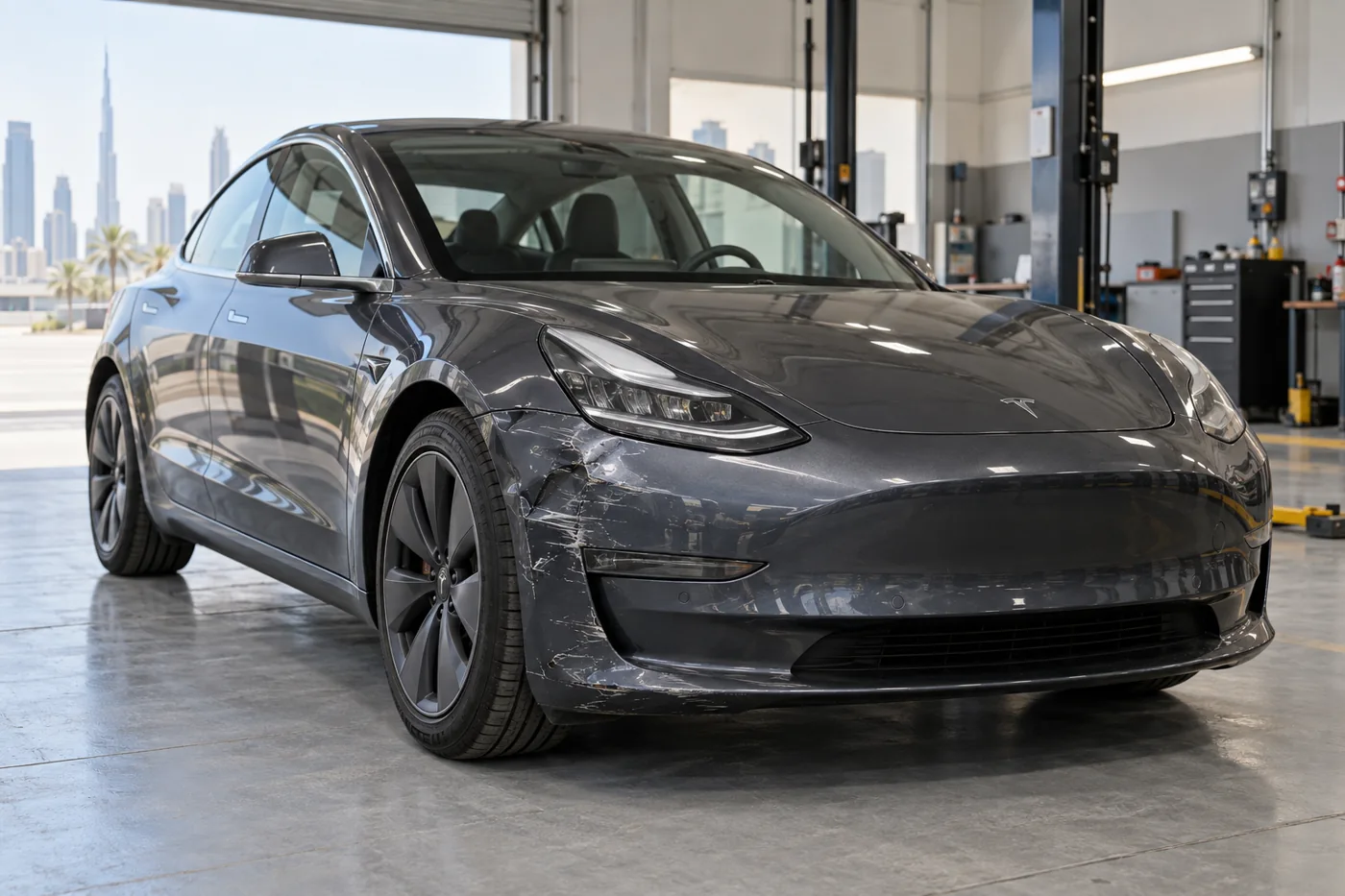
A small scrape can lead to a larger bill when the impact has also damaged fittings or parts behind the bodywork. Cosmetic repair planning amounts start at AED 600 for repair and repainting of a suitable bumper cover, and AED 2,500 for body and paint work across several damaged panels. A complete accident estimate adds the necessary parts, affected-system checks and other agreed charges. These starting figures are not complete collision quotations; confirm their current applicability and VAT treatment before relying on them.
What the cosmetic starting prices actually cover
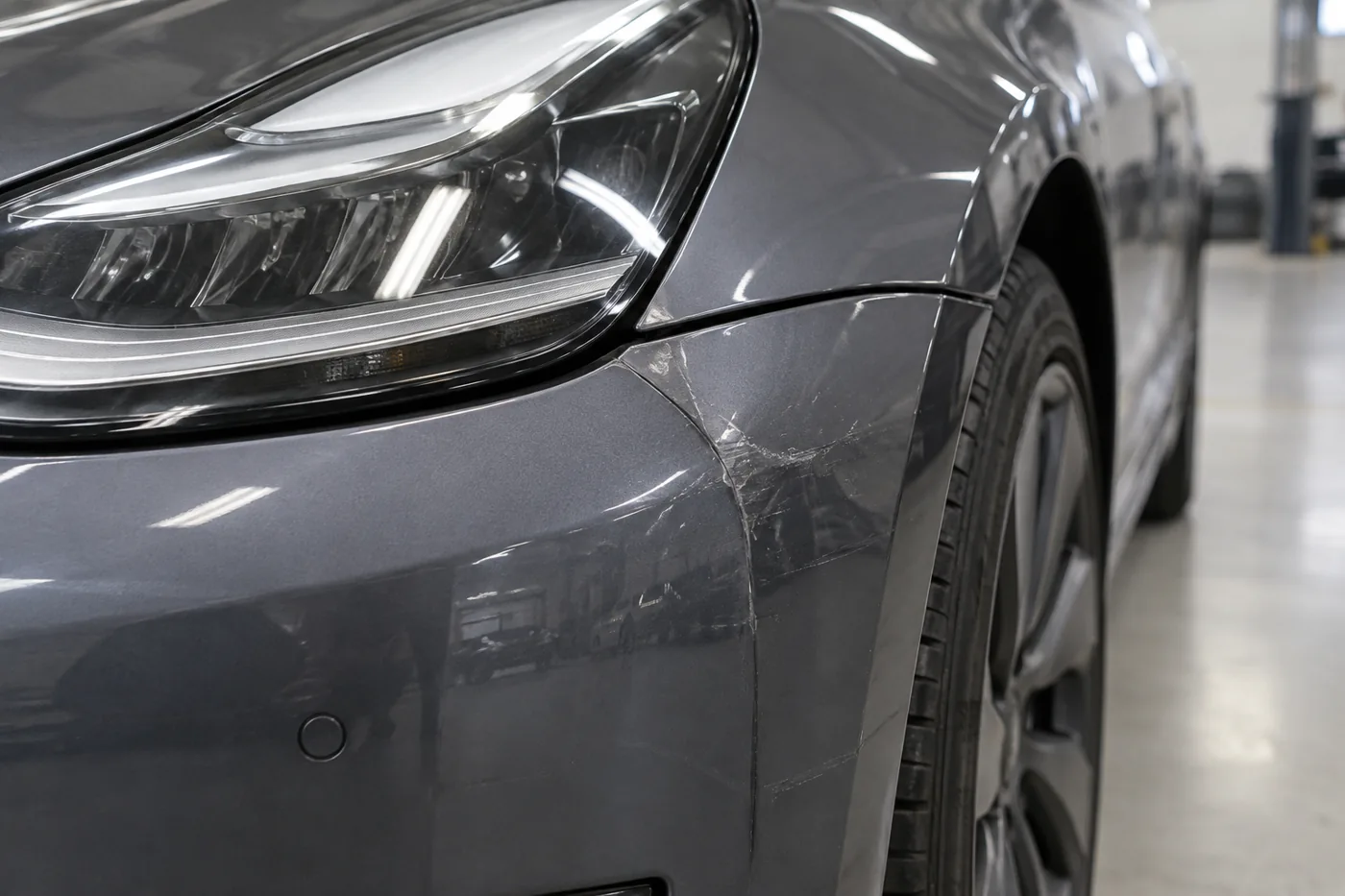
For a parking scrape, the work may stay within the paint and outer panel. A harder impact can involve the same visible area plus a lamp, support or wheel. That is why a price for cosmetic work is useful as a starting point but cannot describe every accident.
| Repair involved | Planning amount | Limits of the figure |
|---|---|---|
| Repair and repaint a suitable bumper cover | From AED 600 | Replacement covers, damaged mounts and parts behind the cover are separate. |
| Repaint one panel | AED 800 to AED 3,000 | Dent repair, replacement parts and blending into adjoining panels can add work. |
| Body and paint work across several panels | From AED 2,500 | The damaged areas and repair method must be defined. Glass, airbags, suspension and structural work are outside this starting amount. |
| Structural or mechanical damage | Priced after assessment | The affected components and permitted repair methods determine the estimate. |
Swipe to read the full table.
These amounts describe different jobs. They should not be added together as a standard accident package, because a combined bodywork price may already include preparation and paint. VAT treatment is not specified in these planning figures. The written quote needs to show whether VAT is included and the final payable amount.
Your accident estimate may include dent and panel repairs, replacement parts and checks for damage hidden behind the bumper. Each item should name the affected part and the work needed to put it right.
From photographs to an agreed repair
A photo estimate helps establish the likely size of the job before the car reaches a workshop. It can show a scraped panel, broken lamp or displaced bumper, but it cannot reveal the condition of everything underneath. A firm price needs enough access to identify the work being promised.
- The first assessment records visible damage. A wide photograph shows where the impact occurred. Close views reveal the finish and shape. Information about new warnings, a catching door or changed steering adds detail that a photograph cannot provide.
- An inspection checks the car itself. The estimator looks at the damaged area, adjoining components and reported symptoms. Where dismantling is needed, its extent and any charge payable if you decline the repair should be agreed first.
- Additional findings change the estimate when necessary. A broken support concealed by the cover may only become visible after removal. The revised estimate should name the part, explain the finding and show the change in price.
- The approved work becomes the repair plan. Owner approval and insurer approval may both be relevant. The workshop needs to know who can authorise extra work before it proceeds.
An addition after inspection is often called a supplement. Its purpose is to account for newly identified damage. It should be possible to follow the change from the first estimate to the revised amount without relying on a vague description such as additional accident work.
For example, an initial estimate may allow for refinishing a bumper and reusing its fittings. If removal reveals a broken guide, the revision should add that guide and the labour it requires. If a planned operation is no longer needed, the revised document should reflect that too. Keeping each version gives you a clear record of what changed.

Where each part of the repair bill goes
An accident bill combines several kinds of work. Understanding the categories helps explain why two cars with a similar scrape can have different totals.
Body labour, replacement parts and smaller fittings
Body labour includes gaining access, correcting damage where permitted and fitting components. Parts cover the items supplied for the repair. A cover, lamp or panel may be the obvious expense, but guides, clips, liners and seals also affect how the car fits together.
A small fitting can have a practical job. A broken guide may prevent a bumper corner from sitting correctly, even if the outer cover can be reused. Repainting that cover will improve its appearance without solving the poor fit. The estimate needs to account for both concerns when both are present.
Paint preparation, colour matching and final finishing
Paint work starts before colour is sprayed. The surface has to be suitable for the chosen paint system, and surrounding areas need protection or access. Colour matching and the final clear finish add work beyond the visible scratch.
A neighbouring panel may appear on the estimate because colour is being blended across it. That does not necessarily mean it was hit. The estimate should distinguish repairing damage from finishing an adjoining area so you can understand why each panel is included.
Checks needed after the affected repair work
Diagnostics, wheel alignment and camera calibration serve different purposes. Diagnostics investigates relevant faults. Alignment concerns wheel geometry. Camera calibration follows the requirements for the affected equipment and repair. One line labelled checks should not leave you guessing which of these was needed or completed.
Transport, storage and replacement transport may be separate expenses. Their relevance depends on your arrangements and the claim. Keeping them separate from repair labour makes the cost of the actual workshop job easier to compare.
What you pay when insurance is involved
Confirm which insurance claim applies to you
Third-party liability insurance covers liability for damage to others; it does not pay for your own car through that policy when you cause the accident. Comprehensive cover combines third-party and own-damage protection, subject to its terms. If another driver caused the damage, confirm the third-party claim route rather than assuming your own-policy deductible applies. The CBUAE’s motor insurance consumer guide explains these distinctions.
Check the costs you must pay yourself
The repair total and your personal contribution are separate figures. The first describes the approved work. The second depends on the claim and your policy. An excess, also called a deductible, is a policy contribution rather than another repair operation.
Before committing to paid work, establish the insurer’s repairer arrangements, required documents and approval process. Follow the relevant police reporting instructions for the incident. Keep the report reference, claim reference and approved estimate together so the workshop and insurer are working from the same information.
For a small cosmetic repair, the useful comparison is between the confirmed self-pay total and the terms of making a claim. Those terms can include your contribution and any effect on renewal benefits. They need to come from the insurer for your policy. A repair price alone cannot tell you which route will cost less overall. Ask the insurer to itemise any deductible, applicable contribution towards new replacement parts and costs it has declined. Approved repair charges, VAT and your own payment should reconcile without counting the same item twice.
Optional improvements should be easy to separate. You might choose to repair an older scratch while the car is already in the workshop, but that is a different decision from approving the accident work. Separate items make it clear what the insurer has accepted and what you are choosing to pay for yourself. Obtain confirmation of who pays for a supplement before the additional work begins. An insurer accepting a workshop for your claim is separate from Tesla recognising that business as a manufacturer-approved repairer.
When an estimate raises a total-loss question
Extensive damage can lead to a total-loss assessment rather than repair approval. Ask the insurer for its written decision, the applicable policy basis and the valuation used. Own-damage and third-party settlements can use different valuation rules. A large repair quote alone does not establish the settlement you will receive.
Compare the finished job behind each total
A lower total may include fewer operations. Before treating it as a saving, place the descriptions side by side.
| Difference between estimates | Why it matters |
|---|---|
| Repaired cover or replacement cover | The method, part cost and amount of preparation differ. Both options need to suit the damage. |
| Bare part or fitted and painted part | A part price leaves out the labour and finish needed to return the car to use. |
| Damaged panel only or additional blending | The finishing area can be larger than the impact area. |
| Named checks or an unexplained diagnostic fee | The work should relate to an affected system or required repair procedure. |
| Fixed inclusions or provisional items | An allowance awaiting inspection can change once the part is accessible. |
| Price before VAT or including VAT | Only the final payable amounts provide a fair comparison. |
Swipe to read the full table.
The UAE standard VAT rate is 5%, as stated by the Ministry of Finance. As a simple calculation, AED 2,000 before VAT becomes AED 2,100 after adding AED 100. This example shows the tax calculation only. A price already described as inclusive should not have VAT added again.
Separate necessary repairs from choices about the finish. Reusing a suitable part can be a valid option, while leaving an identified fault unresolved changes the completed job. If one quote costs less because it omits an operation, establish what the car would be like at handover under that option. This is particularly useful when a visible cosmetic repair and a reported operating problem came from the same incident.
Written workmanship terms also deserve a read. The useful details are what the terms cover, how a concern is reviewed and the remedy offered. A broad warranty phrase gives less practical information than those conditions.
Why similar scrapes produce different estimates
Consider two hypothetical parking incidents. Both leave a scrape across the same bumper corner, so the close photographs look similar.
The scraped cover and its fittings remain sound
In the first case, inspection finds a repairable cover with sound attachments and no related operating problem. The work can remain focused on preparation and refinishing. There is no reason to build a wider collision estimate around components that the assessment does not identify as affected.
The corner has moved away from the body
In the second case, access reveals a broken guide. The cover may still be suitable for repair, but the guide must be addressed to restore its fit. The total grows because there is an additional component and operation, even though the paint scrape looks much the same.
Now add a wheel strike and new pulling to either incident. That introduces a separate mechanical concern. The cosmetic estimate can still explain the paint repair, but it cannot settle the wheel and suspension assessment. Comparing only bumper prices would miss part of the owner’s problem.
Timing and collecting the repaired car
The time away from your Tesla includes assessment, approvals, parts, workshop work and completion checks. A car awaiting a compatible part is at a different stage from one already being refinished. A useful progress update identifies the current stage and the remaining dependency.
Parts identification can also affect timing. A similar-looking cover or lamp may belong to a different production version. Supplying the vehicle details through the workshop’s normal private process helps resolve compatibility before ordering. If an approval or part is delayed, the expected collection date and any storage arrangement need updating.
At collection, leave time for a short review.
- View the repaired area in suitable light from several angles.
- Check the gaps, closures and fittings involved in the work.
- Review the original operating complaints and the completion records relevant to them.
- Keep the final invoice, revised estimates and paint aftercare instructions together.
Raise any remaining concern while the agreed work is being reviewed. A catching closure, unresolved warning or loose trim needs a clear response. You should leave knowing what is complete and whether another visit is needed.
Common questions about your Tesla accident estimate
Can a workshop give a final price from photographs?
Sometimes a clearly limited cosmetic job can be priced from enough information, but hidden damage and uncertain fittings make a photo estimate provisional. The estimate should state what it assumes and whether inspection or dismantling could change the work.
Will every accident need Autopilot calibration?
No. The affected equipment and repair procedure determine the checks or calibration required. A cosmetic paint repair should not automatically carry an allowance for every driver assistance component. Any proposed operation should have a vehicle-specific reason.
What if I decide against the repair after inspection?
Any assessment, dismantling, reassembly or storage charge should follow the arrangement agreed before those services began. Establish those charges at intake, particularly when the car needs to be opened up before a reliable estimate is possible.
Get clarity on your accident estimate
Send the model, year and clear damage photos to the Tesla accident repair team. Include any new warning or change in how the car drives so the first assessment covers your main concerns.