Body fit and owner observations
Tesla Panel Gaps and Wind Noise Checks
Separate an appearance concern from new noise, rubbing or closure trouble before choosing a repair.
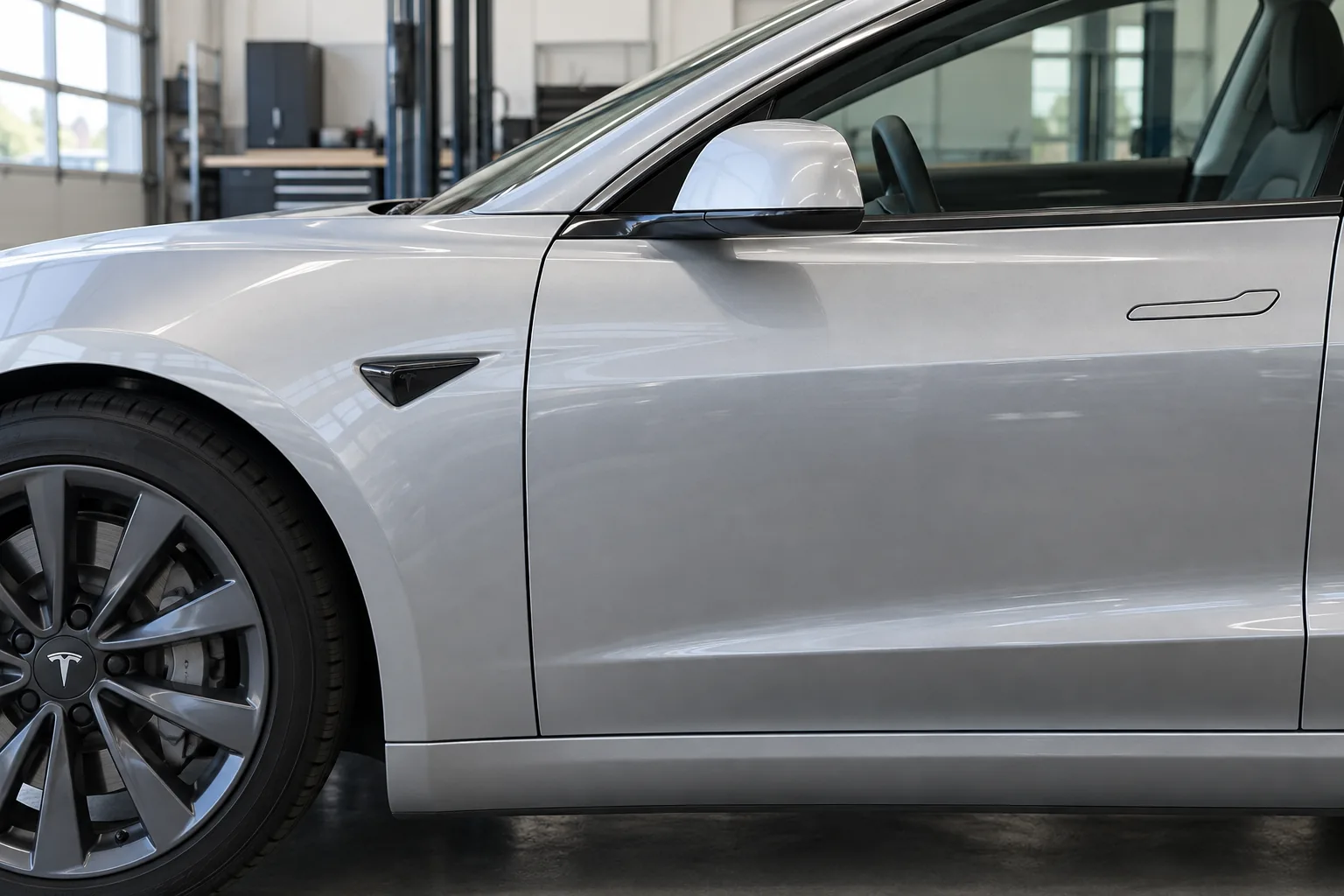
Uneven Tesla panel gaps do not, by themselves, establish a fault or an urgent repair. Request a body or seal assessment when the appearance has changed, new wind noise has started, a panel rubs, or a door, hood or liftgate has trouble closing. If a closure will not latch securely, stop using it and obtain advice before driving.
Start with the actual concern. A wide-looking seam, a raised panel edge and a whistle beside the window are different observations. They may need different checks, even when you notice them together. Photograph the fit, record when the sound occurs and describe any recent work. Those details are more useful than asking for every gap to be tightened.
Separate panel appearance from a functional problem
A body seam is the visible space between neighbouring panels. Flushness describes how their outer surfaces line up. One panel can sit higher than the next even when the space between them looks consistent. A rubber weather seal has a separate job at the closure or glass interface. The visible painted seam is not a direct measurement of the seal’s contact.
Look at the same location with the vehicle stationary and the panel fully closed. Identify whether your concern is spacing, surface height, a body line that does not continue evenly, or a piece of trim that appears loose. Describe the location precisely, such as the upper rear corner of the front passenger door. Calling the entire side misaligned can obscure the part you want assessed.
An appearance concern can still be worth discussing, particularly after delivery or bodywork. However, a photograph cannot establish whether the vehicle meets the applicable inspection standard. Nor does an uneven seam alone prove collision damage, a leaking seal or a sensor fault. Keep those conclusions separate until the relevant checks support them.
| What you notice | A useful next step |
|---|---|
| Uneven appearance without a new operating symptom | Document the location and request a fit assessment if it concerns you. |
| New whistle or rushing sound near the glass | Record the conditions and request diagnosis of the noise source and sealing interfaces. |
| Rubbing, fresh contact marks or changed closing effort | Stop repeated testing and arrange a closure and body-fit inspection. |
| A closure will not stay securely latched | Seek assistance before driving. Do not treat this as a cosmetic issue. |
| Actual wet carpet, lining or interior trim | Request a separate water-ingress assessment rather than assuming a panel adjustment will resolve it. |
Compare photographs taken before and after repairs
If the concern followed a repair, find photographs taken beforehand. Delivery pictures, an inspection record or the workshop’s intake images may help establish whether the appearance changed. Include the date and the work that was performed. A missing earlier photograph does not prevent assessment, but it limits what a visual comparison can demonstrate.
Take new pictures in even light from a level position. Start with a wider view showing the adjoining panels, then take a closer view of the particular seam. A very oblique camera angle can make one edge appear proud, while reflections can conceal the body line. Use similar distance, angle and lighting when comparing two images. Avoid placing a metal ruler against the paint.
- Overall view: Show which panel and side of the vehicle are involved.
- Close view: Include both panel edges and the surrounding trim.
- Operating concern: Photograph an existing rub mark or displaced seal without forcing another movement.
- Repair history: Note any panel removal, glass replacement, wrap installation or recent impact that preceded the change.
Use the opposite side as an additional visual reference, not as a substitute for a specification. Matching photographs can show a difference that deserves examination. They cannot prove that the other side is correct or that both locations must have identical measurements. Ask the assessor to identify the relevant standard and the measurement positions.
Record wind noise conditions without chasing speed
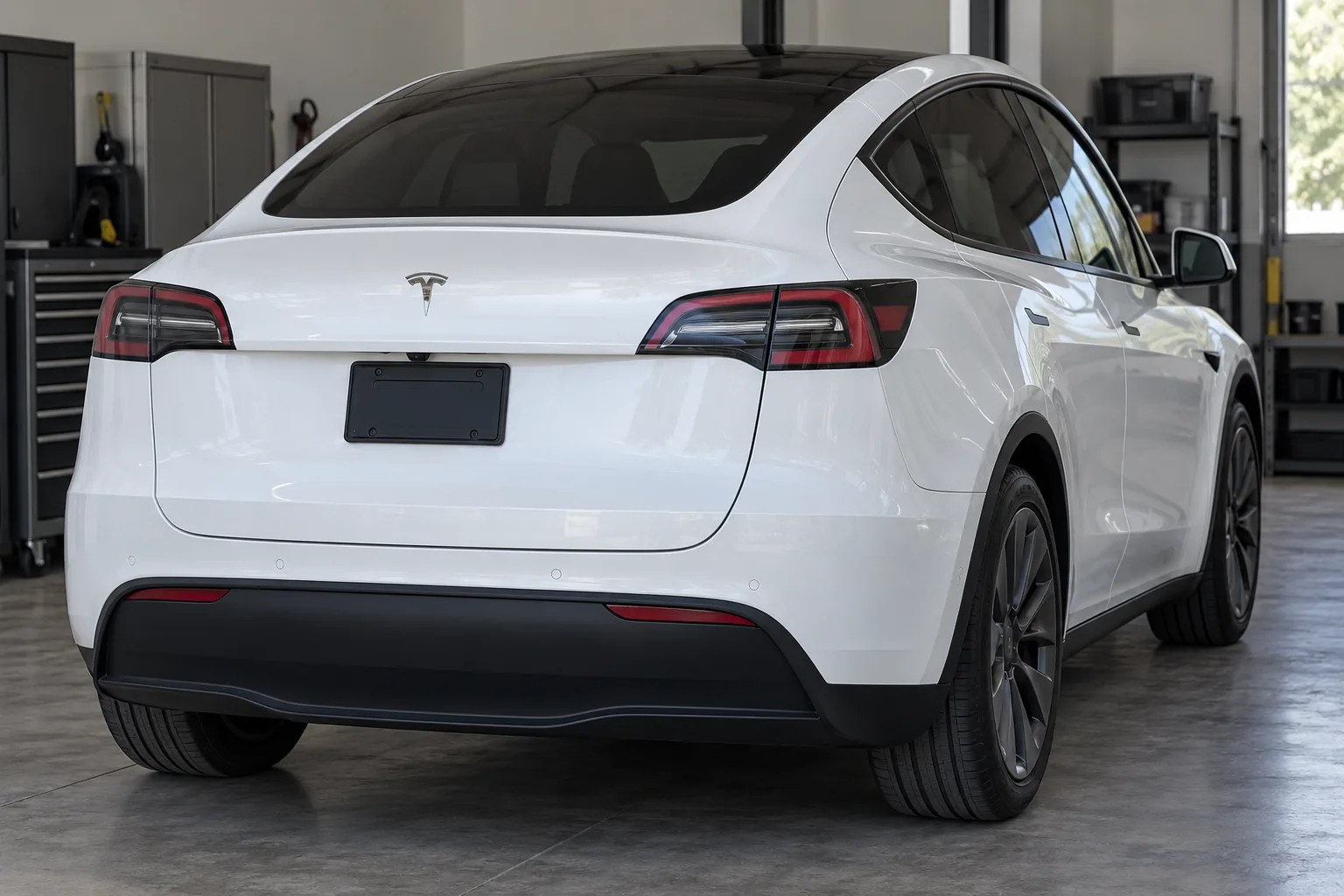
For new Tesla wind noise, explain what changed and where you hear it. Useful descriptions include a steady rush beside the front passenger window, an intermittent whistle near the mirror, or a sound noticed after glass or door work. Describe the apparent location as an observation. Sound heard beside a particular trim piece does not confirm that the piece is the source.
Record the approximate speed range during an ordinary journey, whether the sound changes with wind conditions, and whether it happens on more than one route. Note whether the windows were fully closed and whether roof-mounted accessories were fitted. Keep the climate setting in your record so the assessor can distinguish your complaint from a sound noticed only with the cabin fan running.
Do not drive faster to reproduce the noise, use a phone while driving, press on the glass during a journey or tape over exterior joints for a home road test. If an audio recording would help, a passenger can capture it during normal safe travel. A short description written once parked is sufficient when a recording is impractical.
A fixed speed is not a diagnostic threshold for a failed seal. Road conditions, wind and the vehicle’s configuration matter to reproducing the complaint. The aim is to give the technician a clear starting point. Agree how the sound will be assessed, rather than approving a seal replacement or body adjustment solely because it becomes audible on a motorway.
Keep unrelated noises out of this brief. A knock over a bump, a sound under acceleration and a whistle near a window should not be grouped into a broad panel-gap diagnosis. Describe each concern separately so the workshop can choose the right assessment. This guide concerns body fit, closure behaviour and wind noise around the exterior and glass.
Check visible seals with the vehicle parked
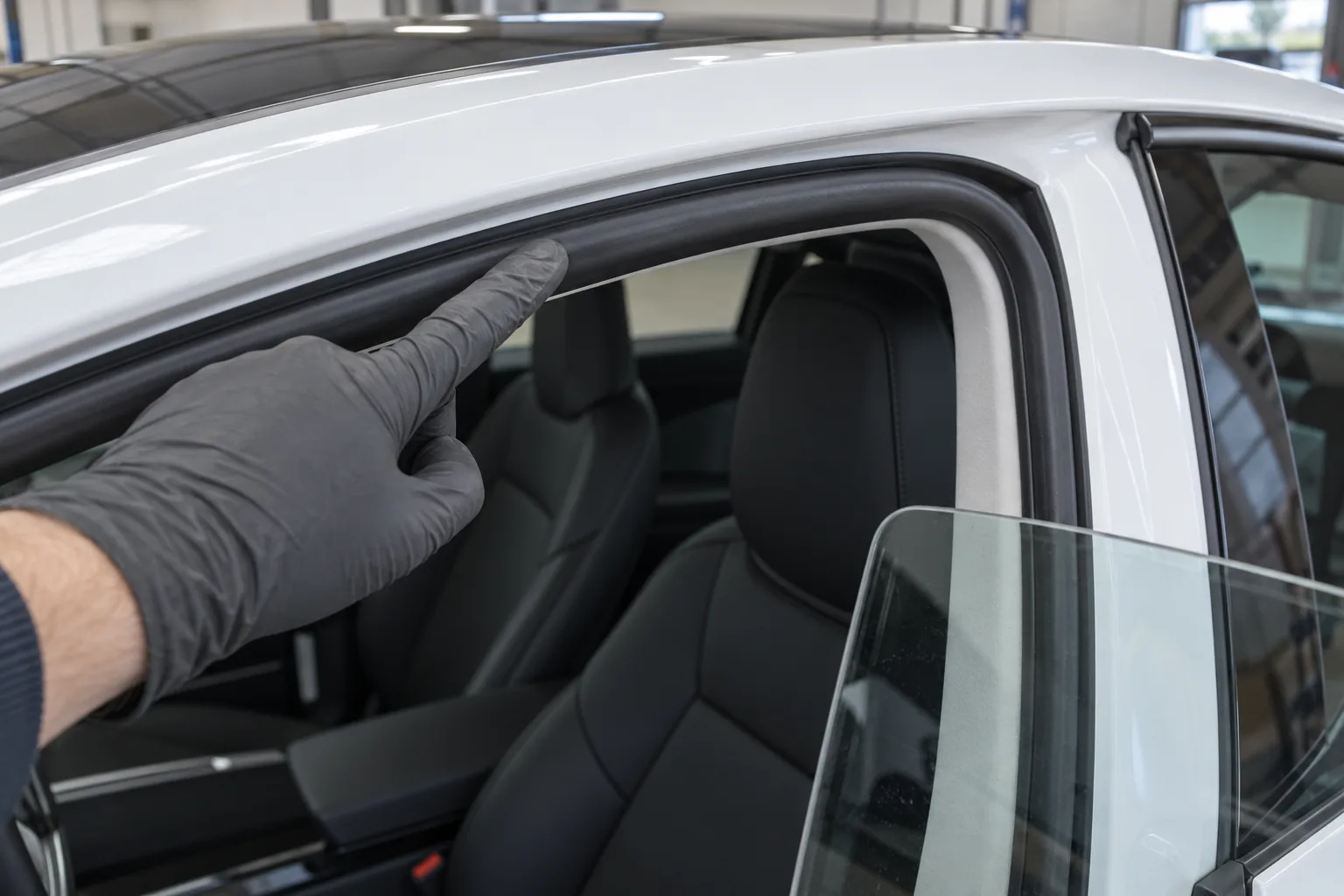
With the vehicle safely parked, look at the accessible rubber around the affected opening. Record an obvious tear, a folded section, loose visible trim or an object caught where the closure meets the body. Do not pull a seal out of its channel to inspect the hidden area. A visible observation is useful even when you cannot identify the part’s name.
If the door opens and closes normally, observe its usual movement once with hands and objects clear. Stop if glass catches, the panel contacts another panel or the mechanism resists. A frameless window’s small movement during door operation can be normal. Unexpected dropping, repeated reversal or failure to close belongs to a moving-glass assessment rather than a conclusion that the body gap is wrong.
A rubber seal can look intact while its contact or the adjoining glass position still needs assessment. Conversely, a visible mark does not automatically mean replacement is necessary. Photograph what you can see and let the workshop relate it to the operating complaint. Do not add adhesive foam, pack the seal, cut rubber, bend a hinge or loosen a striker to improve the appearance.
Stop testing when closure or rubbing changes
Rubbing and insecure closure deserve a different response from an appearance-only concern. Fresh contact marks, catching glass, unusual resistance or a latch that will not hold are reasons to stop repeated opening and closing. Do not slam a door or force a powered liftgate to see whether it will settle into place.
Follow the owner manual for your model and build when checking that a hood or other closure is secure. Tesla’s Model Y front-trunk guidance requires a securely latched hood before driving and warns against slamming or dropping it. Its closing instructions identify where pressure belongs. That procedure should not be transferred to another closure or used as a panel-adjustment method.
If you cannot confirm secure closure, contact service or assistance before travelling. Share the vehicle’s actual alert wording, if an alert is present. A latch concern needs assessment of its own operation, not simply a photograph of the surrounding seam. Likewise, a closure that looks flush should not be assumed secure solely because its appearance seems correct.
Model X powered doors and Falcon Wing doors require particular care. Use the applicable owner instructions and keep people clear of the moving area. Do not bypass an obstruction warning or copy an adjustment intended for a conventional hinged door. Tell the workshop which door is affected and what it did during the last normal attempt, without cycling it repeatedly for evidence.
Understand professional gap flush and seal checks
A useful assessment identifies what is being measured and what complaint the work is intended to resolve. Ask the technician to distinguish the body-panel gap, surface flushness, glass fit and seal contact. These observations can inform one another, but they are not interchangeable. A good-looking painted seam does not complete wind-noise diagnosis.
There is no single millimetre target in this guide. Tesla’s public panel-alignment page directs employees to inspection standards rather than providing an all-model tolerance table. Request the applicable standard for the vehicle and location. Internet measurements from another door, model or production period should not become the acceptance criterion for your car.
For body alignment, the assessor should consider neighbouring panels and the relationship to fixed body references. Tesla’s 2017–2023 Model 3 hood-alignment procedure explicitly considers adjacent panels. It also cautions against forcing hood gaps into alignment through latch adjustments. That is a reason to examine the assembly and its natural fit before choosing a correction, rather than pulling a closure tighter for appearance alone.
For a wind-noise complaint near moving glass, Tesla’s service training describes visual inspection and window-fit measurements followed by professional ultrasonic or smoke leak-detection methods. Those are diagnostic options, not owner tests and not proof that every workshop has that equipment. Ask how the source will be located and how the proposed work relates to the finding.
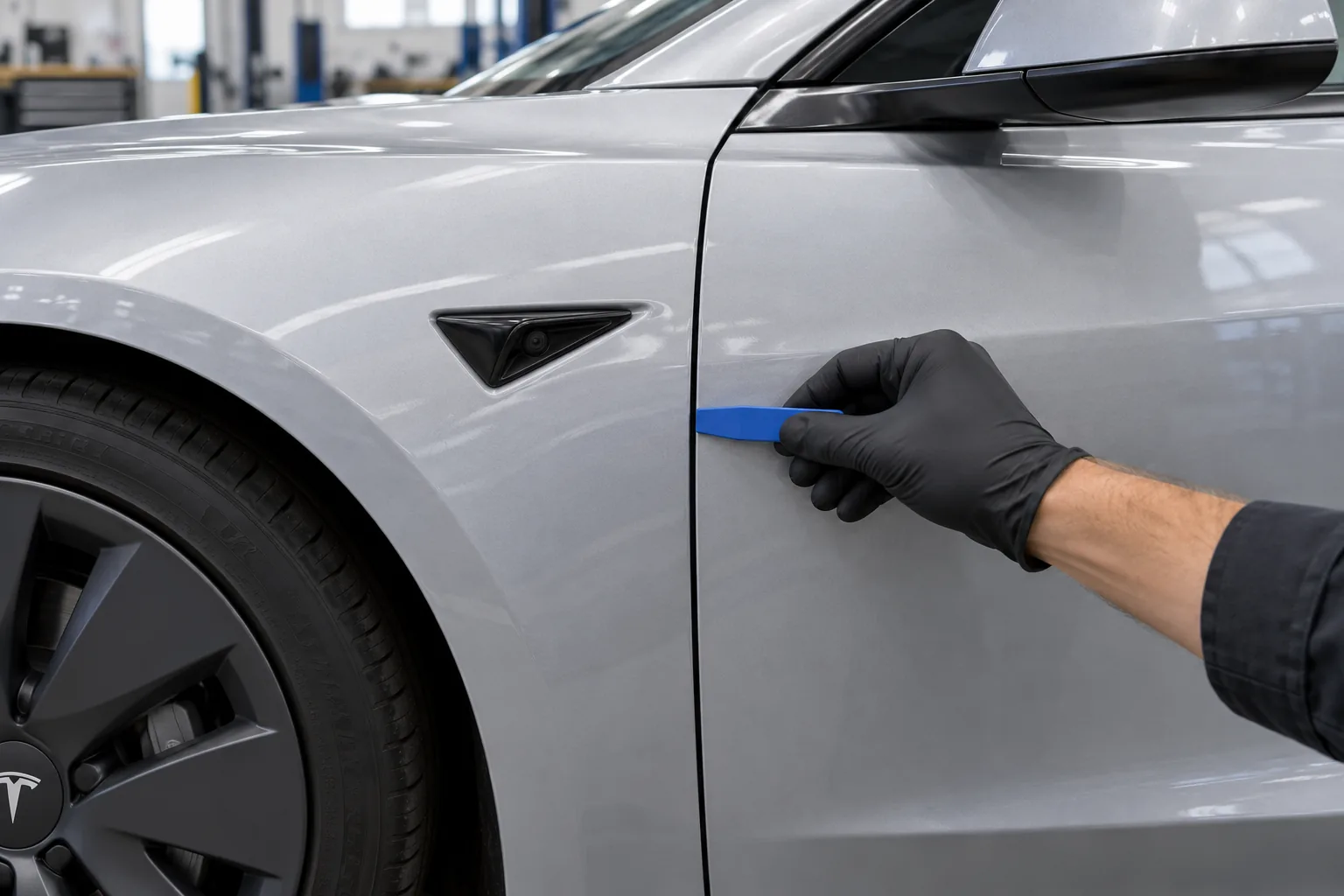
The result may support a panel adjustment, glass-fit correction, seal-related work or further investigation. Replacement should follow a finding that makes it necessary. Ask whether the work addresses an appearance concern, a closure fault or a reproduced noise. If the source is still uncertain, agree the next diagnostic step before authorising parts based only on suspicion.
An uneven panel seam does not establish a camera or parking-system fault. If an assistance-system alert is also present, record it separately and let the workshop assess the relevant system. Do not assume a cosmetic adjustment requires every vehicle system to be recalibrated. Any additional checks or calibration should be justified by the actual work and applicable procedure.
Treat actual wet interior trim as water ingress
Wet carpet, headlining, door trim or luggage-area lining changes the question. Record where the moisture first appeared and whether it followed rain, washing or recent work. Tell the workshop about actual dampness even if the most obvious exterior feature is an uneven seam. The entry route needs to be established separately.
Do not assume that water travelled through the nearest visible gap or that improving appearance will stop it. Photograph the wet area before it dries, if you can do so safely. Avoid deliberately directing a pressure washer at a joint to reproduce the problem. Ask for water-ingress diagnosis and confirmation of the entry route, with body-fit work considered only when the findings connect it to the leak.
Use a dedicated water-ingress assessment for an active interior leak. This article covers fit, closure and wind-noise observations and does not prescribe leak repairs. If wet trim is accompanied by vehicle alerts or abnormal operation, follow the vehicle’s instructions and obtain service advice promptly rather than treating the issue as an appearance correction.
Ask for findings before approving adjustment work
Give the workshop the model, production year, affected area, symptom record and relevant repair history. Supply the VIN through its appropriate private booking channel when it is needed to identify the vehicle. Ask for the findings in plain language and for photographs or measurements that relate to your concern.
A quotation should distinguish assessment from the proposed repair. Clarify which panel, glass or seal is involved, whether parts are required, which adjacent areas may need checking and how completion will be confirmed. Ask whether paintwork or removal of existing film is included if the proposed work could affect those finishes. Establish whether VAT and any separate diagnostic charge are included in the total.
A generic panel-gap price is not a meaningful estimate for a reproduced wind-noise complaint or a latch fault. Ask for the scope and amount for your vehicle before work begins. If further investigation is needed, agree its charge and an approval point for additional work.
Check repaired fit alongside the original complaint
At collection, compare the affected area with the intake photographs under similar light. Ask to see the recorded findings and what changed. Confirm that the original concern is included in the completion check, rather than judging the work solely from a close photograph of one seam.
Where normal operation is safe, check the relevant closure using its usual controls and owner instructions. Look for new contact marks, catching trim or a change in effort. Keep fingers clear of closing edges. If the original complaint was wind noise, ask how it was rechecked under comparable safe conditions and whether the reported sound was reproduced before the work.
Tell the workshop about any new noise or operating change before accepting that the issue is resolved. An improvement in appearance and resolution of a sound are separate outcomes. Retain the quotation, work record and photographs so any follow-up can refer to the same location and symptom rather than starting from a vague description.
Common questions about Tesla gaps and wind noise
Does every uneven Tesla gap need urgent repair?
No. Appearance alone does not establish urgency. A changed gap can be assessed, while new rubbing, catching glass or difficulty latching warrants attention to function. If a closure cannot be secured, seek advice before driving. Keep the appearance concern and the operating symptoms distinct when describing the problem.
Can wind noise occur without an uneven seam?
Yes. The visible seam does not measure every glass and seal interface. Tesla’s training treats moving-glass wind noise as a diagnostic task involving inspection and fit checks. Describe the sound and its conditions even if the painted panels look even. A technician should connect a proposed repair to the findings.
Will Dubai heat explain a newly changed gap?
Hot weather alone does not verify the cause of your vehicle’s changed fit. Record when you noticed it and any recent work or contact. Avoid accepting climate as the diagnosis without an inspection that explains the actual condition. This guide does not attribute panel movement or seal damage to Dubai temperatures.
Should I buy extra seals before an inspection?
Establish the source first. An added accessory seal does not demonstrate that the original sealing interface is correct or that a body adjustment is needed. Tell the assessor about any accessories already fitted. Choose repair or replacement only after the affected part, vehicle compatibility and intended outcome are clear.
Do better panel photographs prove a completed repair?
They can document appearance, but they do not verify secure latching, seal contact or resolution of a noise. Ask for checks matched to the original complaint. Keep comparable photographs alongside the findings and completion record so a later concern can be discussed with useful evidence.
Official references for the checks described here
- Tesla 2017–2023 Model 3 panel alignment specifications reference
- Tesla 2017–2023 Model 3 hood alignment guidance
- Tesla service video library, including first-row moving-glass wind-noise diagnosis
- Tesla Model Y front-trunk owner instructions for the UAE
References checked on 30 September 2026. Use the current instructions applicable to your vehicle. Model-specific service information is cited for context, not as a do-it-yourself adjustment procedure.