Door glass and owner checks
Tesla Window Won’t Close, Reverses or Drops
Understand unexpected movement, check what is visible and choose the right next step before replacing a regulator.
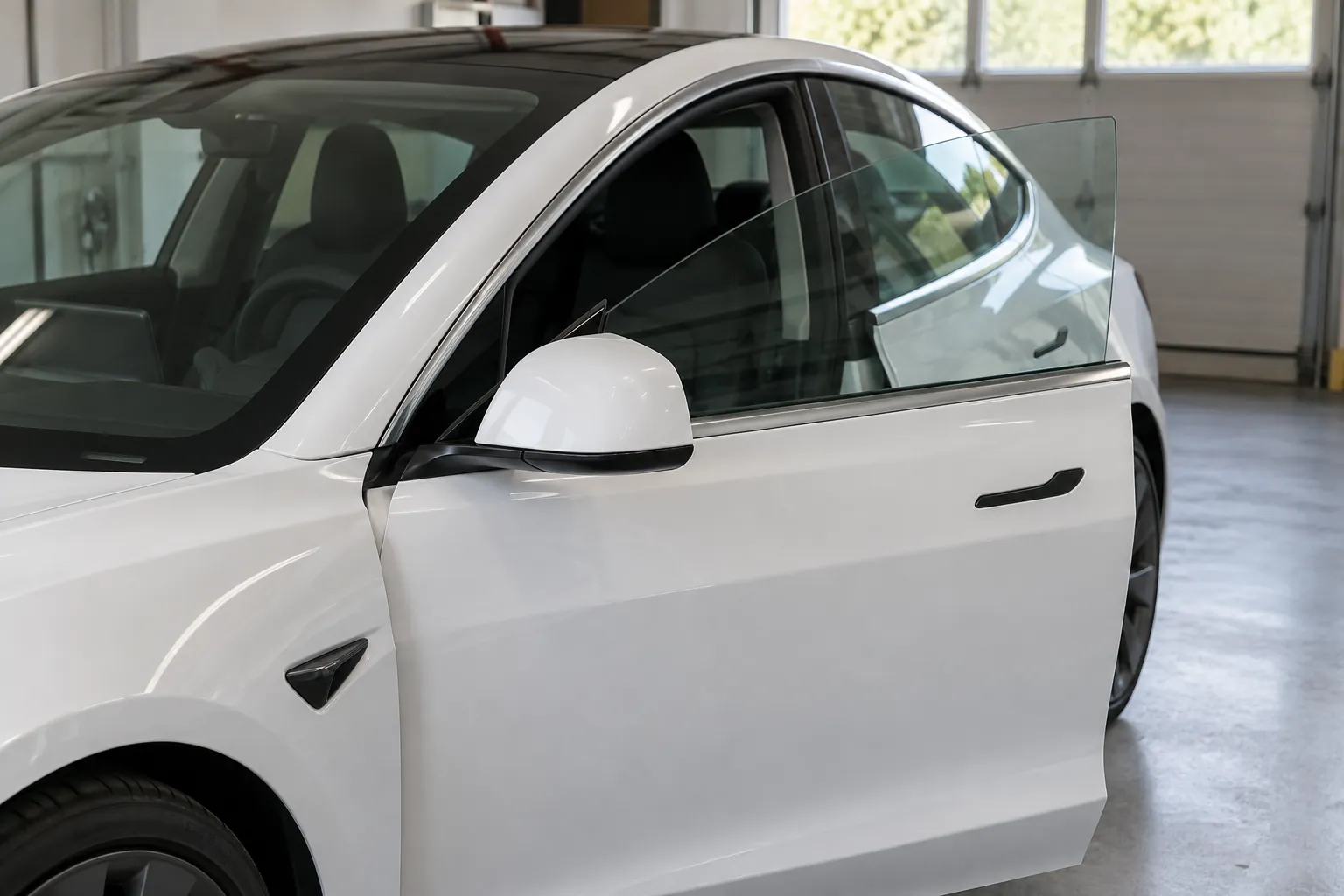
A Tesla window that will not close, reverses near the top or drops unexpectedly needs a careful check before anyone orders a regulator. A small movement when opening a frameless door can be normal. A reversal, on its own, does not identify a broken part. Start with the visible glass path, the exact circumstances and the instructions for your vehicle.
If the glass is tilted, loose or making a grinding sound, stop operating the switch and arrange an inspection. Keep hands and children away from the opening. This guide concerns moving door glass. A car that does not recognise a key, or water entering the cabin, needs a different diagnostic route.
Separate normal window movement from unexpected behaviour
Frameless door glass needs clearance when the door opens and closes. Tesla’s current UAE Model 3 owner manual explains that the window lowers slightly for this purpose. A small, controlled drop associated with opening the door is therefore different from glass falling into the door or remaining far below its usual closed position.
Watch the sequence rather than measuring an assumed universal distance. Did the movement begin as you operated the door handle, while closing with the switch, or after the door was already shut? Did the glass return to its usual position? A clear description of the trigger is more helpful than calling every downward movement a regulator failure.
| What you observe | How to approach it |
|---|---|
| Small drop during door opening | Compare with the frameless-door behaviour described in your manual. Do not assume replacement is needed. |
| Window rises, then moves down again | Check for a visible obstruction and record where reversal occurs. Calibration may be relevant if the glass otherwise moves normally. |
| Glass drops much farther than expected | Record whether it remains straight and supported. Loose or tilted glass needs professional inspection. |
| Grinding, binding or changing glass angle | Stop cycling the window. Ask for the mechanism and glass mounting to be checked. |
| Window stays still when commanded | Note which controls work and whether any sound occurs. Lack of movement does not distinguish a motor, control or mechanical fault. |
Do not close the door against raised glass that is striking the trim. The Model 3 manual warns that glass manually raised with the door open must be lowered slightly before closing. If your window cannot make that clearance, leave the door in a safe position and seek help instead of forcing it shut.
Check the visible glass path before operating
Park safely before investigating. Look along the exposed glass edge and accessible seals without putting fingers into a closing gap. An object trapped at the top, folded material or an obviously displaced seal gives the workshop a useful starting point. Remove only a loose, accessible object that can be lifted away with the window stationary.
Do not prise a seal out, push a tool down inside the door or pull the glass into position. A hidden fault cannot be verified from the outside. If the obstruction is attached, inaccessible or close to damaged glass, leave it for a technician. The purpose of this check is to identify visible interference, not to dismantle the door.
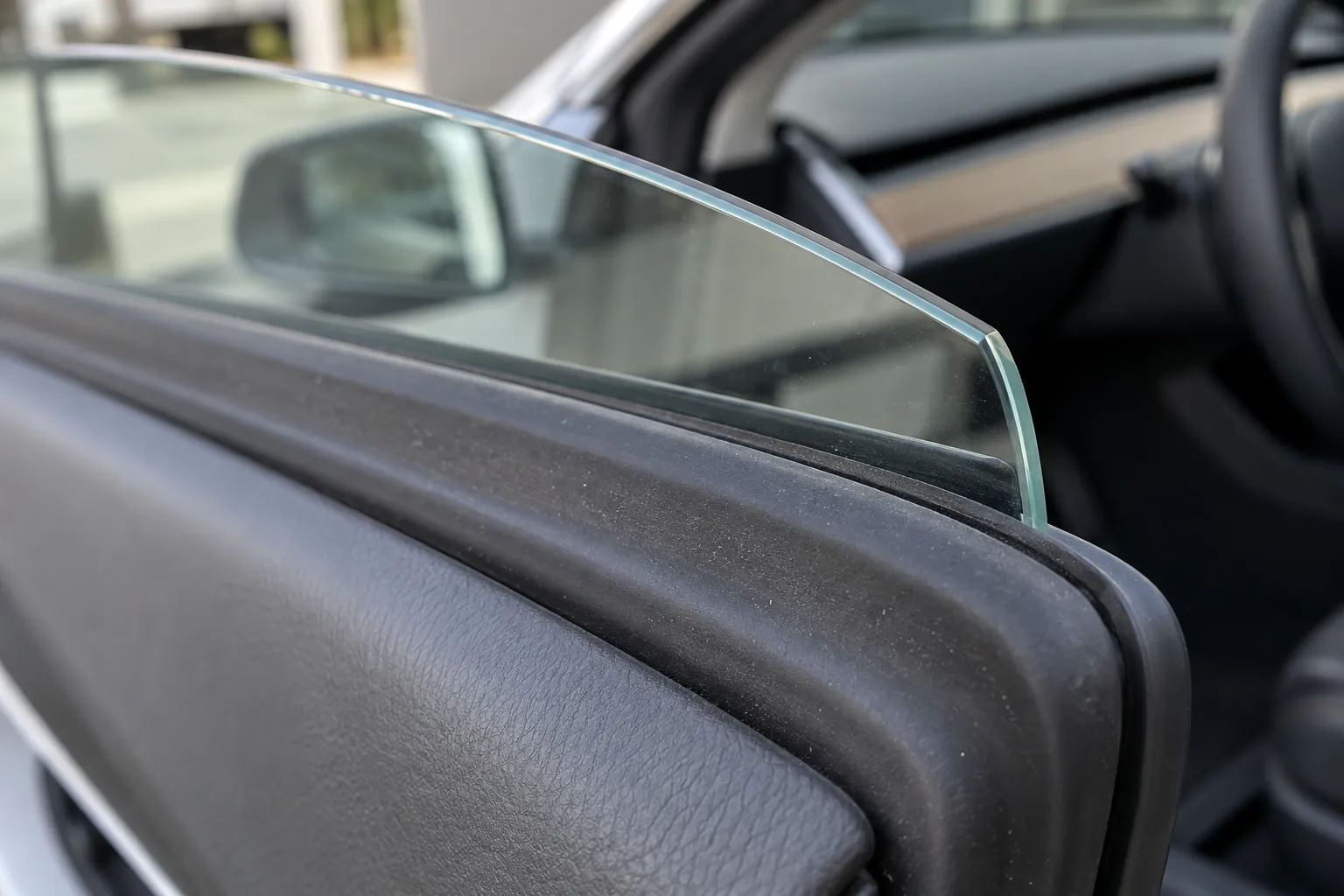
Dust around a seal is worth noting, especially after exposure to sand. It does not establish that sand has damaged a motor or regulator. Avoid spraying oil, solvent or an unspecified lubricant into the door. Ask for a cleaning method compatible with the materials and any window film rather than applying a product that may leave residue.
If you have aftermarket tint, record when it was fitted and whether the symptom began afterwards. That timing is a lead to investigate, not proof that the film caused the fault. The same applies to recent glass replacement, door repairs or body work. Tell the workshop about them even if the work seemed unrelated at the time.
Understand reversal without assuming the regulator failed
A window that rises smoothly and then reverses presents a different question from one that tilts or grinds throughout its travel. Record whether the reversal always occurs at the same place, only near the upper seal, or only when the door is closed. These observations help an inspection distinguish travel-position concerns from physical interference.
Do not test the response by placing a hand or another body part in the opening. Do not attempt to defeat a protective response by forcing the switch, pressing on the glass or repeatedly commanding it closed. If the window has already failed several times, further cycling may add little information and should stop.
Current UAE Model Y owner guidance identifies calibration as something that can potentially correct unexpected window behaviour. It does not say that every reversal needs a regulator. Calibration is a possible next step only when the applicable manual supports it and the glass can complete its travel without obvious mechanical distress.
One successful closure also does not prove a recurring fault is resolved. Keep the history of the earlier failures and tell the technician what changed. If the same behaviour returns after an appropriate calibration attempt, treat the recurrence as a reason for diagnosis rather than repeating resets indefinitely.
Ask Tesla to check outstanding recalls or service actions against your VIN and market. Tesla has documented a software remedy for automatic window reversal on certain vehicles. That recall is not evidence that every Dubai Tesla is affected or that software explains your symptom. An already completed remedy also does not rule out a separate mechanical problem.
Find the calibration instructions for your vehicle
Identify the model, build year and affected door before choosing instructions. Use the owner’s manual available for your vehicle, then check its Windows section. A search result using the word Tesla may describe a different generation or a workshop procedure. Software and hardware applicability matter more than a familiar-looking sequence of switch movements.
The current UAE Model 3 and Model Y manuals describe an owner calibration sequence with the affected door and driver door closed, using the corresponding switch on the driver’s door to raise, lower and raise the glass to its travel limits. Follow the complete applicable manual, including its precautions. These pages do not prescribe a universal hold time in seconds.
For earlier vehicles, Model S or Model X, locate the instructions for that exact vehicle rather than transferring this sequence automatically. Tesla’s 2021+ Model S service manual, for example, describes a calibration operation through Service Mode. That is a different service procedure. This guide does not instruct owners to unlock the gateway or enter workshop functions.
Skip a calibration attempt when the glass is loose, visibly crooked, damaged or grinding. A reset is not a substitute for dealing with those observations. If you cannot confirm that the instructions apply to your vehicle, ask Tesla or a qualified technician to identify the correct procedure before proceeding.
The current Model 3 and Model Y owner guidance directs readers to contact Tesla if the issue continues after a couple of calibration attempts. Do not turn that limit into a recommendation to keep cycling a distressed window. Stop sooner if movement becomes uneven, a new noise appears or the glass makes contact with the trim.
Stop cycling when glass movement becomes abnormal
A harsh grinding sound, a changing glass angle or a sudden unsupported drop warrants inspection. You do not need to reproduce the event several times for it to be taken seriously. Note what happened during the last attempt and leave the switch alone. A technician can choose a controlled inspection method after assessing the condition.
- Grinding or repeated cracking sounds merit a mechanism inspection rather than a reset experiment.
- Visible tilt or one edge lagging should be recorded with the glass stationary.
- Glass touching body trim means the door should not be forced against it.
- Loose, cracked or unsupported glass needs professional handling.
- Smoke or a burning smell requires stopping operation and moving away from a potentially unsafe situation.
Do not hold the glass while someone operates the switch. Do not use a screwdriver to imitate a closed latch or attempt an improvised mechanism adjustment. These actions introduce another moving part or pinch point and can obscure the original symptom. Leave dismantling and support of the glass to someone equipped for that work.
If the window remains open, choose a sheltered, secure parking place while arranging assistance. Avoid leaving valuables visible. Do not drive simply to see whether vibration makes the problem disappear. If the glass is unstable, visibility is impaired or the door cannot close safely, ask the service provider whether the vehicle should be transported.
Record the symptoms without repeating the failure
A useful service description can be short and precise. Write down the affected door, the starting position and what you asked the window to do. Include whether the door was open or closed. Describe the actual result instead of naming the part you think failed. For example, say that the front left glass reversed near the top with the door shut.
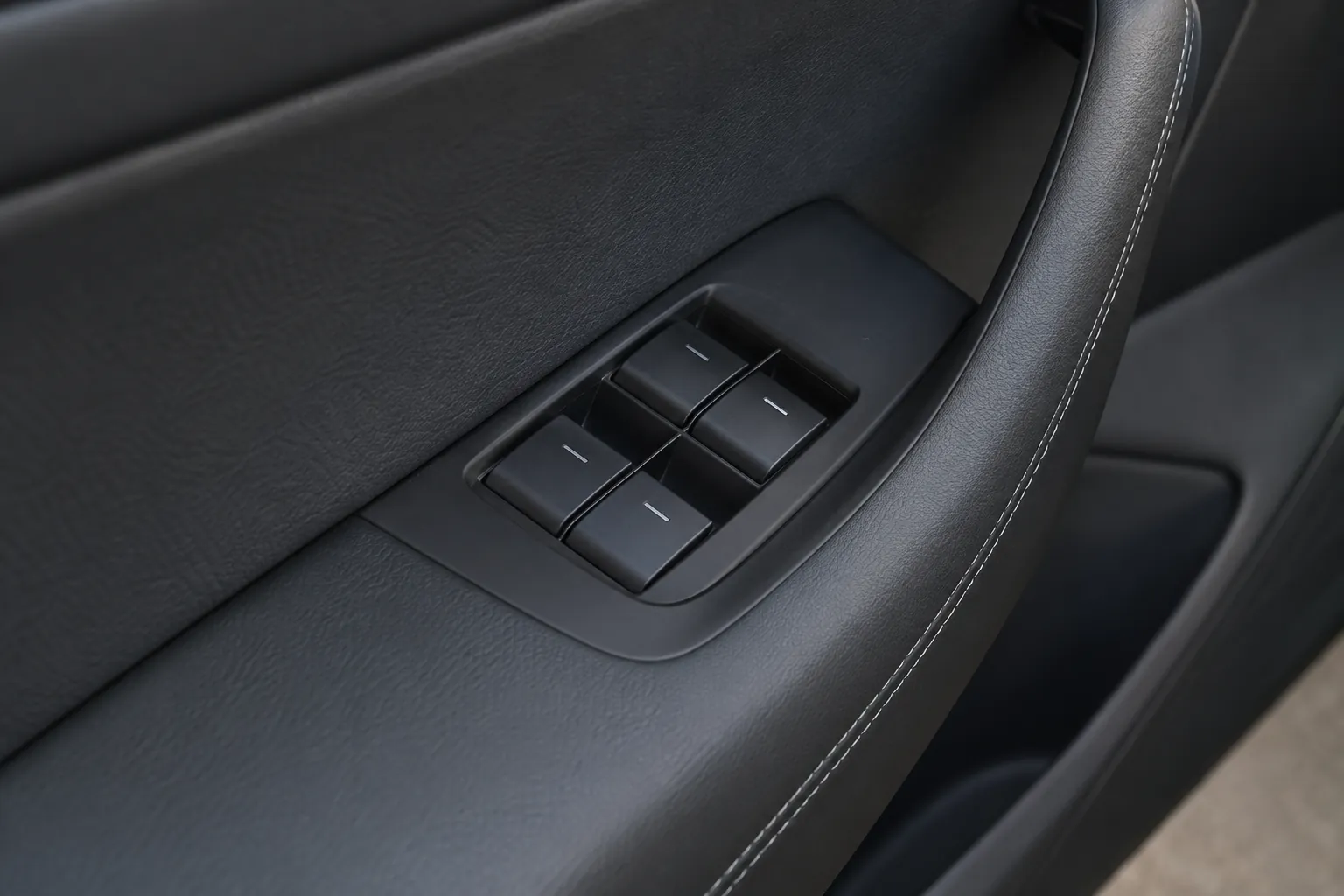
If a rear window responds to the driver control but not its local switch, check the applicable rear-window lock setting before assuming a part has failed. Current Model 3 and Model Y manuals describe Window Lock under Controls and Locks. This setting check does not require repeatedly moving distressed glass.
- Model, build year and affected window.
- Whether the driver control, local door control or both were involved.
- Whether movement stopped, reversed or continued at an angle.
- Where in the travel the noise or reversal occurred.
- Any recent door, glass, tint or electrical work.
- Whether an applicable calibration was attempted and its result.
- Any alert shown on the vehicle screen.
If a safe photograph already shows the glass position, keep it. A video of a previous occurrence can help too, but creating one is not a reason to operate a grinding or loose window again. Photograph stationary alignment from outside the pinch area and avoid including private information that the workshop does not need.
Record temperature, dust exposure or rain only as circumstances. Avoid concluding that Dubai heat caused a particular internal failure. A complaint that happens under certain conditions still needs component-level confirmation. This keeps the diagnosis focused and helps prevent an expensive replacement being justified by a general story about local weather.
Ask what testing supports the proposed repair
The regulator is the mechanism that moves and supports the glass, while the motor provides the drive. A complaint about window movement can also raise questions about glass mounting, alignment, seals, controls or electrical supply. Ask which of these possibilities has been assessed and what evidence points to the recommended repair.
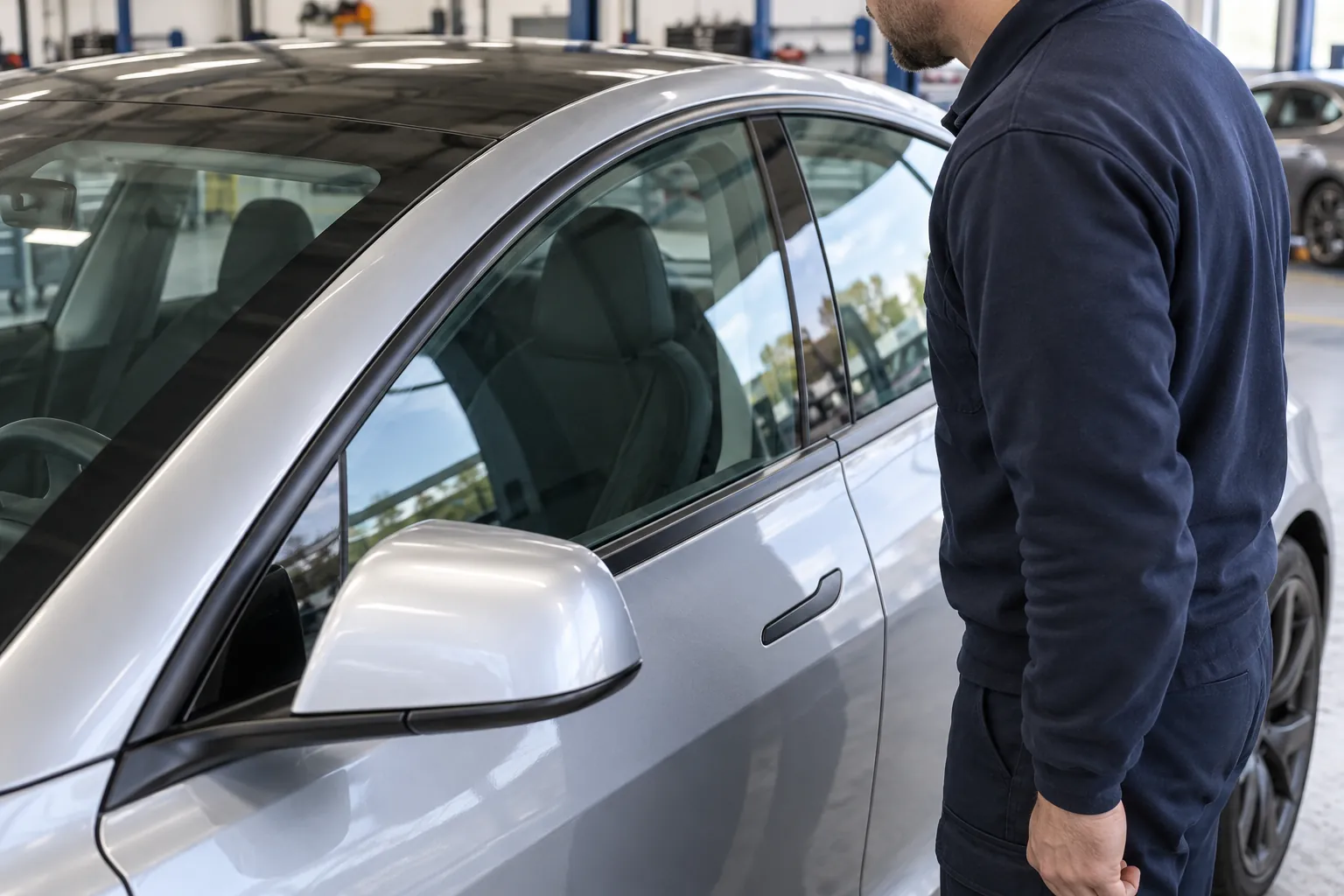
A good explanation connects the observation to the finding. If the glass was crooked, ask whether its attachment and alignment were checked. If there was no movement, ask how the workshop distinguished a mechanical restriction from a missing drive command. The reader does not need to perform electrical tests, but can ask for the reason behind the conclusion.
Replacement becomes a reasonable proposal when inspection identifies a failed mechanism or another damaged component that requires it. Ask whether the proposed part is the regulator alone, the motor or an assembly, and why that matches your vehicle. A symptom list from a blog is not evidence that every item on a quotation is necessary.
If adjustment or calibration is proposed instead, ask how the result will be checked. If replacement is proposed, ask whether glass positioning and any required calibration are included afterwards. The useful outcome is restored, repeatable operation without abnormal noise or contact, not simply an invoice showing that a part was fitted.
Compare repair quotations using the same scope
There is no verified current Dubai fitted price in this guide for your exact Tesla window regulator. A parts listing, a windscreen offer or another owner’s overseas bill cannot establish that price. Request a vehicle-specific quotation after inspection rather than relying on a generic AED range.
Compare what each quotation covers. Ask for the affected door, compatible part identification, part condition and labour to be stated. Confirm whether diagnosis, fitting, glass adjustment, calibration and final checks are included where required. Ask whether VAT is included and whether any additional work needs your approval before it starts.
Warranty terms should be written rather than assumed. Ask what is covered, for how long, and whether the terms apply to the part, labour or both. If a less expensive proposal excludes the motor or follow-up adjustment while another includes them, the headline totals are not directly comparable. Clarify the scope first.
Keep the observation record and final diagnosis with the quotation. If you seek a second opinion, supply the same information to both providers. This makes it easier to compare their reasoning and reduces the chance that different assumptions about the complaint produce incompatible estimates.
Check the original complaint after the repair
Ask the workshop to demonstrate the affected window under the conditions that originally caused the complaint, provided it is safe to do so. A door-closed reversal should be checked with the door closed. A problem associated with opening the door should be assessed through that sequence. Confirm that the glass stays straight and clears surrounding trim.
Keep the invoice, fitted-part details and explanation of the work. Note whether the repair involved calibration, adjustment or replacement. If the symptom returns, describe the recurrence using the same observation record rather than starting a fresh series of resets. A clear history helps the provider assess the follow-up against the agreed scope.
Common questions about Tesla window movement problems
Does a reversing window always need replacement?
No. Reversal alone does not establish regulator failure. Check visible interference, identify the vehicle and consult its applicable calibration guidance. Recurring reversal or mechanical distress needs inspection.
Is a small drop when opening normal?
A small, controlled movement can provide clearance for frameless glass. Compare it with your manual. Glass dropping unexpectedly, remaining far below its usual position or becoming tilted needs a different assessment.
Can the same reset fix every Tesla?
Do not assume so. Model, generation and procedure type matter. Owner guidance and a Service Mode procedure are different. Follow instructions identified for your vehicle.
Should I keep trying a grinding window?
No. Stop cycling it and arrange inspection. Keep the opening clear and do not push, pull or hold the glass while a switch is operated.
Official references for vehicle specific window checks
Checked on 30 September 2026. Select the manual for your own vehicle before following a procedure.