Paint and body care
Tesla Scratch Repair in the UAE
Work out which marks may improve without repainting and what to expect from cleaning, correction, touch-up or a new finish.
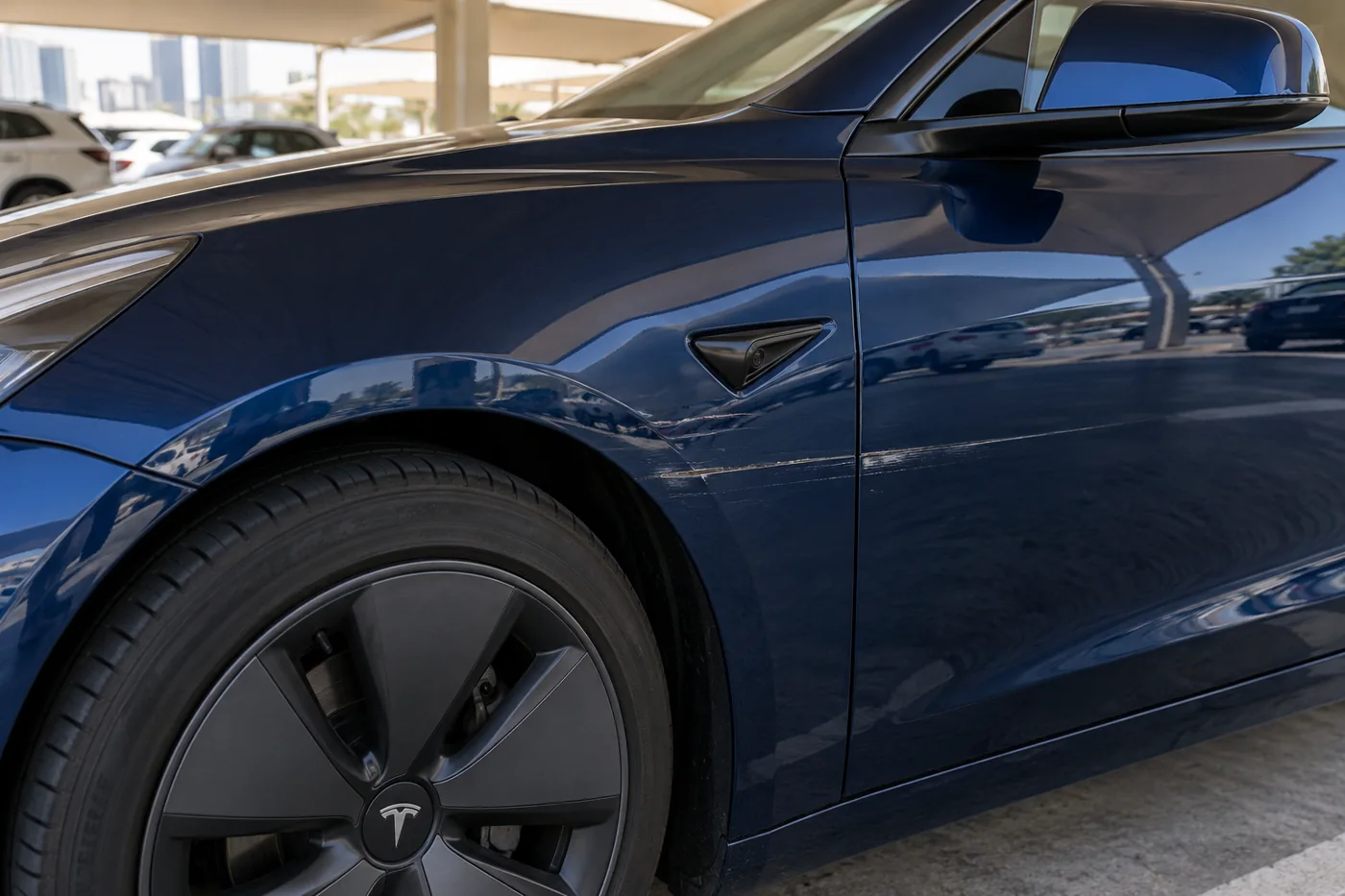
A pale line on your Tesla does not automatically mean the panel needs repainting. Paint transfer and some shallow surface marks can improve without new paint. Missing colour needs touch-up or refinishing, while a gouge or dent may also need body repair. The first step is to find out which surface is damaged and how much of the mark remains after gentle cleaning.
First check what you are looking at
Contact with a wall, trolley or another vehicle can leave material on top of the paint. That transfer may look alarming, especially against a dark colour. Once it is removed using a suitable method, the damage underneath can be smaller than it first appeared. The same contact can also leave a real scratch, so cleaning is an assessment step rather than a promised cure.
If you need a record of the incident, photograph the mark before cleaning. Then look at it with the car in shade and the panel cool. Avoid rubbing a dusty surface to test whether the line disappears. Grit caught under the cloth can leave fresh marks around it.
| Appearance after cleaning | Possible explanation | Repair direction |
|---|---|---|
| A smear sitting above the finish | Transferred material, sometimes over a scratch | Suitable cleaning followed by inspection of what remains |
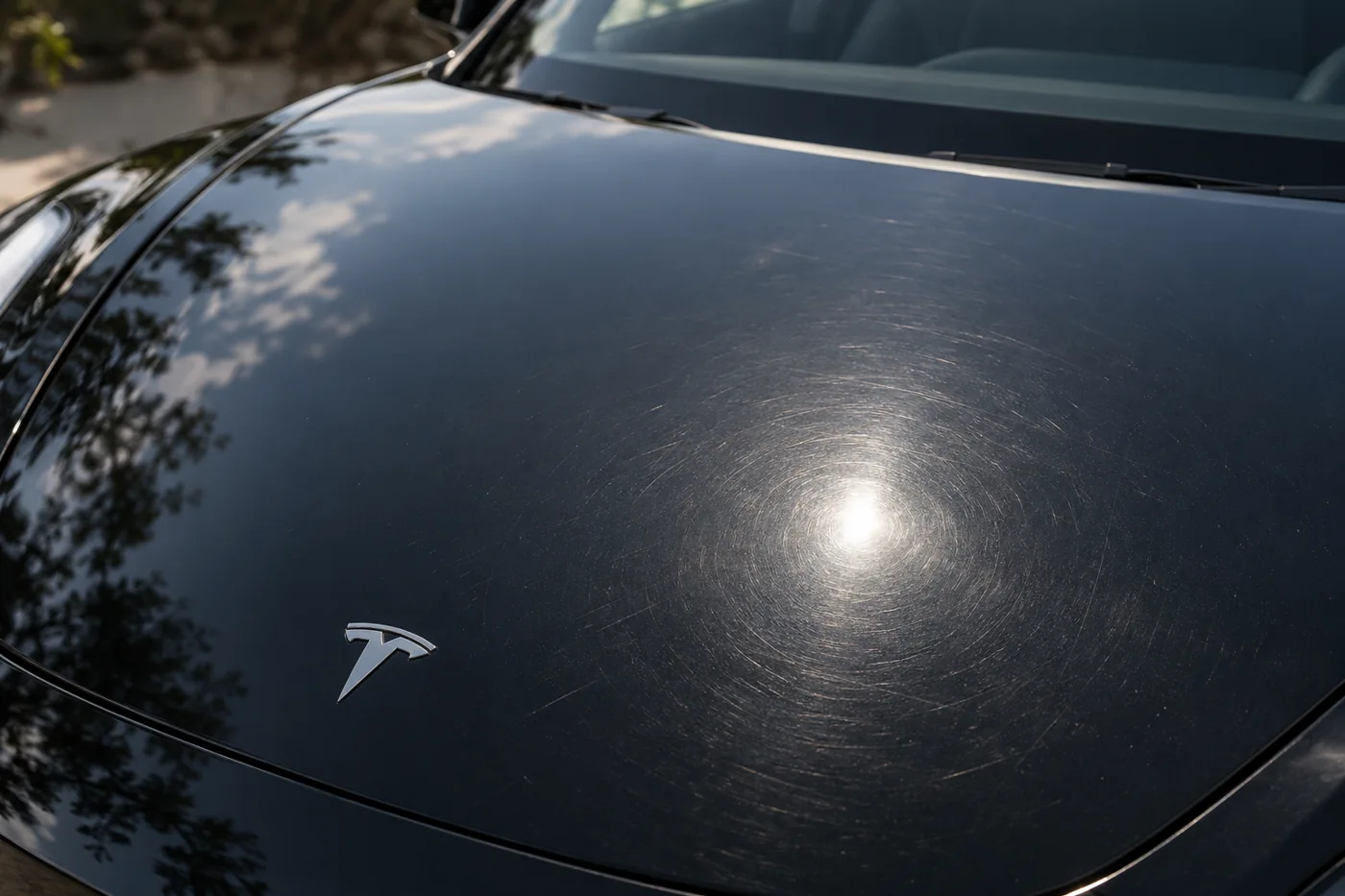
| Fine lines around a light reflection | Surface marring or wash swirls | Assessment for conservative correction |
| A line with missing body colour | Damage through the coloured finish | Touch-up or refinishing according to size and finish expectations |
| A deep groove, split or dent | Damage to the underlying material or shape | Body or plastic repair considered alongside paint work |
| A mark on protective film | Damage may be limited to the film | Film assessment before deciding whether paint needs work |
Swipe to read the full table.
Colour alone can be misleading. A white line on a black car could be transfer, a disturbed clear finish or exposed undercoat. A dark line on a white bumper could be deposited material or the plastic below the paint. A clean surface and a change of viewing angle tell you more than the colour of the line by itself.
How scratch depth changes the repair choice
A typical glossy painted panel has a clear protective finish over its colour, with preparation layers underneath. A shallow defect can disturb the clear finish while leaving the colour intact. A deeper one removes colour, exposes primer or reaches the material below it. Primer is a preparation layer; seeing it means some of the finish is missing, but the colour of a line alone cannot confirm which layer is exposed. Inspect the cleaned mark rather than treating every white or grey line as primer.
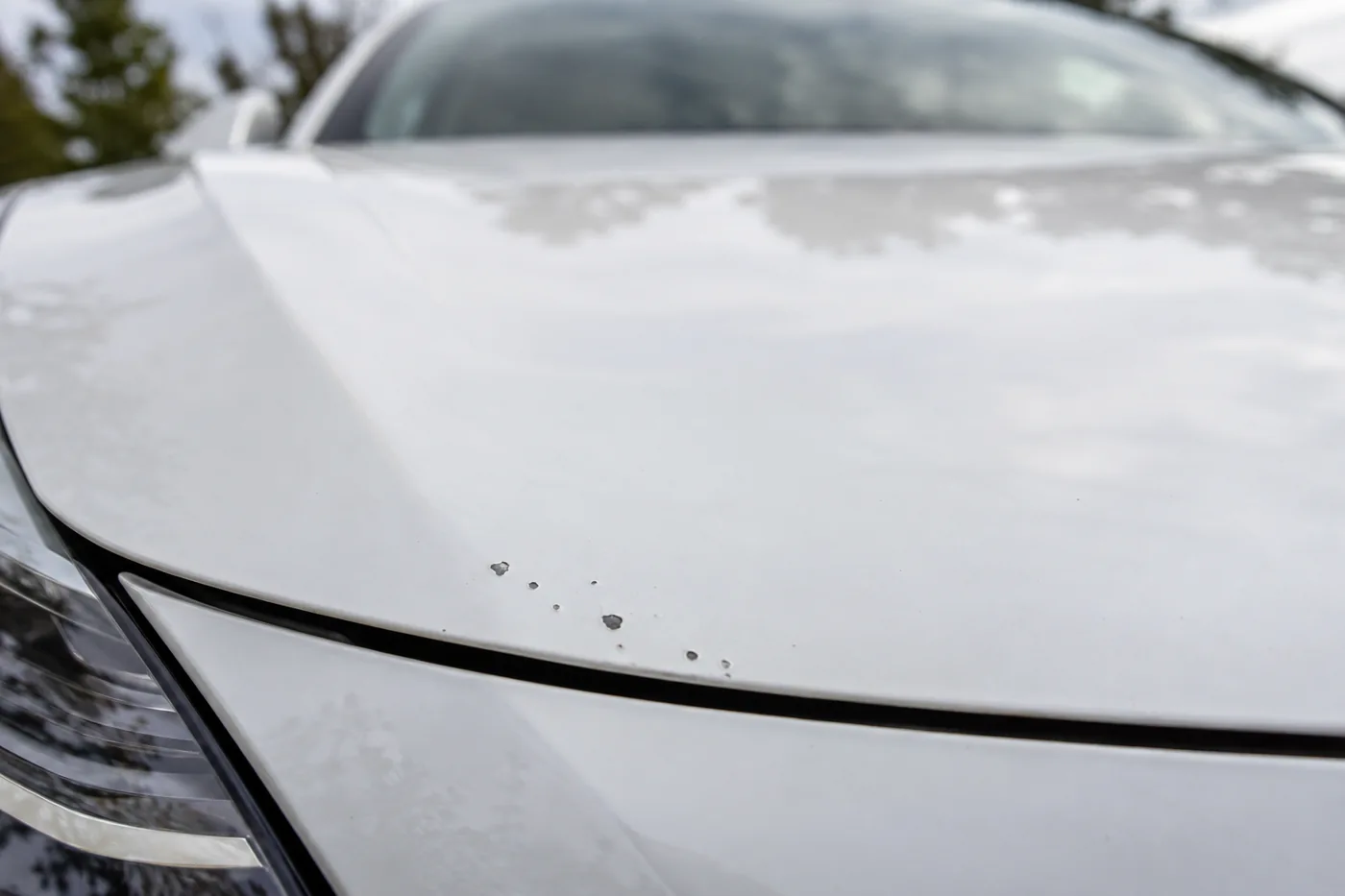
That explains why a long, faint line can be easier to improve than a tiny stone chip. Length describes how far the damage travels. Depth determines which layers need attention. Polishing cannot replace colour that has been removed.
What the fingernail test can tell you
A nail catching on a mark can suggest a groove, but a raised deposit can catch too. The test does not measure how much clear finish remains or establish that polishing is safe. Repeated picking, sanding or stronger cutting products can enlarge the problem. Location matters as well, particularly around an edge or crease where the surface is less forgiving.
Why the panel beneath the paint matters
A scratch on a plastic bumper does not create the same corrosion concern as exposed steel. Aluminium does not form the same red rust as steel, although loss of its protective coating still deserves attention. Tesla uses different materials in different components, so a repair decision should relate to the actual panel.
Shape is a separate issue. A scraped dent may need the panel corrected before it can be refinished. Dent repair addresses the changed panel shape. Paintless methods can retain existing paint on suitable dents, but they do not remove scratches or replace missing colour. When both shape and finish are damaged, the work needs to address both.
Cleaning, correction or a small touch-up
Once the mark is clean and its depth is understood, the repair options become clearer. Cleaning, correction and touch-up do different jobs.
Cleaning material transferred onto otherwise sound paint
Where material is sitting on an otherwise sound finish, careful cleaning may be enough. The result can only be judged once that deposit is removed. Household scouring pads, harsh solvents and scraping are poor shortcuts because they can damage the finish you are trying to preserve.
Improving shallow marks while retaining the finish
Conservative professional correction may reduce suitable surface defects. Its limit is the condition of the existing coating. Complete removal is not always a sensible target if reaching it would require excessive material removal. Tesla’s Model 3 paint care guidance cautions against cutting pastes, colour-restoration compounds and harsh abrasive polishes. An aggressive home attempt is not a reliable way to find that limit.
A faint line that is visible only under a particular light may be acceptable once its surrounding haze is improved. A line that remains obvious from normal viewing distance may call for another option. The decision should reflect the actual result you want, without assuming every defect must be chased until it disappears.
Adding matched colour to a small paint chip
A touch-up fills a small area of missing colour and can reduce its contrast against the surrounding paint. It suits some isolated chips where you are comfortable with a repair that may still be visible close up. The surface texture or edge can remain different from sprayed paint.
Correct colour information matters. A familiar colour name or an online photograph is not enough to identify a suitable product when variants or earlier repairs are involved. Owner touch-up products should be used according to their instructions and the vehicle guidance. Availability of Tesla’s own products differs by market.
A cluster of chips or a broad scrape presents a different appearance problem. Filling each gap may leave a patchy area, even when the colour is close. In that situation, comparing a touch-up with refinishing is useful because the extra work buys a different kind of finish.
When repainting the damaged area becomes worth considering
Repainting becomes relevant when the existing finish cannot be retained with an acceptable result. Missing colour over a wider area, a deep scratch or damage that needs repair beneath the paint can all lead to refinishing.
The area painted may be larger than the visible mark. Colour needs to sit consistently beside the surrounding finish, and the clear coating needs an appropriate finishing boundary. A scratch a few centimetres long therefore does not necessarily mean the whole repair can end a few centimetres away.
Metallic and pearl colours make this especially noticeable because their appearance changes with the viewing angle. The paint code gives a starting point, while samples and the actual vehicle help establish the match. Refinish manufacturer PPG recommends checking colour with a sprayed test panel before application. A previously repainted adjoining panel can affect that comparison.
A useful paint plan identifies the damaged area, any colour blend and the final clear finishing area. Tesla’s 2017–2023 Model 3 refinishing guidance distinguishes blending the base colour from clear-coating the entire panel or an appropriate break point. Check the procedure for your model and repair. The paint plan should also account for access around handles, mouldings or other fittings where required. That gives you a meaningful way to compare a local repair with a broader panel finish.
The choice can be an appearance decision as much as a technical one. A small touch-up may suit scattered chips on a daily driver. A prominent scratch across an otherwise tidy door may justify refinishing. There is no need to turn either choice into a claim that every visible mark causes an immediate, predictable resale loss.
PPF, wraps and coatings need different treatment
Paint protection film adds another surface above the paint. If your car has PPF, the first question is whether the contact marked the film, cut through it or affected paint that was already damaged underneath.
| Surface | What a scratch can involve | What to expect |
|---|---|---|
| Paint protection film | A surface mark, cut, torn edge or damage through the film | Some films can reduce light marks under specified conditions. Deep cuts and missing material may require film replacement. |
| Vinyl wrap | Damage to the visible wrap, possibly with damage below it | Removing the affected wrap may be necessary to assess the paint. Replacement material must suit the surrounding appearance. |
| Ceramic coating | A mark affecting the coating or paint beneath it | A coating does not fill a deep groove or replace missing paint. Reinstatement may be a separate choice after repair. |
Swipe to read the full table.
Film replacement also has boundaries. Replacing a tiny patch can leave an obvious edge, while a larger covered section involves more material and labour. The proposed area should be clear before comparing prices. Paint inspection or repair beneath the film is a separate operation if it is needed.
Follow the film manufacturer’s care instructions for the specific product. For example, 3M’s film support guidance limits self-healing claims to minor marks on suitable products and advises against abrasive polishes or rubbing compounds for film care. Concentrated heat or an improvised treatment is not a safe way to test a self-healing claim. Self-healing does not mean every damaged film can be restored.
With a wrap, matching a replacement section can be complicated by the condition of the surrounding material or the availability of the same product. Wrapping over a defect does not repair the underlying paint. The condition below the wrap still matters when deciding what to do.
What changes the scratch repair price
Minor paint touch-up has a planning range of AED 500 to AED 1,000. Repainting one panel has a planning range of AED 800 to AED 3,000. The figures refer to different jobs and expected finishes. VAT treatment is not specified in these planning amounts. Confirm the affected areas, included preparation and final price including any applicable VAT in writing. A polish, touch-up and panel repaint should not be treated as interchangeable offers.
A dent, a gouged bumper or damage across several panels can add work outside a single-panel paint allowance. The number of scratches alone is not a reliable measure. Several small chips on one panel may be grouped into one repair, while a line continuing across two doors involves two separate surfaces.
- Depth determines whether cleaning, correction or new paint is relevant.
- Panel shape and damage beneath the coating determine whether body repair is needed.
- The finishing area and colour match affect preparation and application work.
- Film removal, previous repairs and access around fittings can add labour.
These differences explain the range in Tesla paint repair costs. Paying for a larger job only makes sense when it produces an improvement you need or deals with damage the smaller option cannot resolve.
If the incident involves an insurance claim, follow the reporting and approval requirements before repair. For a leased car, the return standards may influence the finish you choose. The acceptance standard should come from the relevant agreement, rather than a general assurance that any touch-up will be sufficient.
Decide what finish you will accept
“Make it disappear” can mean different things. You might want the mark to stop catching your eye when you walk towards the car. Someone else may expect a uniform finish when examining the panel close up. Explaining that difference early makes the repair options easier to judge.
Before an assessment, provide a wide photograph of the panel and a close view in diffuse light. Another angle can reveal a line hidden by reflections. Mention PPF, a wrap, previous repainting and anything already used to clean or polish the mark. A heavily cropped photograph can show detail while hiding the overall size and location.
On the clean surface, compare what each option would leave visible. A small remaining line can be an acceptable trade-off for retaining the surrounding finish. If that result would disappoint you, a touch-up should not be presented as equivalent to refinishing. Agreeing on the expected appearance avoids choosing one service while imagining the result of another.
Keep washing from adding new marks
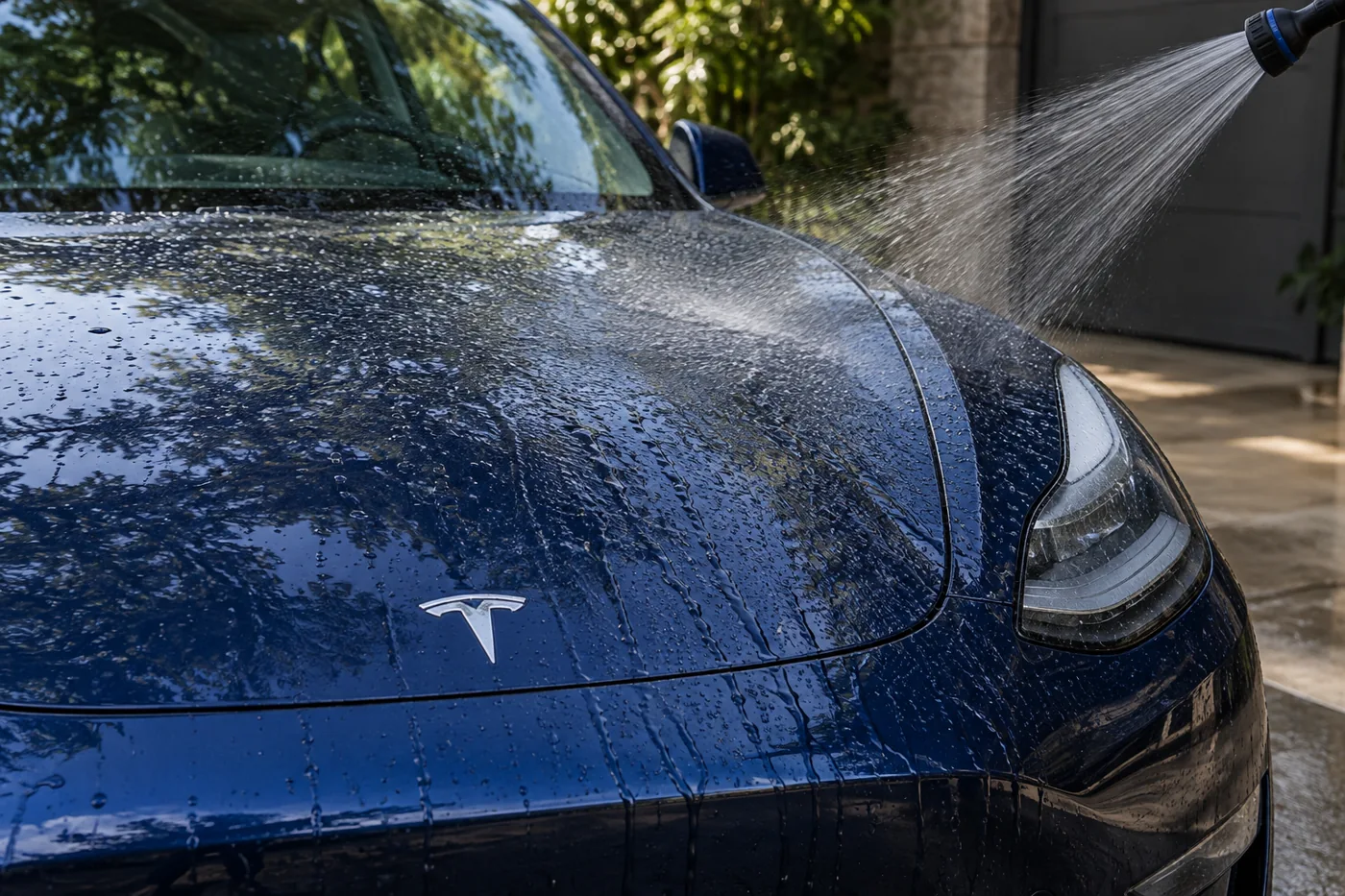
Dust makes dry wiping tempting. It can also leave particles between the cloth and paint, where they are dragged across the surface. Rinse loose contamination away before washing and use clean, suitable materials on a cool panel in shade.
- Keep washing materials clean instead of using the same dirty cloth around the whole car.
- Remove bird droppings and other potentially damaging contamination promptly using the vehicle’s cleaning guidance.
- Let suitable cleaning methods loosen residue instead of scraping it with a nail or abrasive pad.
- Follow the separate care instructions for film, wraps and freshly refinished panels.
Parking habits can reduce avoidable contact too. Space beside a pillar, trolley area or neighbouring door makes a difference to how easily the car can be used without touching another surface. Protection products can have a role, but they do not remove the need for careful washing and parking.
After repainting, the timing for washing, polishing or fitting PPF depends on the materials used. Keep the supplied aftercare instructions with the invoice. A later detailer or film installer needs to know that the panel was refinished before choosing a process for it.
Common questions owners ask about Tesla scratches
Does a scratched door need replacing?
A cosmetic scratch alone does not establish that the door needs replacement. The assessment starts with the finish and panel condition. Distortion, damaged fittings or a repair restriction can change that decision and should be explained separately.
Should a scratch be repaired immediately?
Identify the damaged layer first. Missing protective coating deserves attention, while a superficial appearance mark may be less urgent. If the same incident left a loose bumper, damaged tyre or new warning, that concern needs assessment beyond the scratch.
Can a detailer remove every scratch?
No. Correction can improve suitable surface marks, but it cannot replace missing colour, repair a split or straighten a dent. Those conditions need the appropriate paint or body repair. The remaining coating also limits how far correction should go.
Choose a repair that suits the mark
The Tesla paint repair team can assess the damaged surface and explain the likely result from touch-up or refinishing. Send a wider panel photo and a close view, with details of any film or previous paint work.